Maison Ceronne: A Country House That Refused to Become a Hotel
May 06, 2026

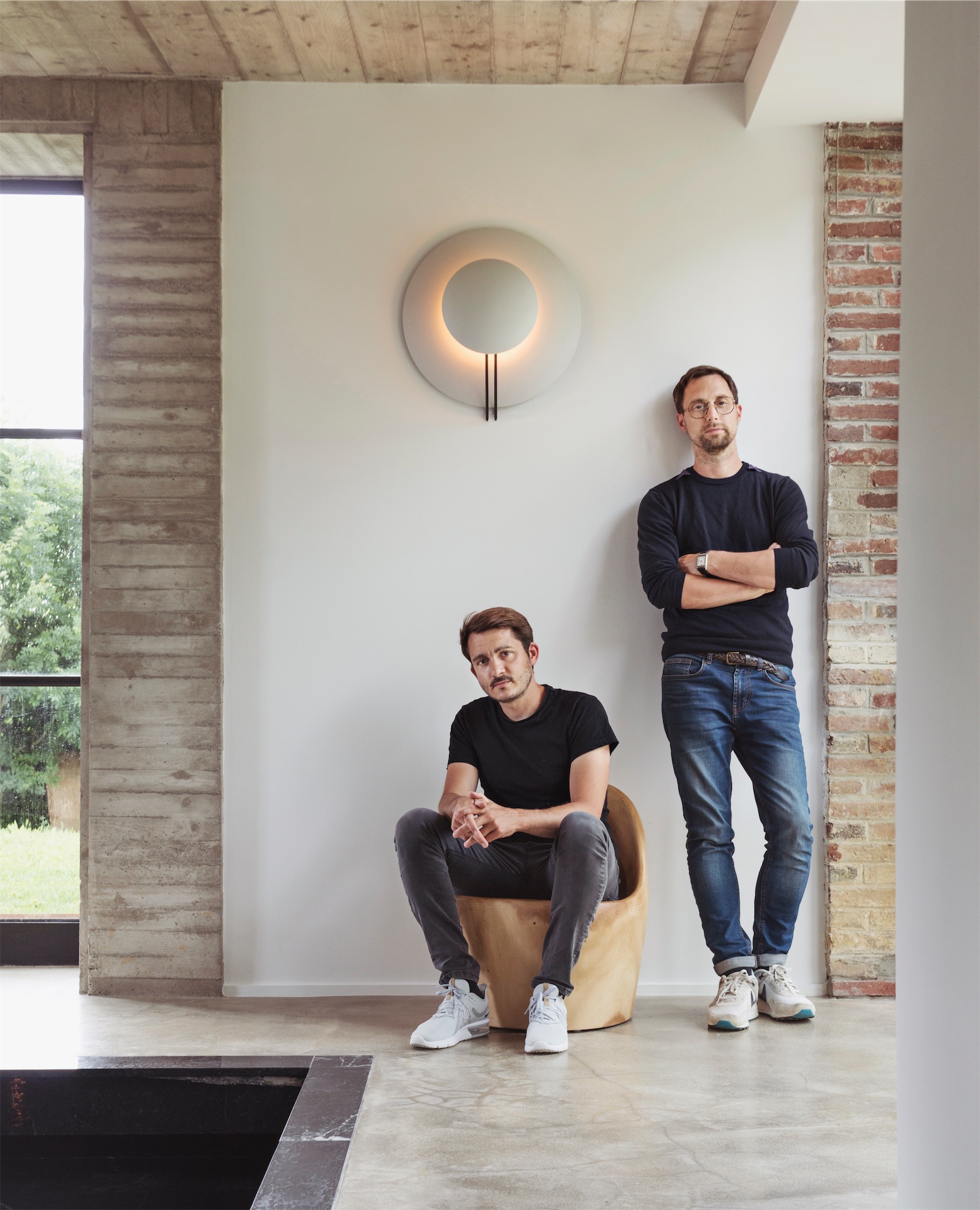
There are no rules at Maison Ceronne, or none that look like a hotel’s. Guests arrive through the kitchen. Breakfast runs until 11:30am. The pool stays open at midnight. Four honesty bars are scattered across the estate, and you log your own drinks on a tablet. Two hours west of Paris, in the protected natural park of Le Perche, Maison Ceronne is a weekend country house that quietly broke the hospitality rulebook seven years ago and has been fully booked ever since. It is the work of Vincent-Louis Voinchet and his partner Clément Lescot, who started receiving guests there long before they meant to.
There are no rules at Maison Ceronne, or none that look like a hotel’s. Guests arrive through the kitchen. Breakfast runs until 11:30am. The pool stays open at midnight. Four honesty bars are scattered across the estate, and you log your own drinks on a tablet. Two hours west of Paris, in the protected natural park of Le Perche, Maison Ceronne is a weekend country house that quietly broke the hospitality rulebook seven years ago and has been fully booked ever since. It is the work of Vincent-Louis Voinchet and his partner Clément Lescot, who started receiving guests there long before they meant to.
BUILT FOR FRIENDS, THEN OPENED TO THE PUBLIC
“At the origin,” Vincent-Louis says, “Maison Ceronne was simply our countryside home, though an unusually considered one. It had been designed from the start to host friends, and also to serve as a setting for agency events and professional gatherings, a place where work and pleasure could coexist naturally over a weekend.”
Vincent-Louis trained as a lawyer, specialized in intellectual property, and went on to found a Paris communications and design agency for luxury clients. Clément is an engineer. The first thing they did with the country home was make sure no one would ever be bored in it.
“Each space was conceived with a purpose,” Vincent-Louis says. “We wanted guests to never be bored.”
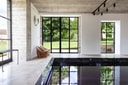
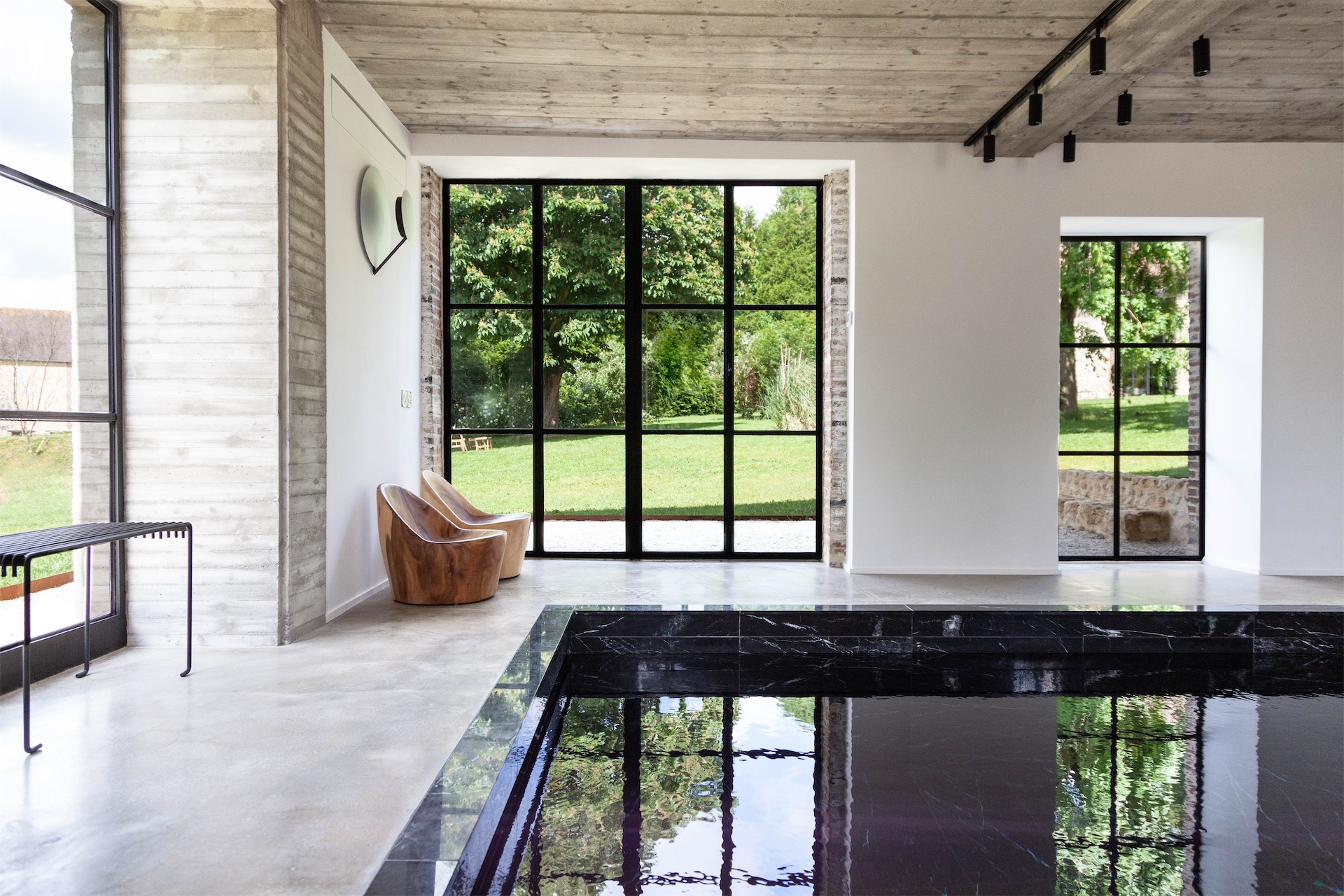
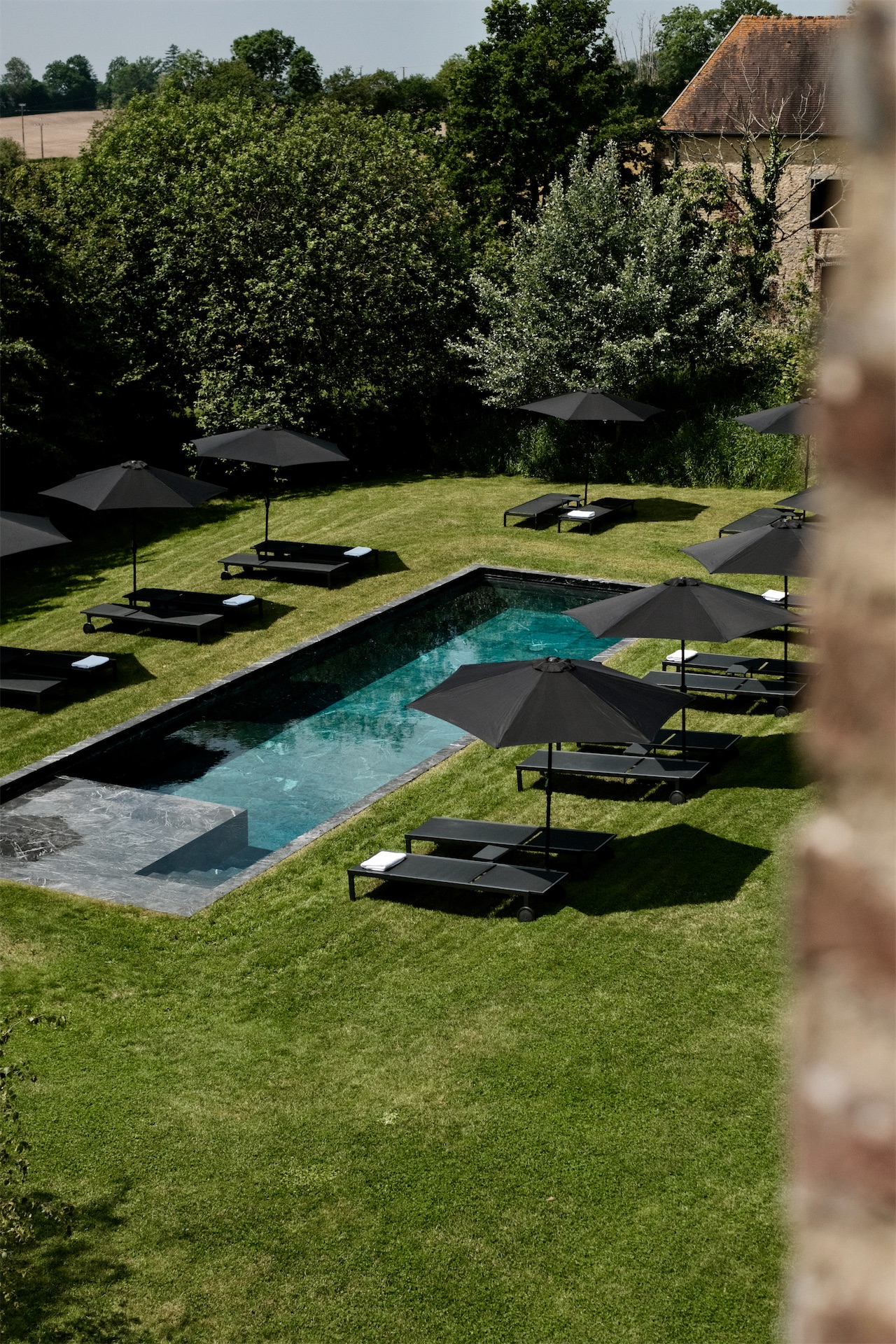
Listed plainly, the result is a 20-seat cinema, a karaoke and club space, a sauna, a hammam, indoor and outdoor heated pools, a wood-fired Nordic bath, and a gym. Friends came. Friends brought friends. Eventually it stopped feeling like a private home.
“Over time, friends brought friends,” Vincent-Louis says, “and it became clear the place wanted to be shared more widely.”
Maison Ceronne opened to the public seven years ago. It runs Friday and Saturday nights through the year, and daily through July and August. It has been fully booked since. Vincent-Louis still runs the agency, splitting his time between Paris and Le Perche. Clément manages the estate full time, and is now developing a second part of the site, closer to the horses, with a new café, a second restaurant, and additional rooms.
WHY LE PERCHE HAS BECOME THE PARISIAN COUNTRYSIDE OF CHOICE
“Le Perche has become, over the past several years, the destination of choice for Parisians seeking countryside without compromise,” Vincent-Louis says. “It is a large, protected natural park, two hours from Paris by car and just over an hour by train, rolling, wooded, and deeply preserved. It is also historically the capital of the horse in France.”
What has changed in recent years is the arrival of a Parisian creative community, and Vincent-Louis is careful to point out that the new energy has not flattened the old.
“The arrival of a Parisian creative community has brought the region to life rather than diluting it,” he says. “Old houses have been restored, and a real local scene has emerged around restaurants, wine cellars, galleries, antique dealers, and small independent shops.”
Maison Ceronne sits in Sainte-Céronne-lès-Mortagne, a small village inside that wider park.
THE HOTEL RULES THAT WERE QUIETLY REMOVED
“Maison Ceronne is neither quite a hotel nor quite a guesthouse,” Vincent-Louis says. “Boutique hotel is the closest shorthand, but it feels more accurate to describe it as a destination in its own right.”
The motivation behind the rules they removed is personal.
“We tried to remove everything about traditional hospitality that we personally found frustrating,” he says. “Breakfasts that end too early. Rigid check-out times. Above all, we aimed for a form of welcome that resembles the way we used to receive friends here.”
In practice, this shows up in details rather than abstractions. Breakfast runs until 11:30am. Sunday rooms are kept all day. In summer, guests can stay on the property and use every facility long after checkout. The pool, sauna, hammam, gym, and cinema stay accessible at any hour. Guests arrive through the kitchen.
“The clientele is young,” Vincent-Louis adds. “The atmosphere is relaxed.”
“We tried to remove everything about traditional hospitality that we personally found frustrating. We wanted to treat guests as friends, and to run the place on trust.”
— Vincent-Louis Voinchet, Co-Founder
FOUR HONESTY BARS AND THE LOGIC OF RUNNING ON TRUST
Then there are the honesty bars. Four of them, scattered across the estate, deliberately easy to find.
“Guests help themselves and log their own drinks directly from a tablet,” Vincent-Louis says. “Wine is always available in the kitchen as well, poured by whoever is around.”
Asked why a system that depends entirely on trust works night after night, Vincent-Louis returns to the underlying logic of the place.
“The principle behind it is the same as everything else here: treating guests as friends, and running the place on trust.”
THE STABLES THAT BEGAN AS A PAPERWORK PROBLEM
“The stables came about almost by accident,” Vincent-Louis says. “When we acquired the neighboring 150 hectares, an agricultural justification was required. Clément trained at an agricultural college, became a registered horse breeder, and the stables followed.”
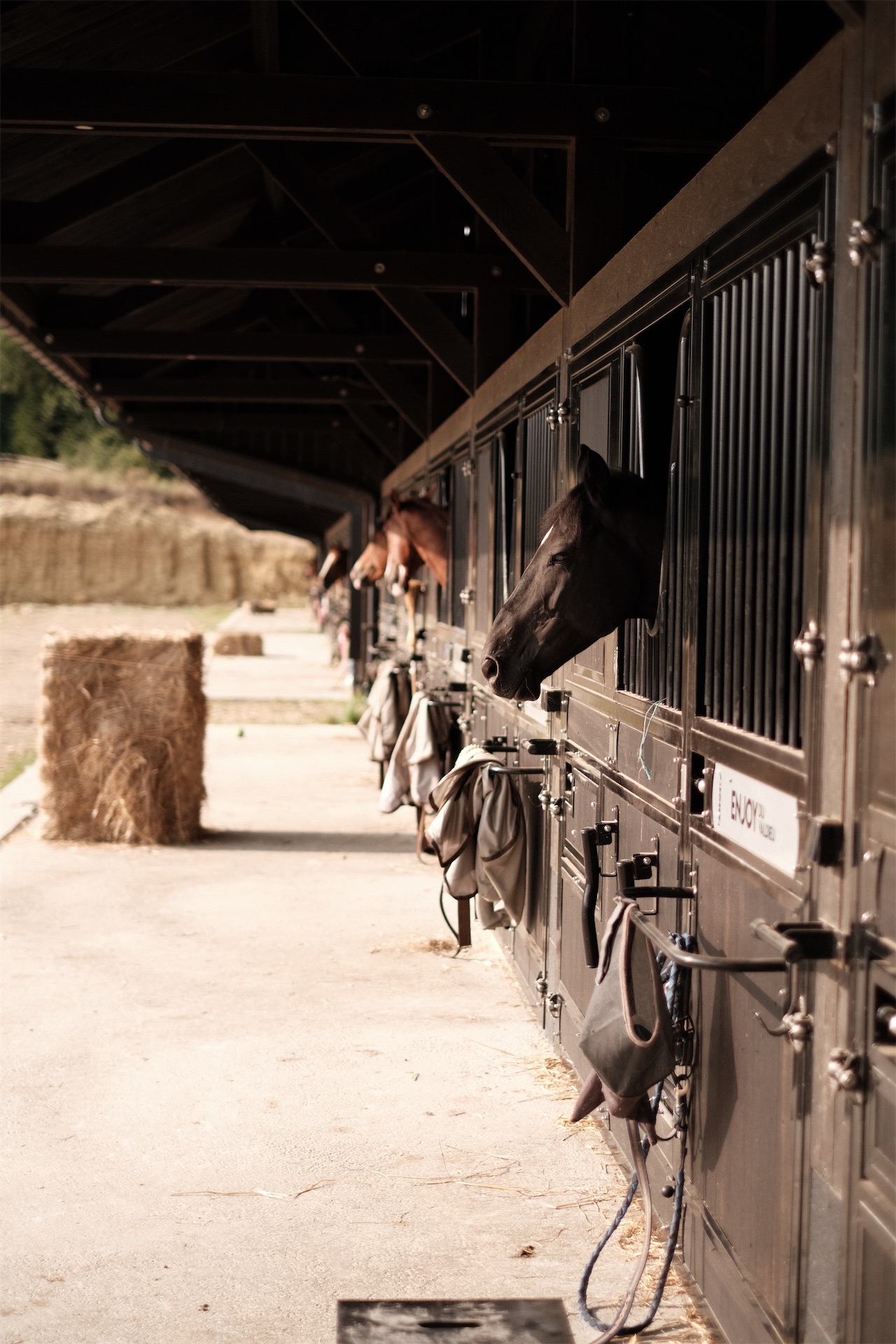
MC Les Paddocks, as the stables are known, now houses 180 horses, including animals rescued through a partnership with the French animal protection society (SPA). Around ten foals are born each year. The stable buildings themselves are clad entirely in black-stained timber and form part of the architectural language of the wider estate. Guests can walk among the horses, meet the foals, and book rides or private lessons.
INSIDE THE FARMHOUSE: A 1970S AND 80S INTERIOR OUT OF TIME
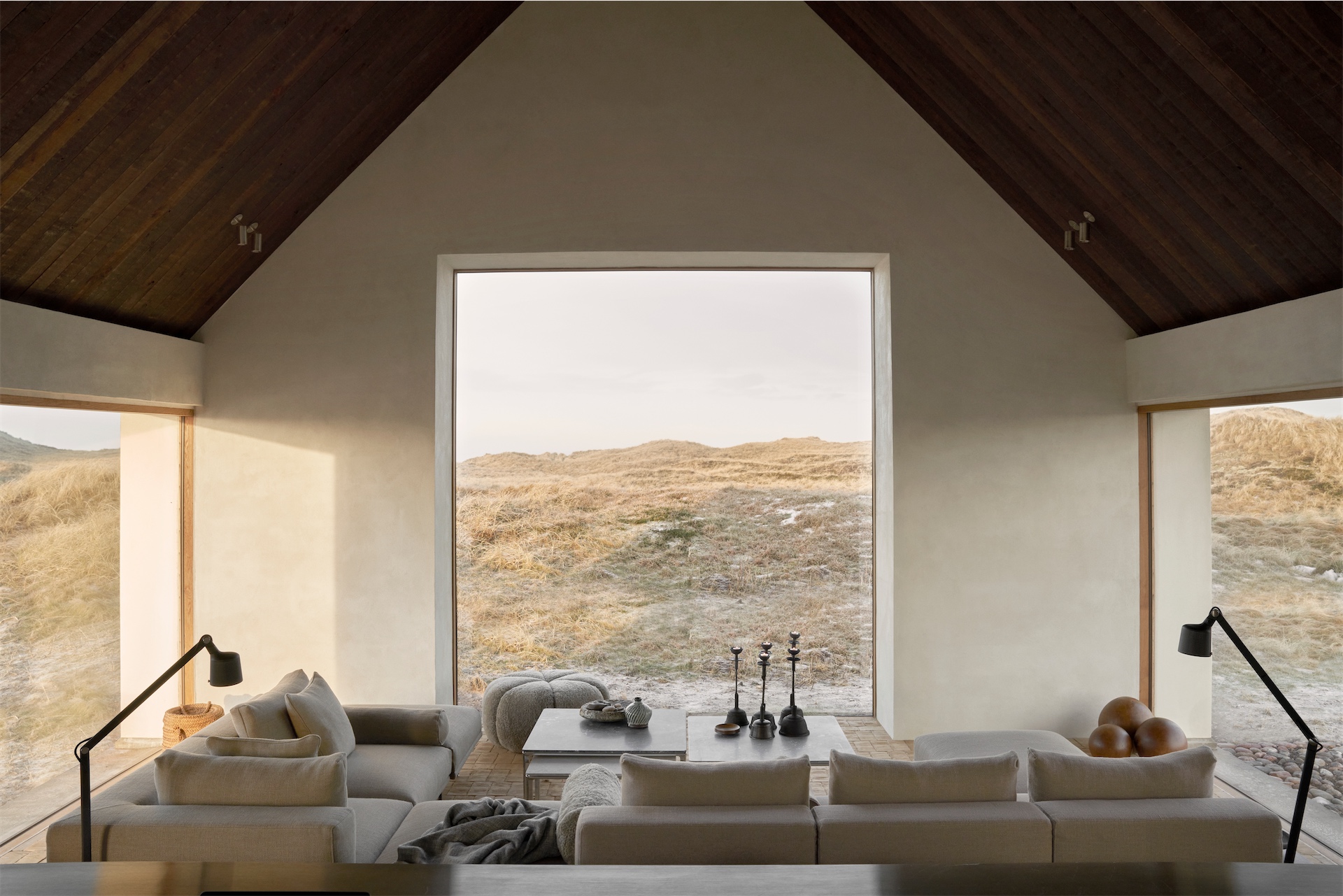
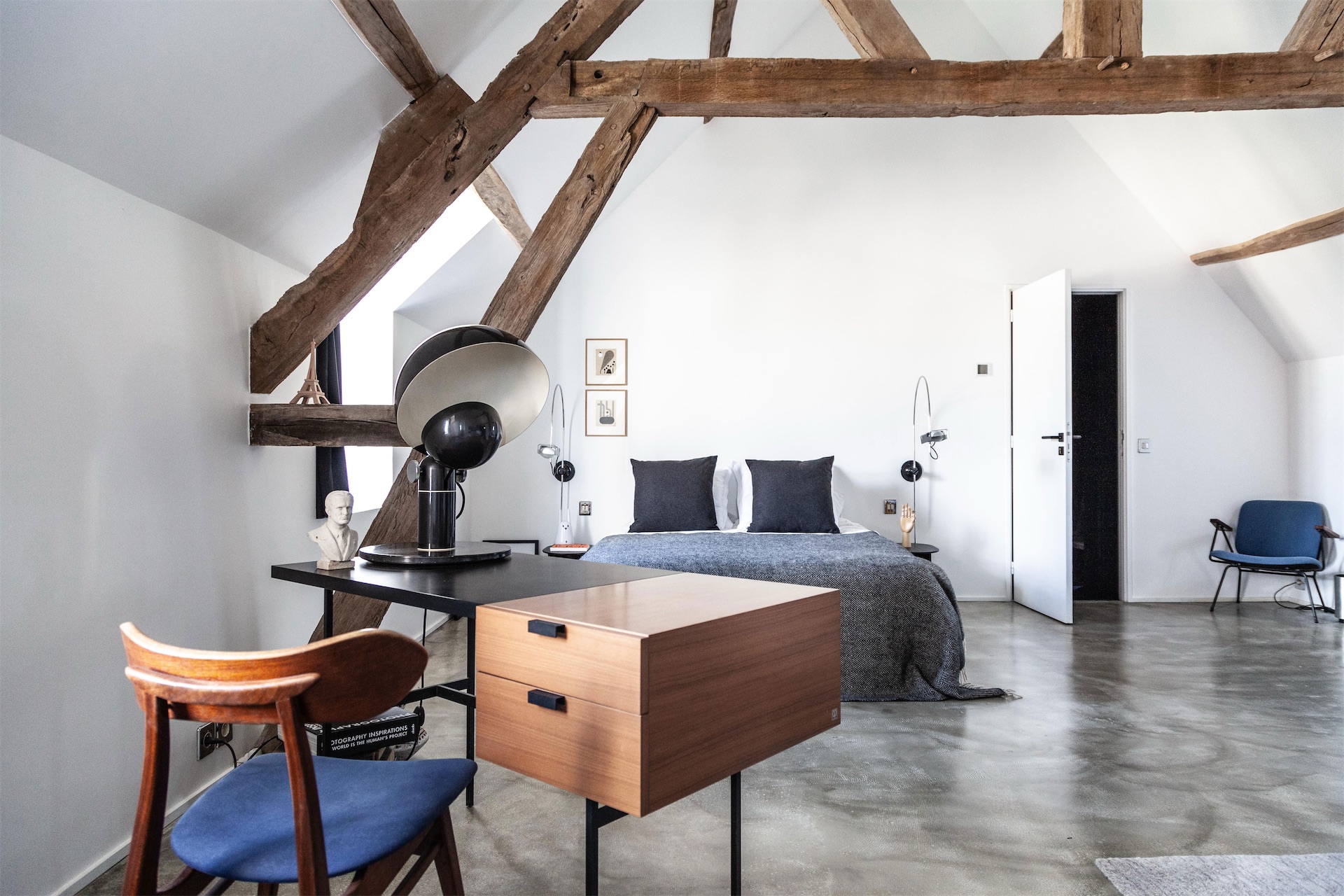
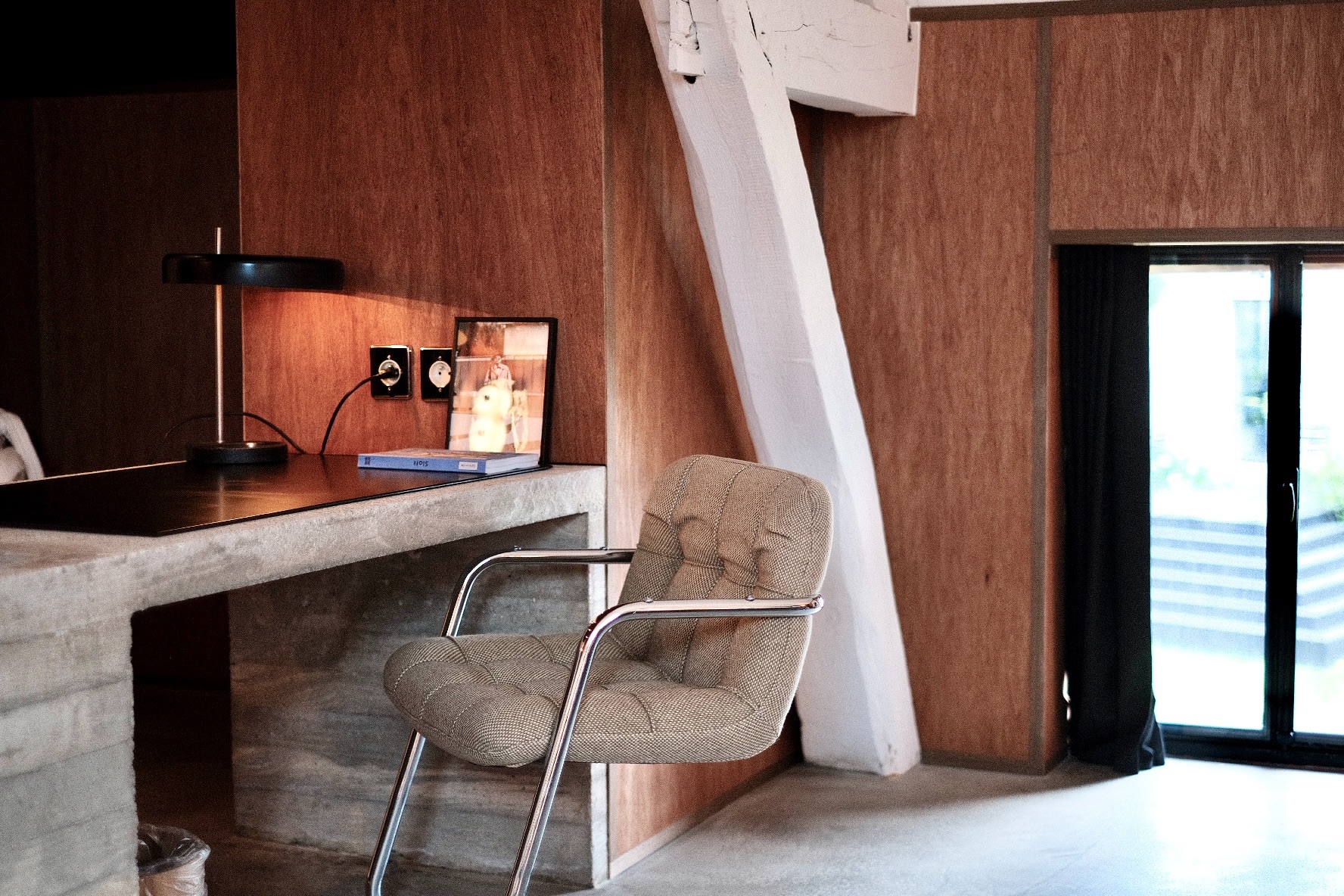
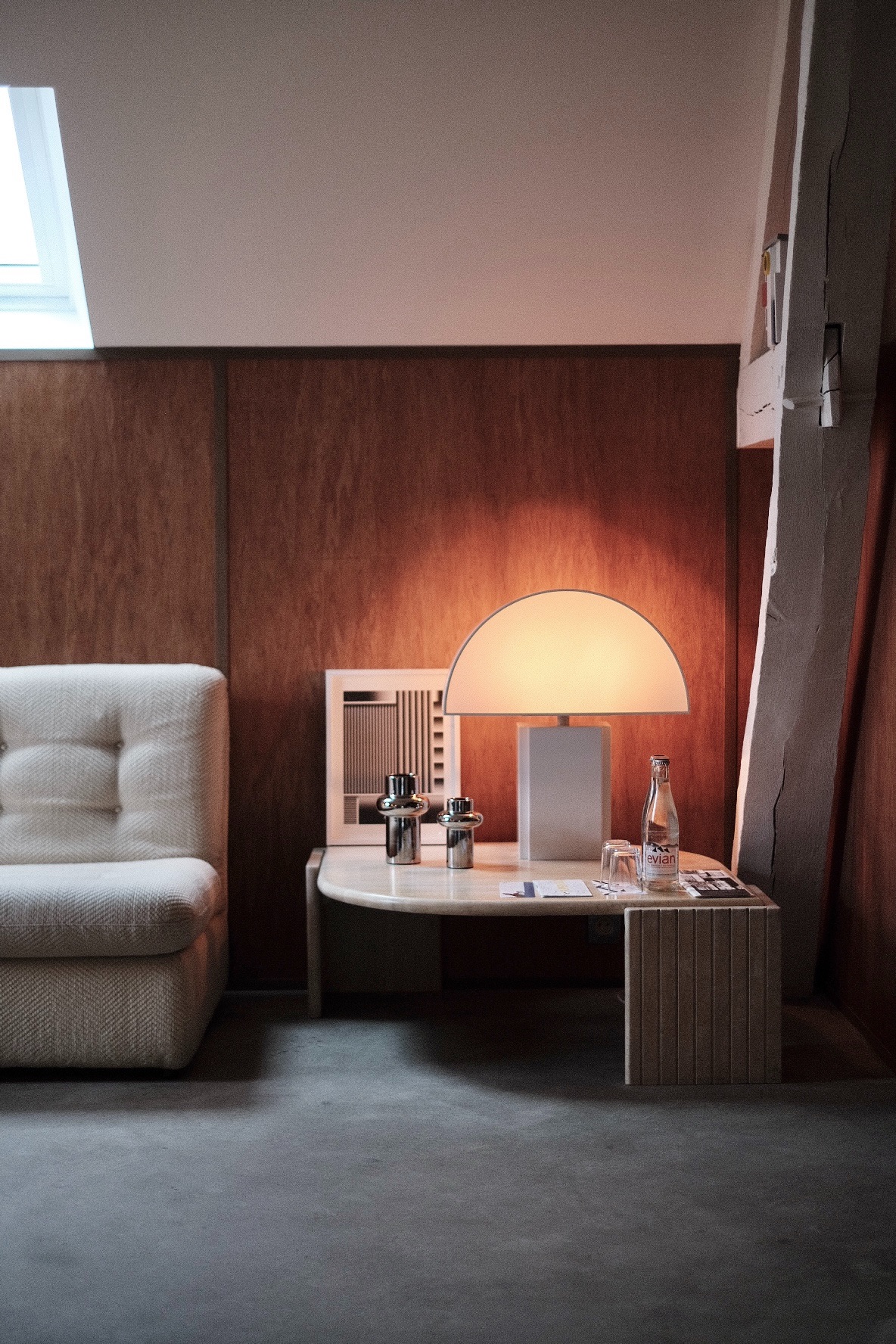
Inside the main house, the design works in deliberate contrast with the building that holds it. Vincent-Louis describes it as anachronistic on purpose.
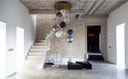
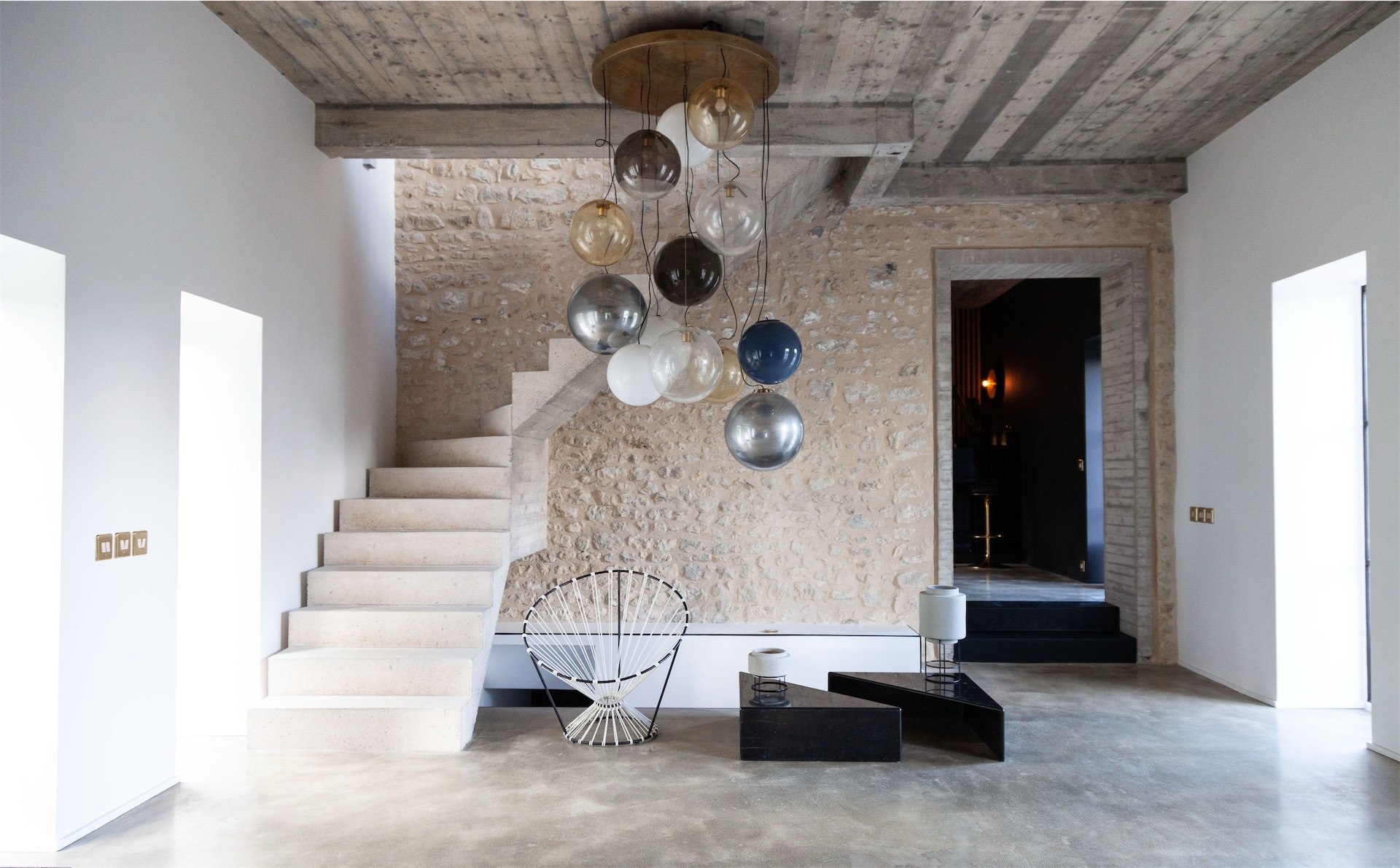
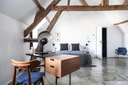
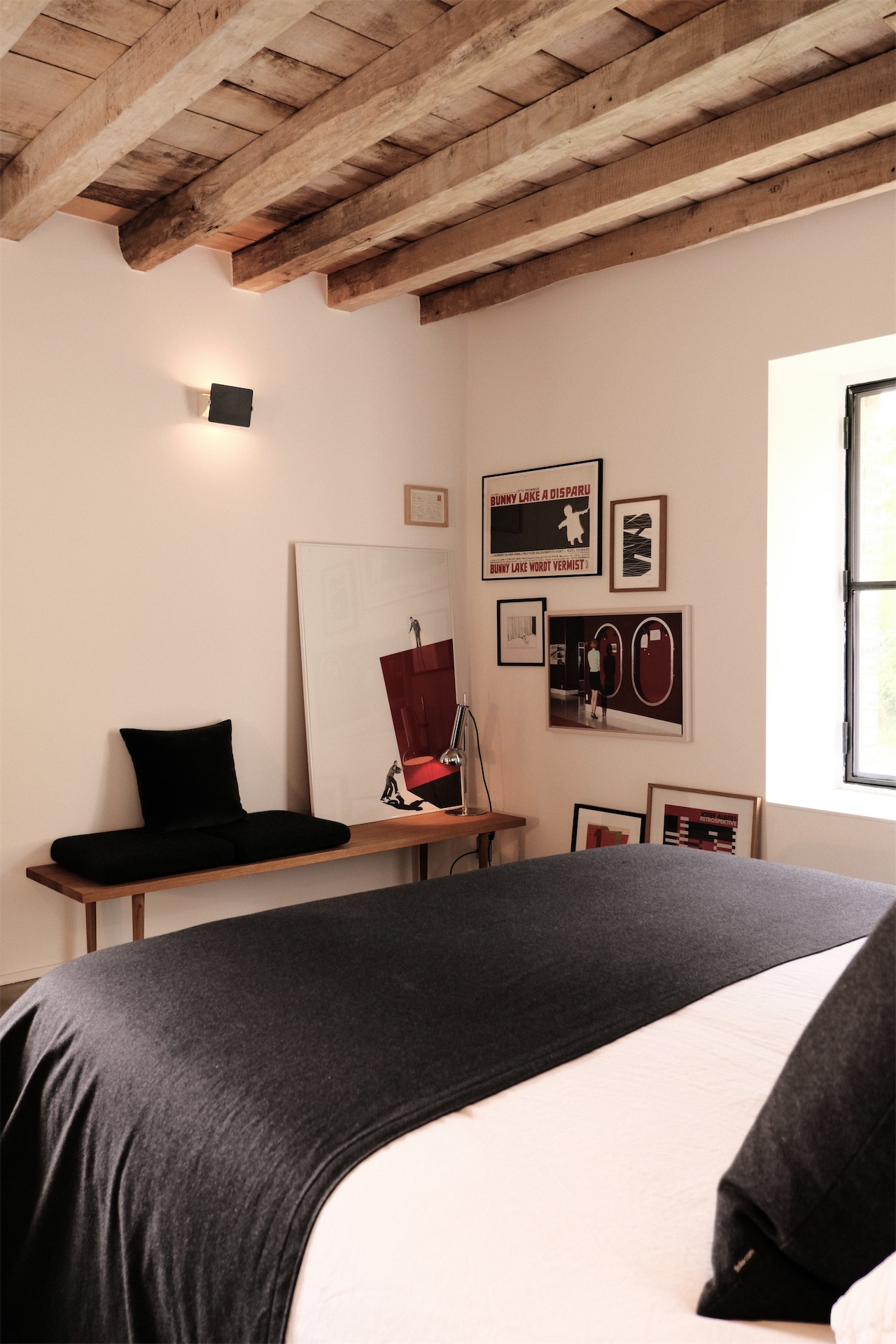
“The aesthetic draws from the 1970s and 80s,” he says, “built around considered lighting, lamps, and a layered, anachronistic atmosphere. You arrive in an old Perche farmhouse and find something that looks nothing like the region’s traditional interiors. That contrast is intentional, and it is what makes the place feel genuinely out of time.”
WHY SIX IN TEN GUESTS COME BACK TO MAISON CERONNE
Around six in ten guests come back. Many of them have gone on to buy or look for a house in Le Perche. Maison Ceronne sits on no third-party booking platform, by design.
“Our communication is almost entirely word of mouth,” Vincent-Louis says. “We are present on no booking platform other than our own website, which matters to us. It allows us to present the place on our own terms and to offer a real experience to guests from the first point of contact.”
Maison Ceronne also does something hotels rarely manage. It introduces people to each other.
“Many guests have met here,” Vincent-Louis says, “around the karaoke, by the pool, over a board game, and a number of them have returned to Maison Ceronne together, to the place where they first crossed paths.”
Asked what he hopes a stay leaves behind, his answer comes easily.
“A little of us, a little of Le Perche, a great deal of nature, and a different sense of what a hotel stay can be,” he says. “More than anything, we want guests to leave wanting to come back, to make this place a home of sorts, somewhere they feel genuinely welcomed and at ease.”
Asked what he hopes a stay leaves behind, his answer is the same one he keeps coming back to throughout our conversation. “More than anything, we want guests to leave wanting to come back, to make this place a home of sorts, somewhere they feel genuinely welcomed and at ease.”
“The house is brought to life by the team, but also by the guests themselves, who make it warm and joyful. That is the memory we want to leave.”
— Vincent-Louis Voinchet, Co-Founder
(1) Where is Maison Ceronne located?
Maison Ceronne is in Sainte-Céronne-lès-Mortagne, in the protected natural park of Le Perche, Normandy, two hours west of Paris by car and just over an hour by train to L’Aigle followed by a short transfer.
(2) When is Maison Ceronne open?
Maison Ceronne operates Friday and Saturday nights throughout the year, and every day in July and August. A two-night minimum stay applies.
(3) Is Maison Ceronne family-friendly?
Maison Ceronne welcomes adult guests. Children under sixteen are not accommodated, given the relaxed evening atmosphere and the open access to all facilities.
(4) Can non-guests dine at the Maison Ceronne restaurant?
Yes. The restaurant is open to outside visitors as well as house guests, with a seasonal market menu of three mains including a vegetarian option, starters, and desserts, all made in-house with local sourcing.
(5) What can guests do on the estate?
Beyond the bedrooms, guests have round-the-clock access to two heated pools (one indoor, one outdoor), a sauna, hammam, wood-fired Nordic bath, gym, 20-seat cinema room, karaoke and club space, and four honesty bars. The neighboring stables, MC Les Paddocks, offer rides, lessons, and visits with around ten foals born each year.

Plan Your Stay
Subscribe
Enjoy the read?
Get unique stays, hidden gems, and mindful travel tips delivered straight to your inbox—no spam, just wanderlust.