
EcoCamp Patagonia: Inside the World’s First Geodesic Dome Eco-Lodge in Torres del Paine
May 21, 2026

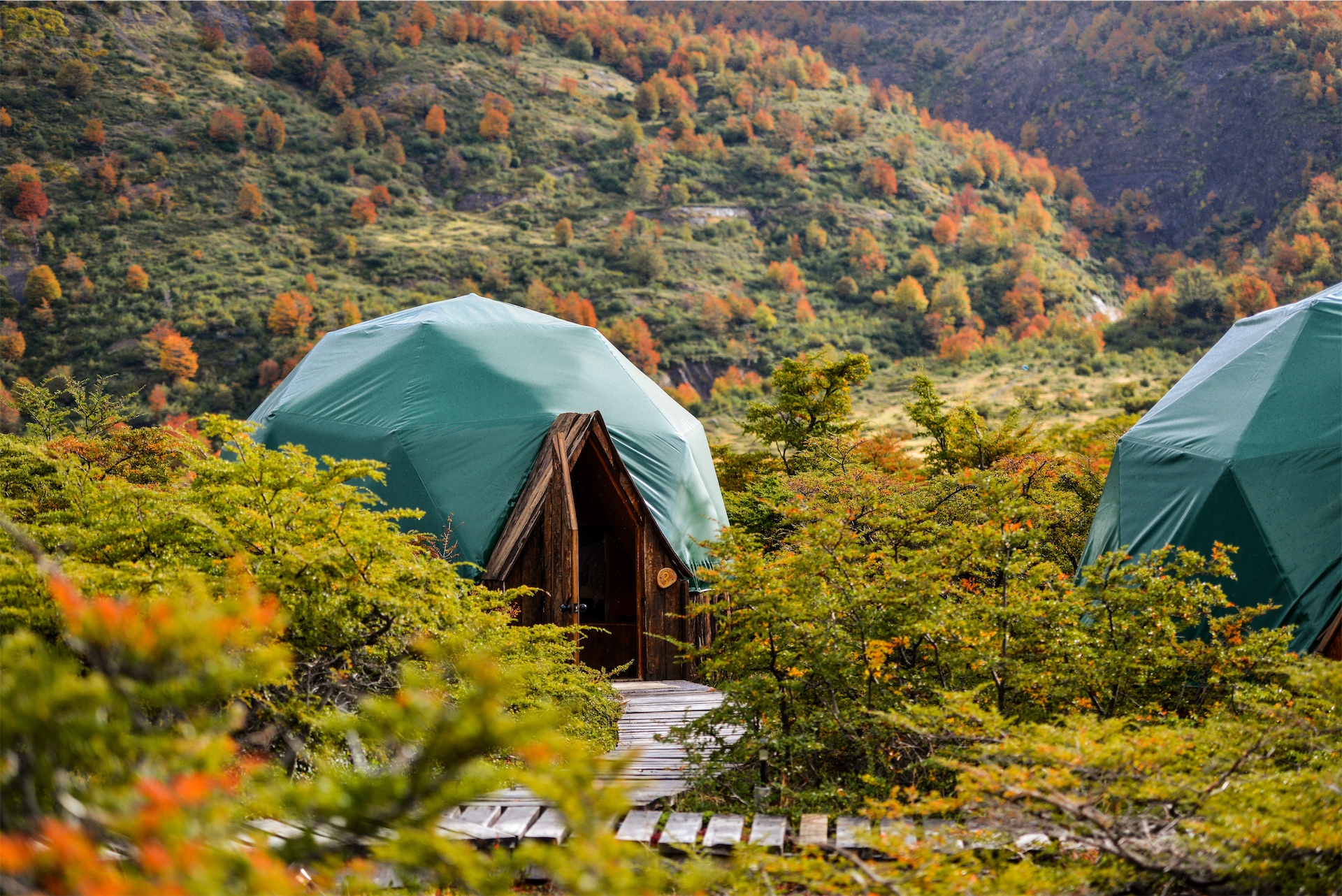
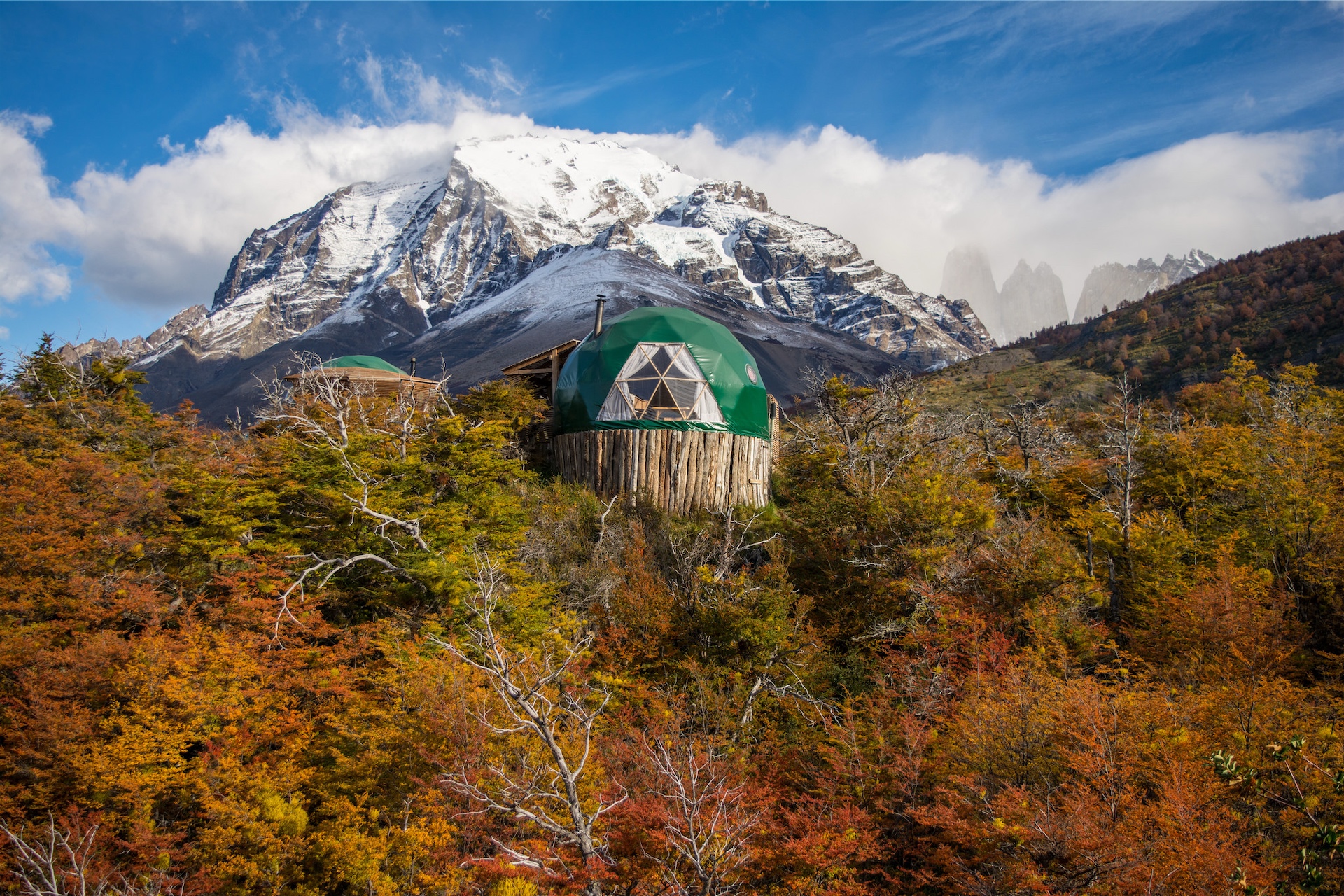
Inside Torres del Paine National Park, at the southern edge of Chilean Patagonia, a cluster of geodesic domes sits low against the steppe. The Paine Massif rises in the distance. The wind moves through wooden paths that connect a yoga dome, a community dome, and thirty-three sleeping domes and eco-cabins. There is no Wi-Fi, by design. EcoCamp Patagonia was the first geodesic dome hotel in the world when it opened in 2001, and it remains the only eco-lodge inside the park offering multi-day W Treks in its own style, with porter and guide support and some nights back at camp. The lodge runs on micro-hydro turbines and solar panels. The toilets are composting. The story behind all of it began ten years before the first dome was raised, on a river two thousand kilometers to the north.
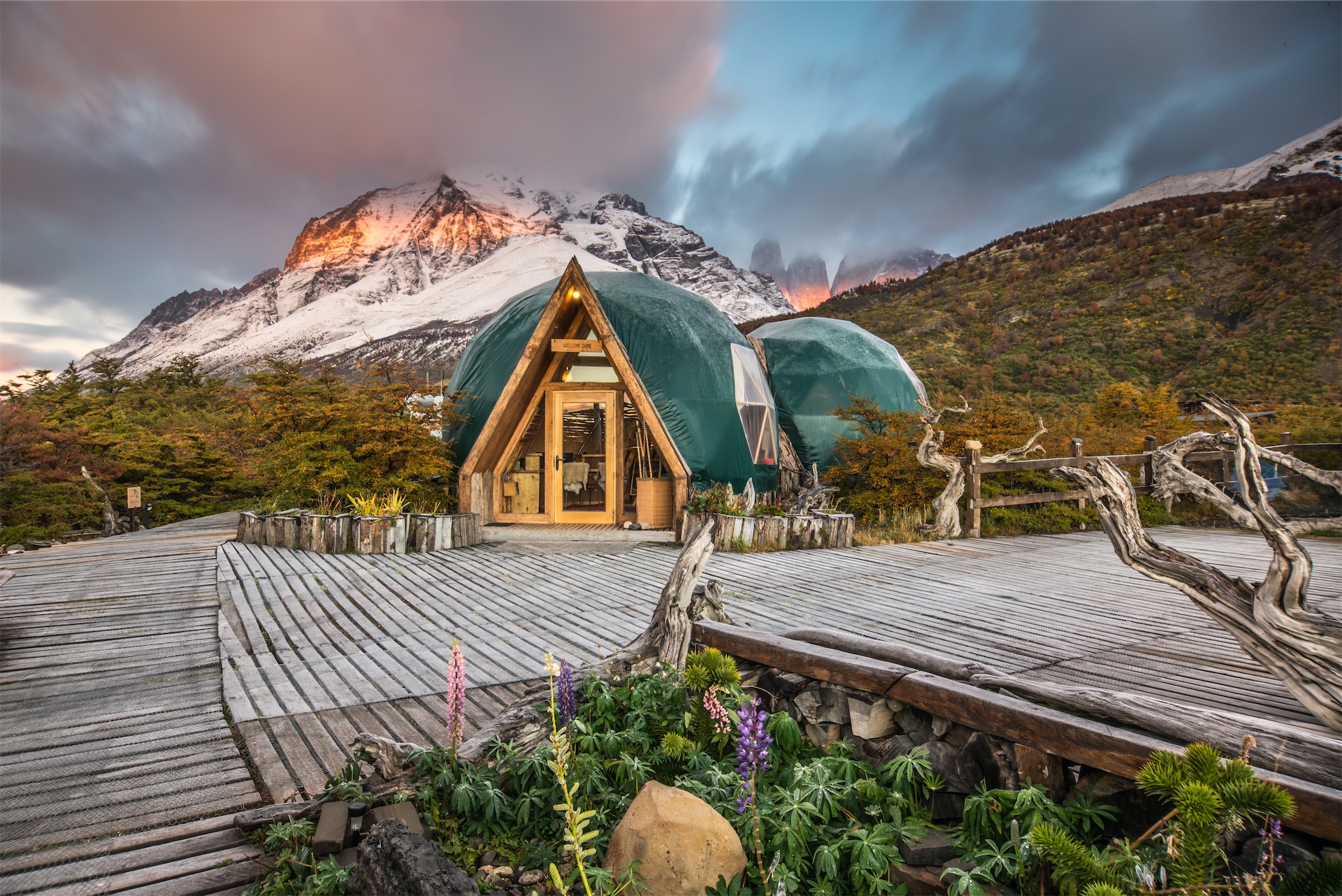
Inside Torres del Paine National Park, at the southern edge of Chilean Patagonia, a cluster of geodesic domes sits low against the steppe. The Paine Massif rises in the distance. The wind moves through wooden paths that connect a yoga dome, a community dome, and thirty-three sleeping domes and eco-cabins. There is no Wi-Fi, by design. EcoCamp Patagonia was the first geodesic dome hotel in the world when it opened in 2001, and it remains the only eco-lodge inside the park offering multi-day W Treks in its own style, with porter and guide support and some nights back at camp. The lodge runs on micro-hydro turbines and solar panels. The toilets are composting. The story behind all of it began ten years before the first dome was raised, on a river two thousand kilometers to the north.
THE BÍO BÍO RIVER AND THE BIRTH OF AN IDEA
In 1991, three university friends, Nani Astorga, Yerko Ivelic, and Javier López, founded Cascada Expediciones, a small operator running rafting and kayaking trips on Chile’s Bío Bío River. The river itself was the lesson.
Over the years they spent guiding clients down the Bío Bío, the three of them watched the river change. Hydroelectric projects upstream were beginning to alter long stretches of it. The trips that had drawn them to the work in the first place were not going to last in the form they had known.
“Their adventures inspired a deep respect for nature and a desire to protect it,” says Siel Debouver, PR and Content Manager at EcoCamp Patagonia, “as they witnessed the region’s changes from hydroelectric projects.”
Out of that decade on the Bío Bío came a quieter, longer-term idea: a lodge in Patagonia that could connect travelers to the landscape and, in doing so, give the landscape a reason to be left alone.
SAFARI TENTS AND KAWESQAR DOMES: WHERE THE DESIGN CAME FROM
The challenge in Patagonia was always the climate. The team needed a structure that could absorb sustained wind, cold, and weather, while keeping the footprint light.
“Looking for new ways to connect travelers with nature, the team envisioned an eco-friendly lodge in Patagonia that could endure its extreme climate,” Siel says. “Inspiration came when they saw large, comfortable safari tents in Africa, and the group learned about the Kawesqar people’s dome-shaped shelters made from guanaco skin.”
The Kawesqar are an Indigenous people of southern Patagonia. Their dome shelters, built for hundreds of years in the same wind that EcoCamp now stands in, were the structural reference.
“Combining both ideas, EcoCamp was born,” Siel says.
The first geodesic domes were raised at the edge of Torres del Paine in 2001. EcoCamp opened that year as the first geodesic dome hotel in the world. The structures themselves are aerodynamic by design, shaped to deflect the Patagonian wind rather than fight it, and built to be assembled and disassembled with minimal damage to the ground beneath.
LIFE IN THE DOMES, AT THE EDGE OF TORRES DEL PAINE
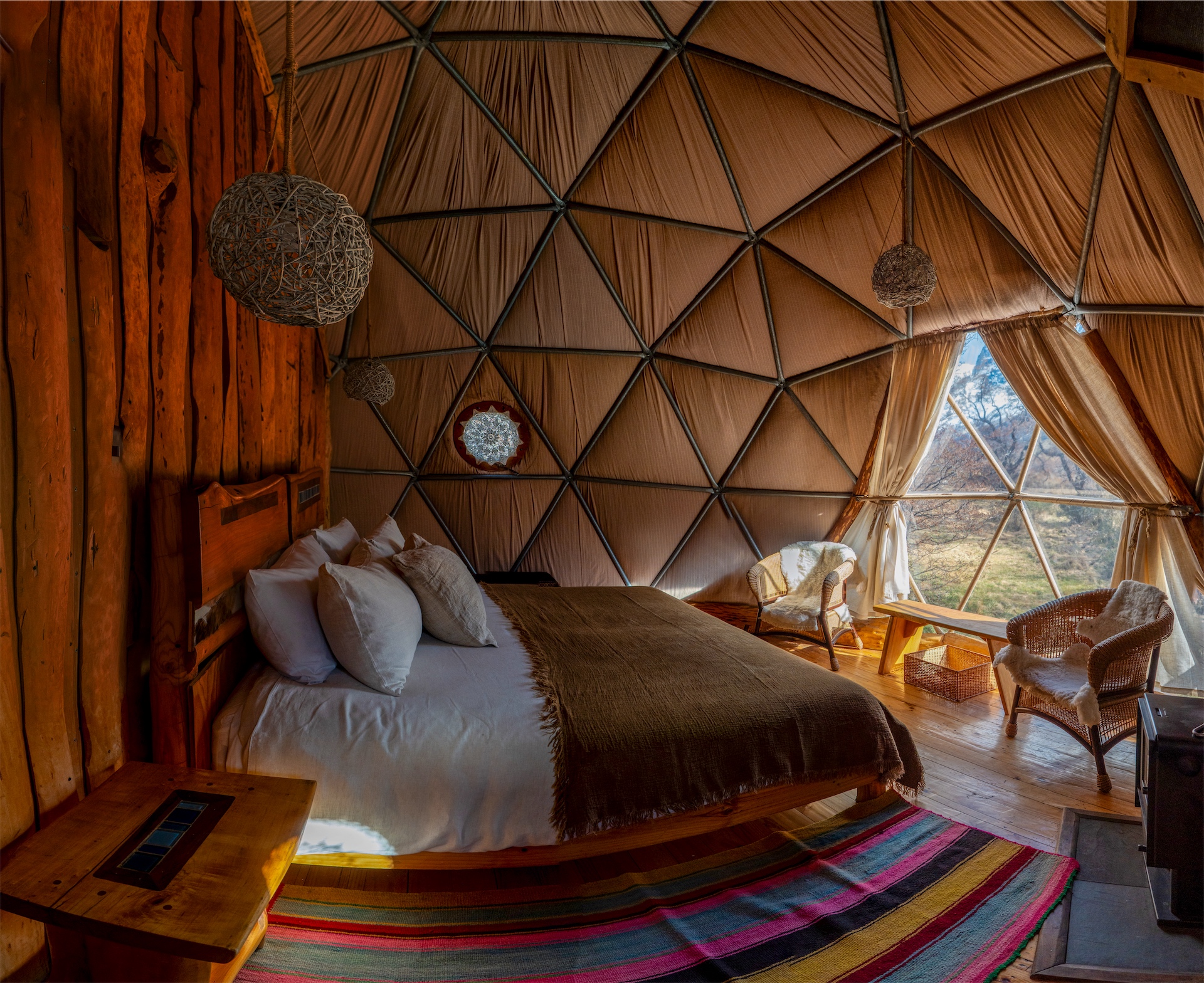
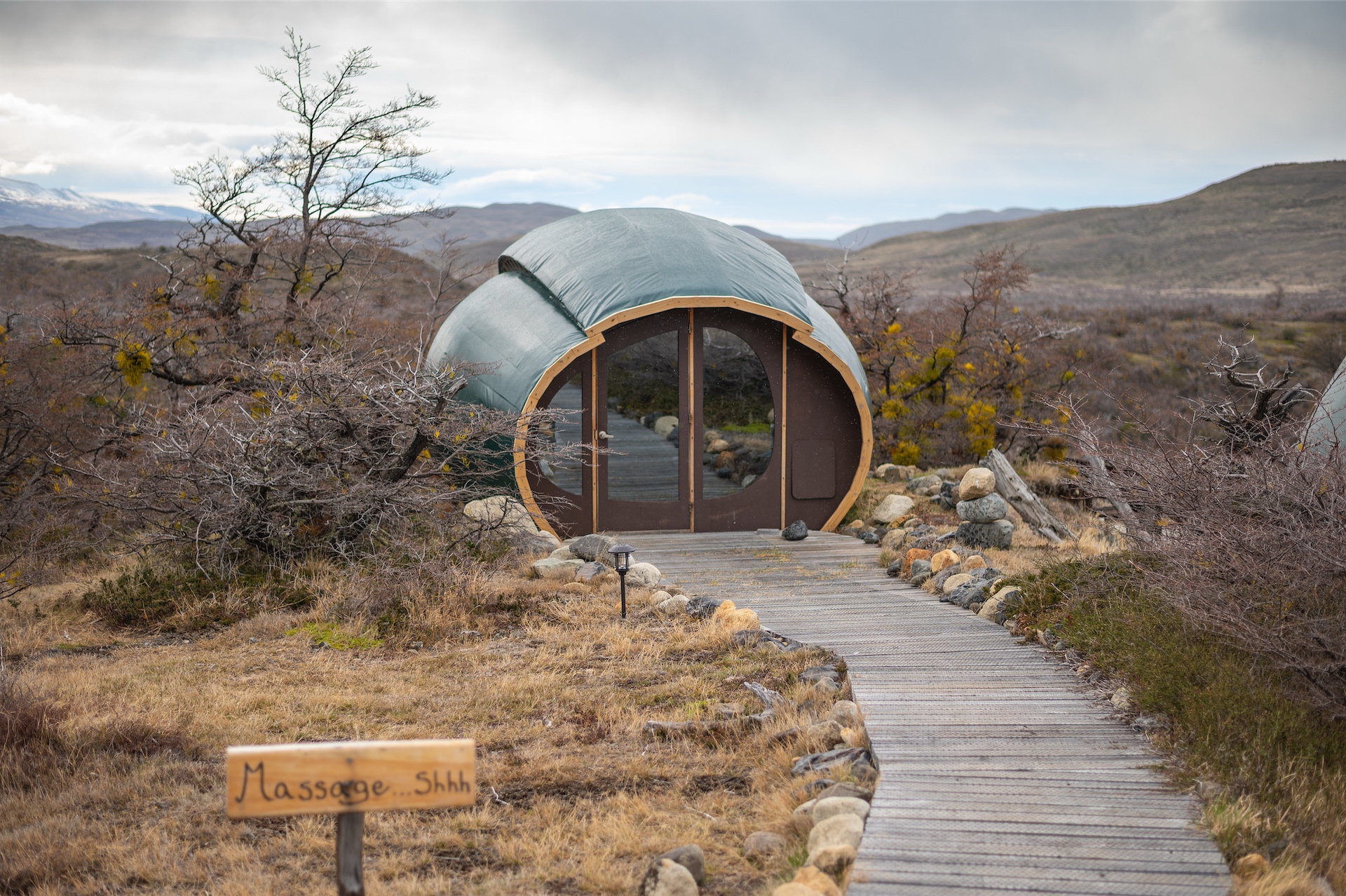
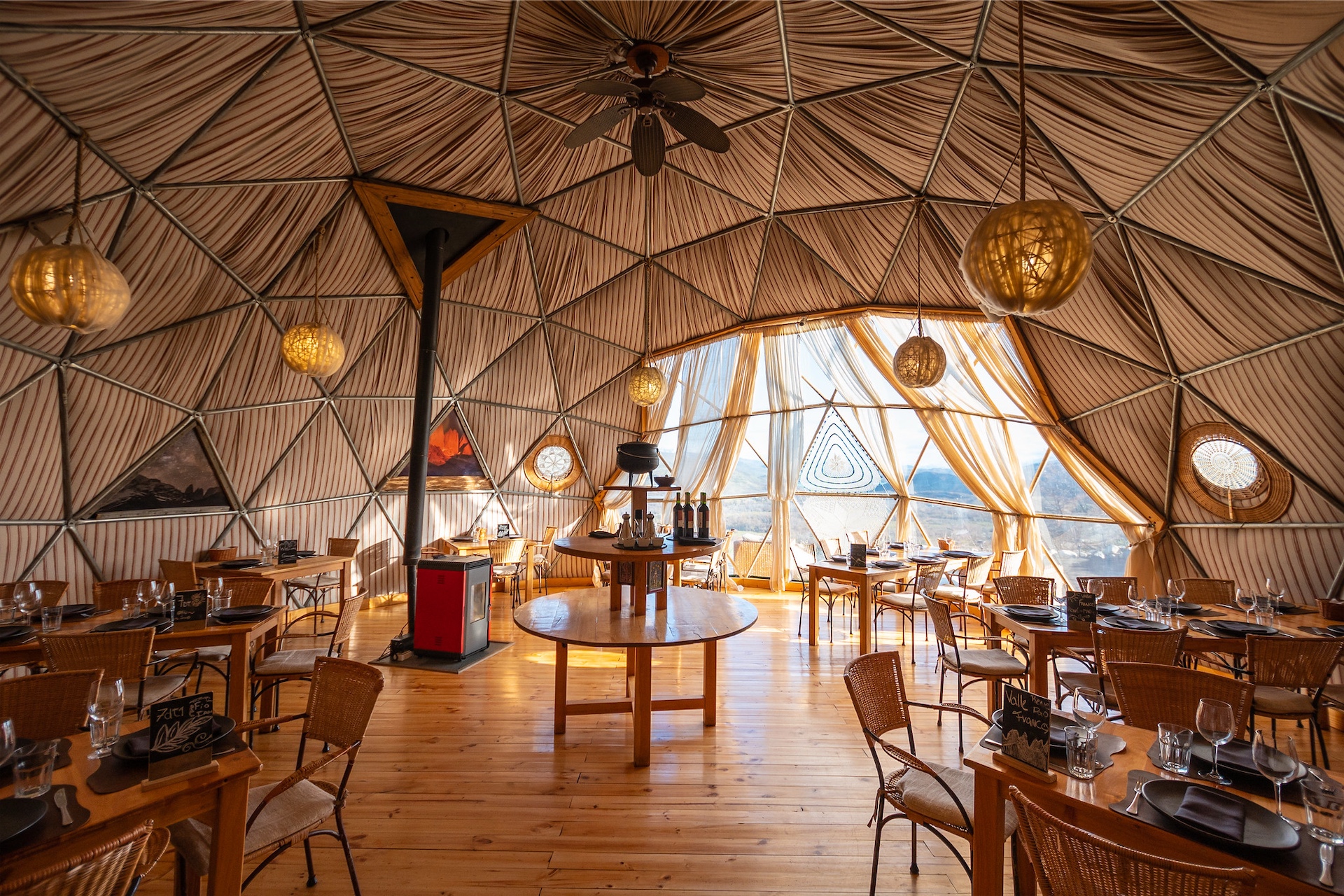
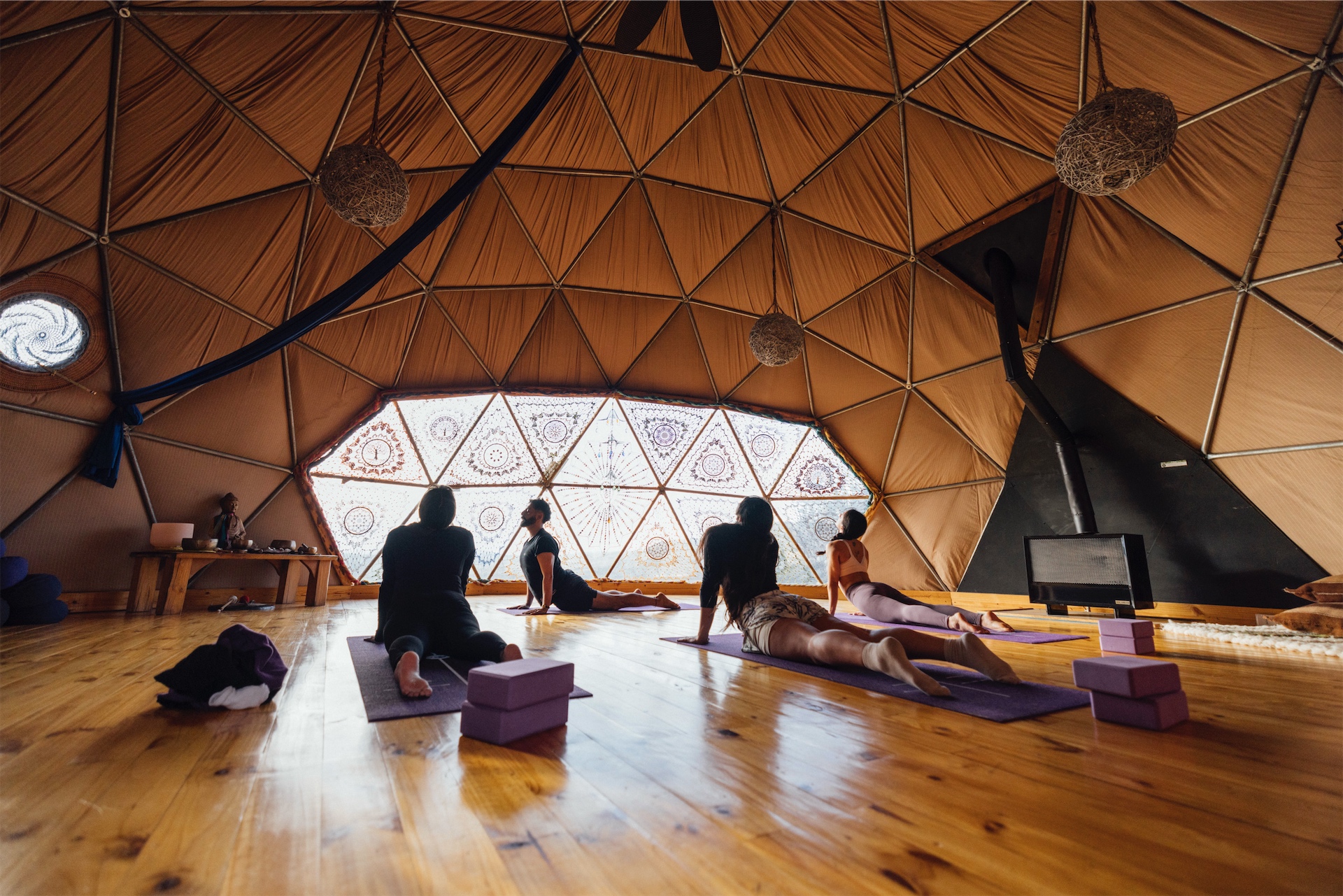
Thirty-three domes and eco-cabins are spread across the site, positioned to disappear into the steppe and open onto views of the Paine Massif, the wider park, and Patagonian skies that change by the hour. Interiors are warm and functional: natural materials, soft textiles, wood-fired heating. The yoga dome and the community dome, which holds the restaurant and the bar, are linked to the sleeping domes by wooden walkways.
The choice to keep the camp without Wi-Fi is intentional, and Siel returns to it often.
“We invite our guests to disconnect from the internet and other distractions, and to reconnect with nature, fellow travelers, and themselves,” she says. “Nestled in a remote, natural setting and without Wi-Fi, our lodge encourages this connection.”
What replaces the phone, in her telling, is the building itself.
“Staying in our domes enhances the experience,” Siel says. “You can hear the Patagonian wind, feel the sun warming your space, and stroll along the wooden paths to the yoga dome or the community dome with the restaurant and bar.”
“We invite our guests to disconnect from the internet and other distractions, and to reconnect with nature, fellow travelers, and themselves.”
— Siel Debouver, PR and Content Manager at EcoCamp Patagonia
THE SUSTAINABILITY MATH: 75 PERCENT MICRO-HYDRO, COMPOSTING TOILETS, NO HAIRDRYERS
The numbers behind the camp are part of how Siel talks about it. The electricity grid that powers the domes is built around the river itself.
“About 75 percent of our electricity is generated by four micro-hydro turbines powered by a nearby river,” she says. “Another 15 percent comes from solar panels, with the remaining 10 percent from a gas generator. Guests are asked not to use high-energy devices such as hairdryers.”
The domes themselves are part of the math.
“Our domes are designed to minimize environmental impact,” Siel says. “The structures are energy-efficient and aerodynamic. Inside the domes, we have composting toilets, and compost is used to enrich the soil and fertilize our flowers.”
The kitchen and the waste system close the loop.
“We work closely with local suppliers for the majority of our food and recycle leftovers through a comprehensive waste management system,” she says.
The full picture is laid out for guests on a daily EcoTour built into the program. Siel notes that the tour is also where the lodge hopes its operating principles travel home.
THE W TREK AND WHAT GUESTS DO IN THE PARK
EcoCamp is built around the park, not around the lodge. The signature program is the W Trek, the four to five day route between Torres del Paine’s three iconic granite arms, which EcoCamp runs as a guided multi-day program with porter support and nights back at the camp between hiking days.
“We are the world’s first geodesic dome hotel,” Siel says, “and the only eco-lodge in the park offering multi-day W Treks in our style, with porter and guide support and some nights at EcoCamp.”
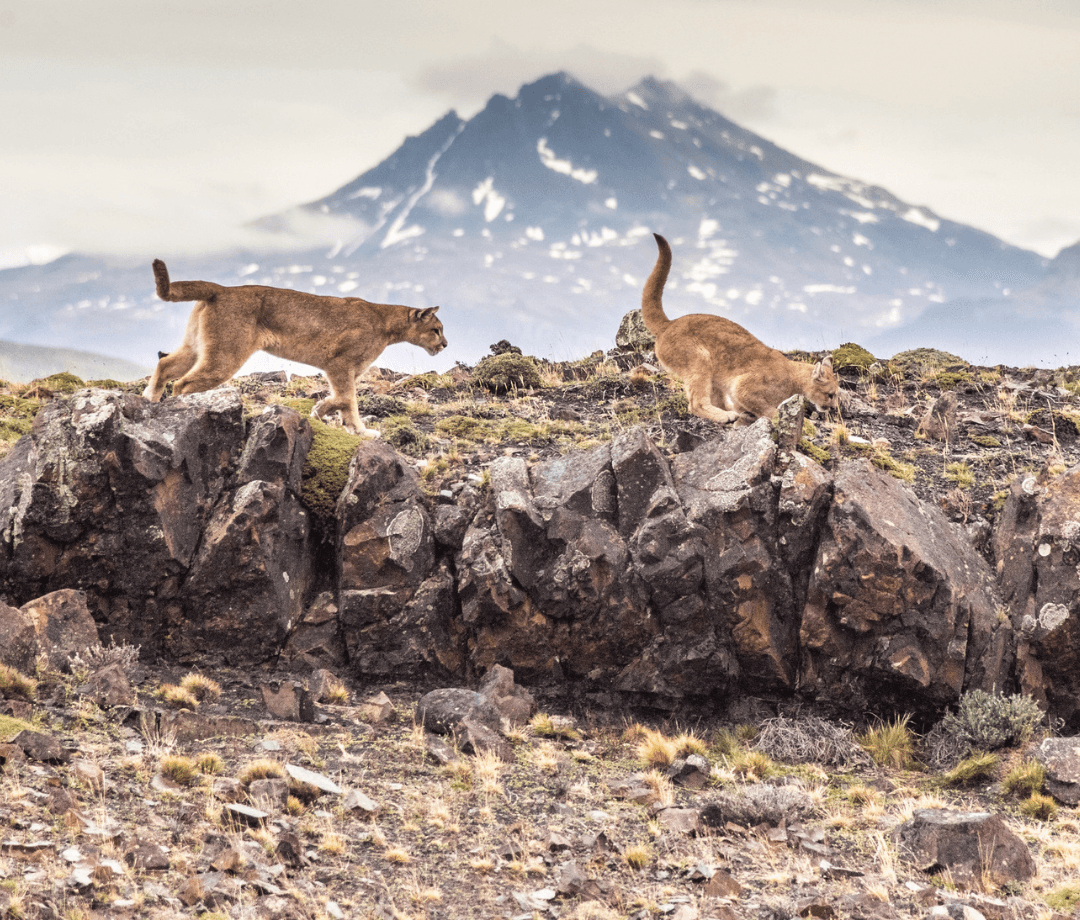
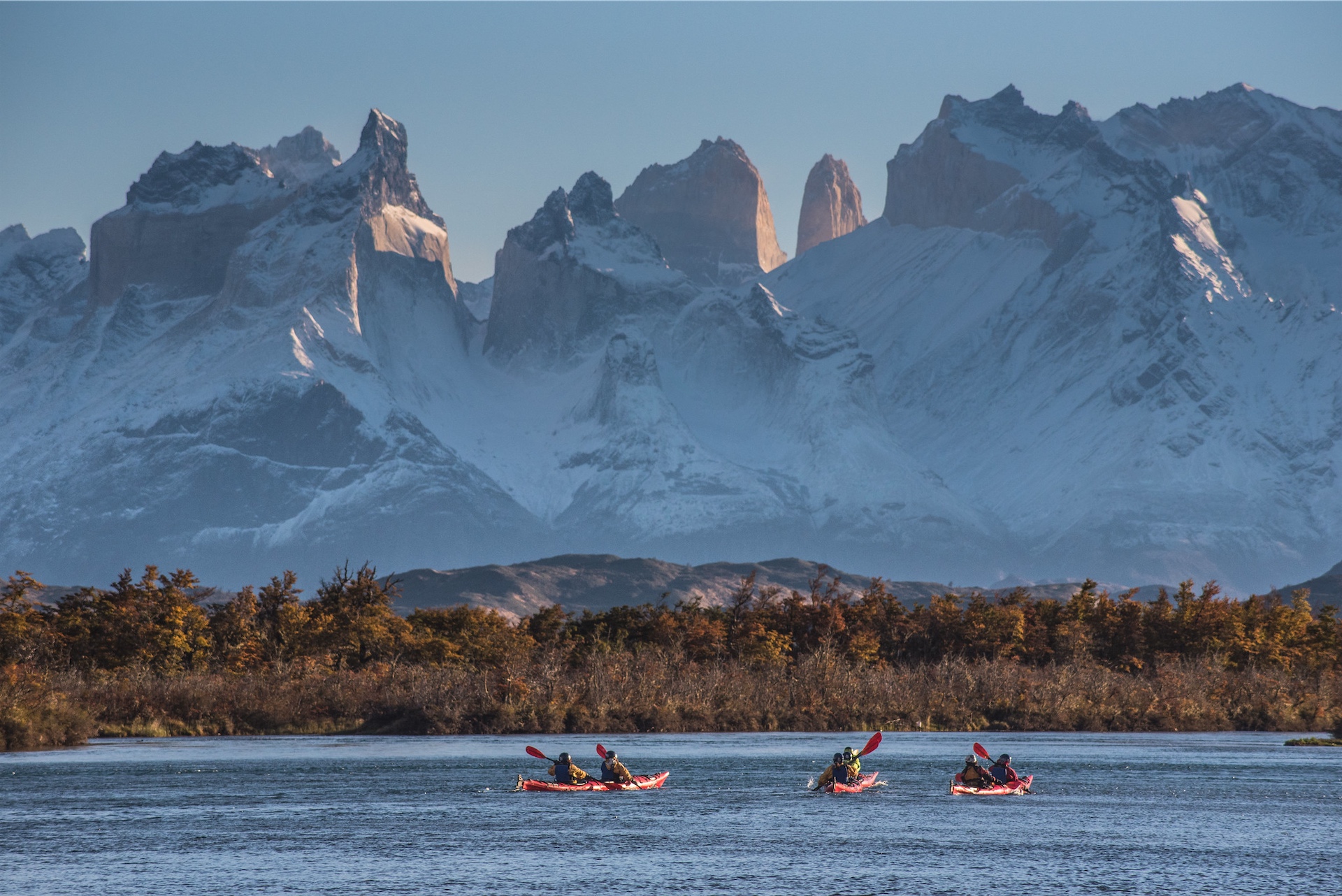
Beyond the W Trek, the program list runs across the wider park: cultural excursions, wildlife observation, photography, multi-day trekking, kayaking, and horseback riding. Children over six are welcome on the programs that suit them. The daily pace is set by what the weather decides, which is itself part of the point.
EcoCamp recommends booking at least six months in advance.
WHAT ECOCAMP HOPES GUESTS TAKE HOME
The hope, in Siel’s telling, is that a stay at EcoCamp does something beyond the four or five nights spent inside the dome.
“We hope our guests enjoy a break from everyday distractions and experience a true reconnection with nature and others,” she says. “We also hope they feel inspired by the messages our guides share, not only about the local flora, fauna, culture, and history, but also about the importance of protecting nature.”
The last hope is the longest reach. EcoCamp wants the sustainability decisions that organize its own operation to show up, in some smaller form, in the lives of the people who pass through it.
“We hope that our lodge’s sustainability initiatives, highlighted during our daily EcoTour, spark ideas they can bring into their own lives,” Siel says.
“We are the world’s first geodesic dome hotel and the only eco-lodge in the park offering multi-day W Treks in our style.”
— Siel Debouver, PR and Content Manager at EcoCamp Patagonia

(1) Where is EcoCamp Patagonia located?
EcoCamp Patagonia sits at the edge of Torres del Paine National Park, in the Magallanes and Chilean Antarctica region of Chilean Patagonia. The lodge is reached from Punta Arenas International Airport (PUQ) via a scenic overland transfer, typically arranged in advance through the lodge.
(2) How do I get to EcoCamp Patagonia?
Most guests fly to Punta Arenas International Airport (PUQ) and connect via a guided overland transfer organized by EcoCamp, which combines road travel and park entry coordination. Independent driving is possible but not recommended for first-time visitors to Torres del Paine.
(3) What is a geodesic dome at EcoCamp Patagonia?
A geodesic dome is a structure made of triangular panels that distribute load and pressure evenly across the frame, which makes the building aerodynamic, energy efficient, and able to withstand sustained Patagonian wind. EcoCamp opened in 2001 as the world’s first geodesic dome hotel and was inspired by the dome shelters of the Kawesqar, the Indigenous people of southern Patagonia, combined with the comfort of African safari tents.
(4) How many domes does EcoCamp Patagonia have?
EcoCamp Patagonia has thirty-three sleeping domes and eco-cabins across multiple categories, plus a yoga dome and a community dome housing the restaurant and bar, all connected by wooden walkways.
(5) When is the best time to visit EcoCamp Patagonia and Torres del Paine?
EcoCamp operates between October and April. Spring (October to November) brings wildflowers and fewer crowds. Late summer (February to March) brings longer daylight, clearer skies, and the warmest hiking conditions. The lodge is closed in the southern winter.
(6) How sustainable is EcoCamp Patagonia?
EcoCamp draws about seventy-five percent of its electricity from four micro-hydro turbines powered by a nearby river, with another fifteen percent from solar panels and the remaining ten percent from a gas generator. The domes use composting toilets, with the resulting compost used to enrich the soil. Food is sourced largely from local suppliers, leftovers are recycled through a comprehensive waste management system, and a daily EcoTour walks guests through the lodge’s operations.
(7) What is the W Trek at EcoCamp Patagonia?
The W Trek is a four to five day hiking route through the most iconic sections of Torres del Paine National Park, named for the W shape it traces between the three granite arms of the Paine Massif. EcoCamp is the only eco-lodge inside the park offering the W Trek as a guided multi-day program with porter support and some nights back at camp between hiking days.
(8) Is EcoCamp Patagonia family-friendly?
Yes. Children over six are welcome at EcoCamp Patagonia on the programs that suit their age and fitness.
(9) How far in advance should I book EcoCamp Patagonia?
EcoCamp recommends booking at least six months in advance, particularly for the high season between November and March.




Subscribe
Enjoy the read?
Get unique stays, hidden gems, and mindful travel tips delivered straight to your inbox—no spam, just wanderlust.
Other Stories


Property Spotlights
The Yard Hotel: A Seven-Room Stay in an 1880s Istanbul Consulate, Built on the Philosophy of Removing the Unnecessary


Property Spotlights
Hotel Hubertus: A Mountain Retreat Suspended Between Earth and Sky in the Dolomites

Property Spotlights
Maison Ceronne: A Country House That Refused to Become a Hotel