
The Yard Hotel: A Seven-Room Stay in an 1880s Istanbul Consulate, Built on the Philosophy of Removing the Unnecessary
May 20, 2026
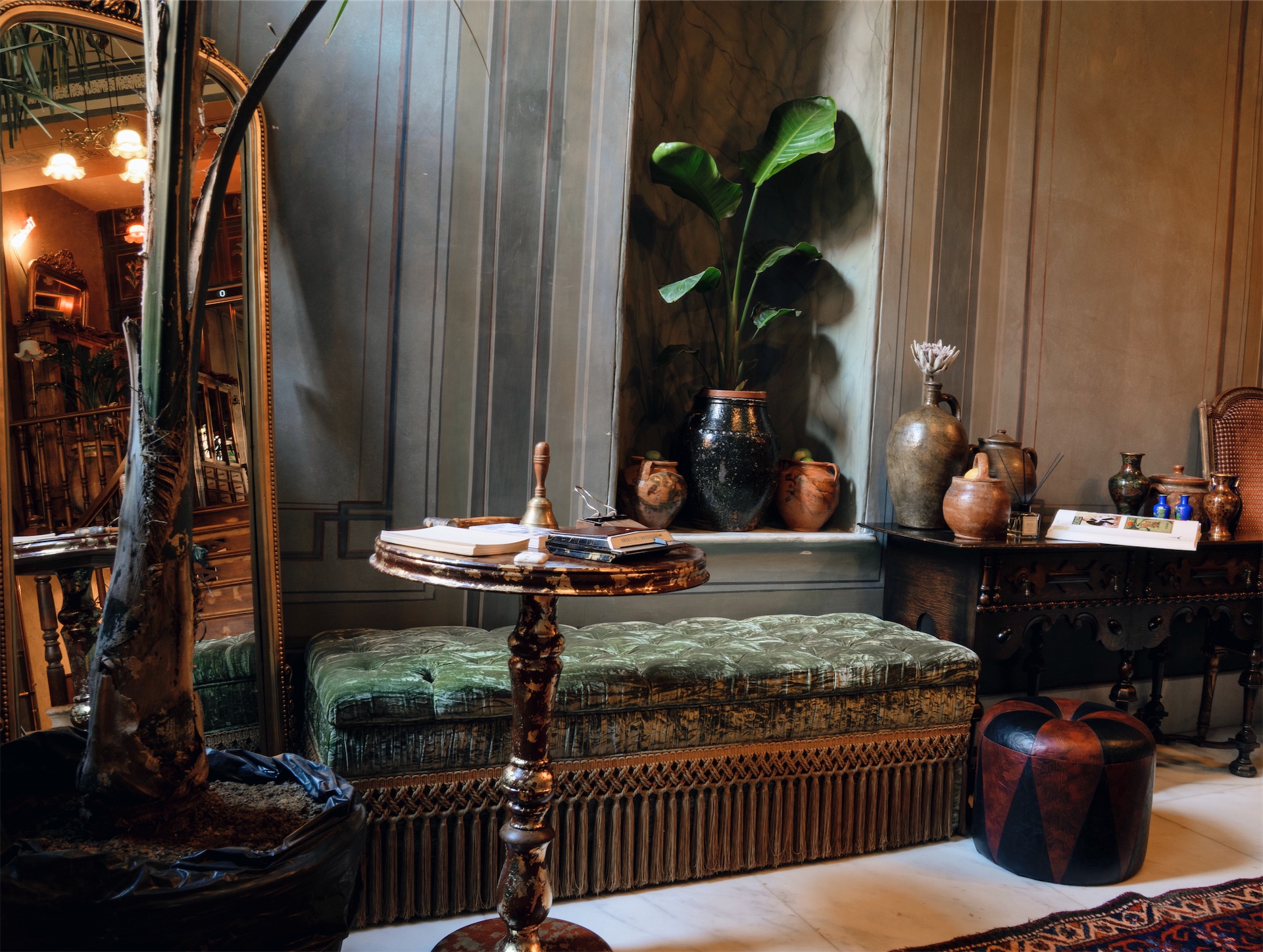

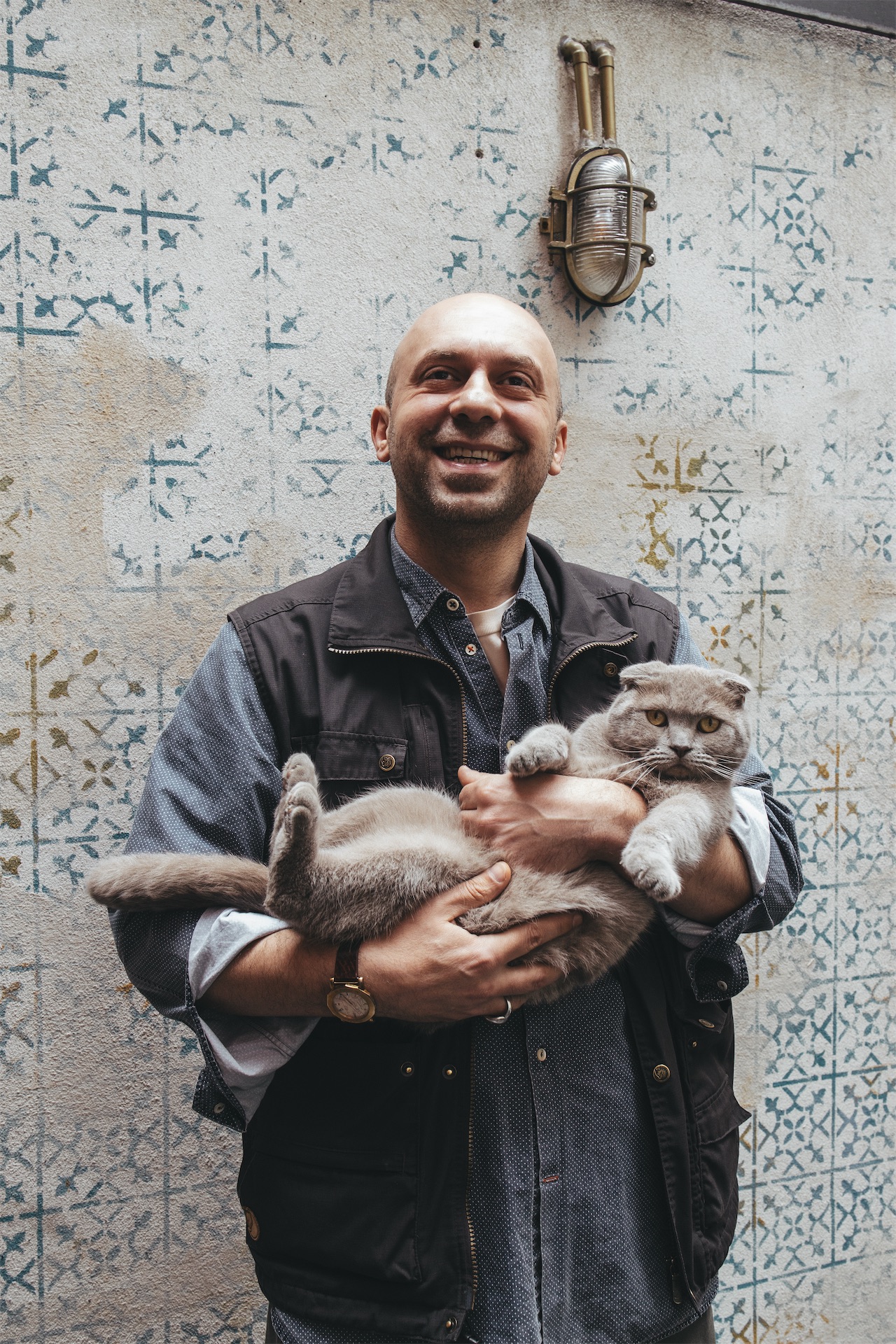
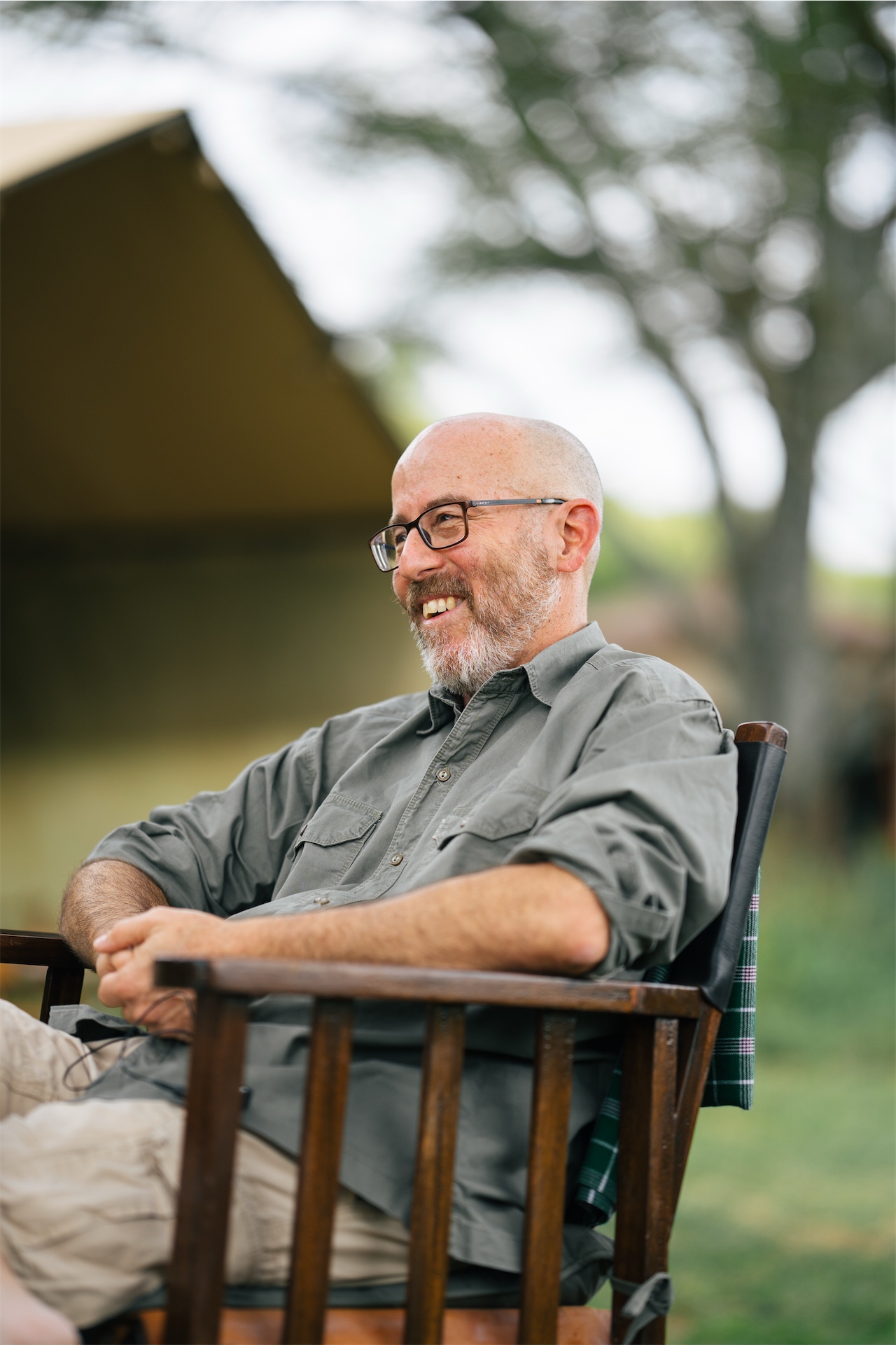
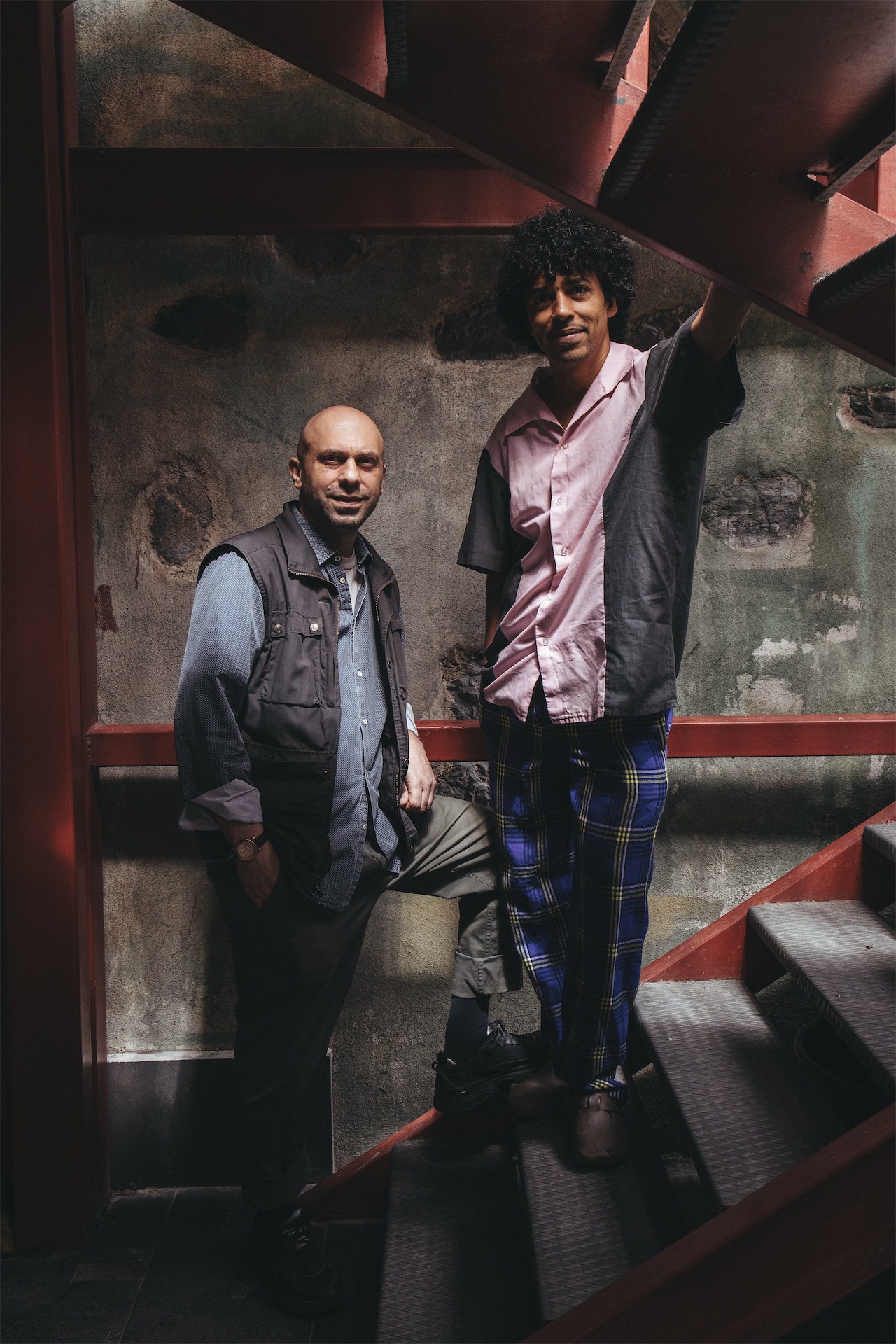
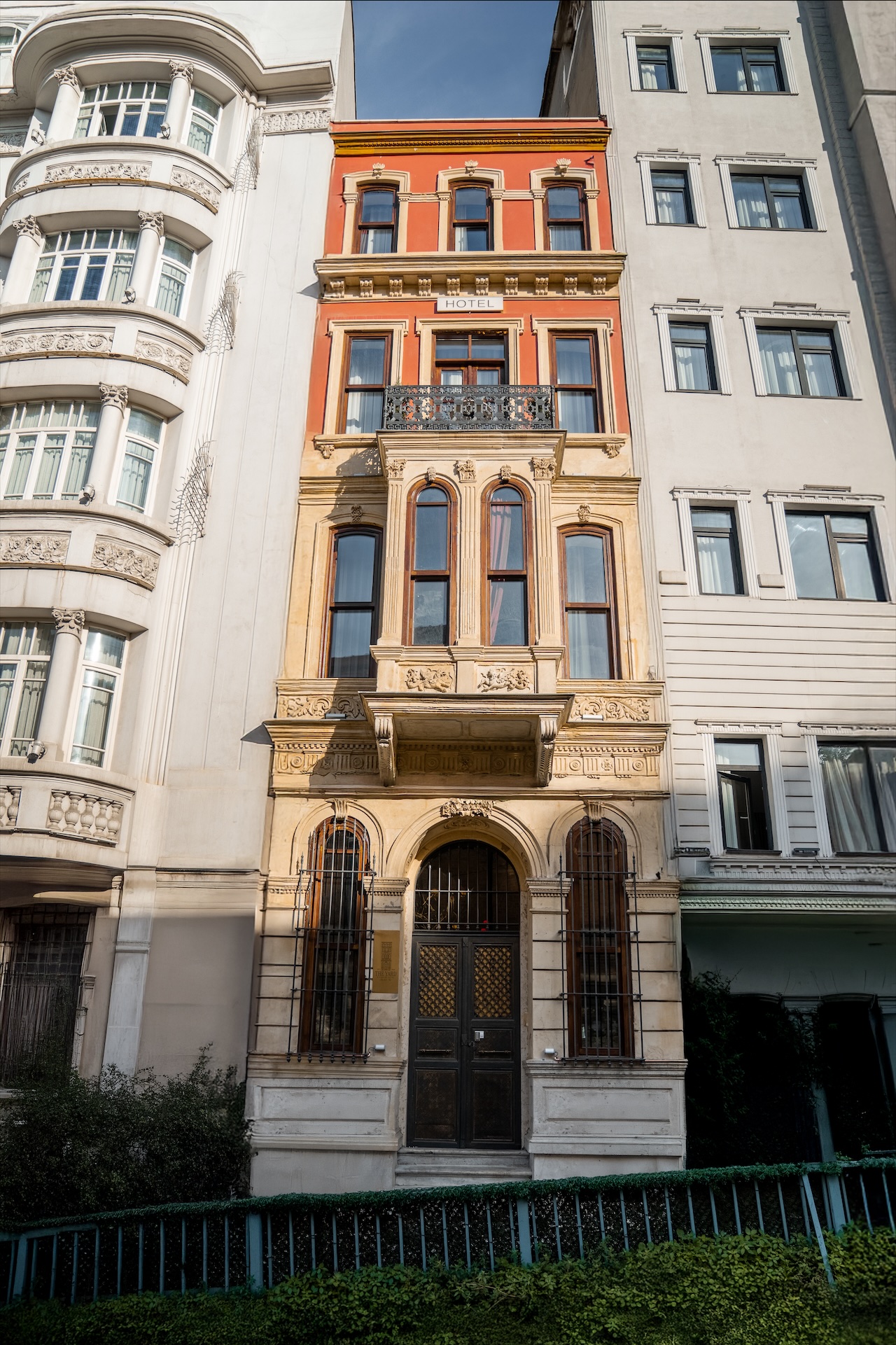
In the heart of Istanbul’s Pera, an 1880s consulate guesthouse has been quietly returned to life. The Yard Hotel sits on a calm side street off Istiklal Avenue, directly across from the British Consulate, with seven rooms, an inner courtyard, and a shared kitchen where coffee, tea, water, fresh fruit, homemade cookies, and brunch are laid out throughout the day. There is no reception desk. Guests arrive by personal door code and settle in at their own pace. The Yard is the work of Yusuf Çakır, an Istanbul-born architect with an unusual road behind him, including years designing handbags in Florence, and a hospitality philosophy he keeps describing in one sentence: the aim is not to offer more, but to remove what is unnecessary.
In the heart of Istanbul’s Pera, an 1880s consulate guesthouse has been quietly returned to life. The Yard Hotel sits on a calm side street off Istiklal Avenue, directly across from the British Consulate, with seven rooms, an inner courtyard, and a shared kitchen where coffee, tea, water, fresh fruit, homemade cookies, and brunch are laid out throughout the day. There is no reception desk. Guests arrive by personal door code and settle in at their own pace. The Yard is the work of Yusuf Çakır, an Istanbul-born architect with an unusual road behind him, including years designing handbags in Florence, and a hospitality philosophy he keeps describing in one sentence: the aim is not to offer more, but to remove what is unnecessary.
AN UNLIKELY PATH FROM FLORENCE HANDBAGS TO PERA HOSPITALITY
Yusuf grew up around construction. His family profession was building, and although his father passed away when Yusuf was eighteen, the standards he set had already been absorbed.
“During the short time I spent with him,” Yusuf says, “I learned a lot about what it means to build good buildings.”
He and his brother continued the family work together after their father’s death. Yusuf stayed on the construction side. He liked being on the sites, inside the buildings, watching the work take shape.
“Whatever work I was doing,” he says, “I always tried to do the best possible version of it, without thinking only about commercial profit.”
In 2011 he left it behind for a while. He moved to Italy, lived between Milan and Florence, and started buying and selling luxury goods. From there he began designing handbags in Florence under the name Ada Munari. In 2015, the work was featured in ELLE Magazine.
“It was a beautiful period of my life,” Yusuf says, “but I never wanted to completely leave construction behind.”
He returned to Istanbul in 2016 and went back to building and selling apartments. The work paid, but it began to feel narrow.
“My mind was always focused on creating more unique living spaces,” he says. “The problem was that no matter how much effort or money you invested, every neighborhood had a certain sales limit. I wanted to create better buildings, but it was difficult to receive the true value of the work. I also did not want the things I built to have a short life. This is what pushed me toward restoring historical buildings.”
THE 1880S CONSULATE THAT WAS LEFT FOR DEAD
Yusuf was restoring a historical building for another investor when he came across the place that would become The Yard.
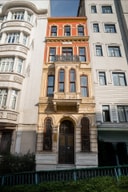
“The building was completely ruined, almost abandoned,” he says, “but it had a very strong character. It was originally built in the 1880s as a consulate guesthouse in Pera. Later, it was abandoned and left in ruins for many years.”
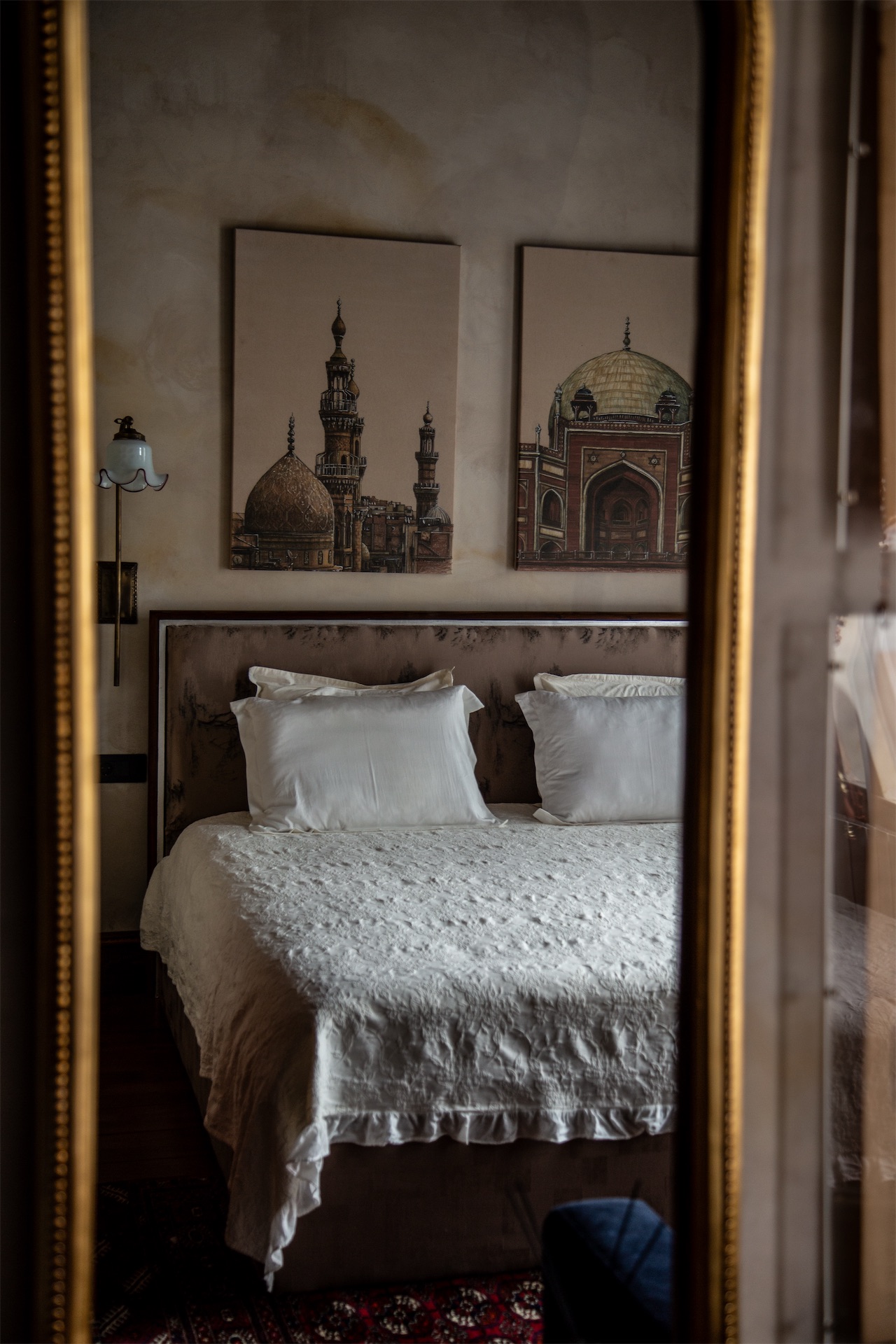
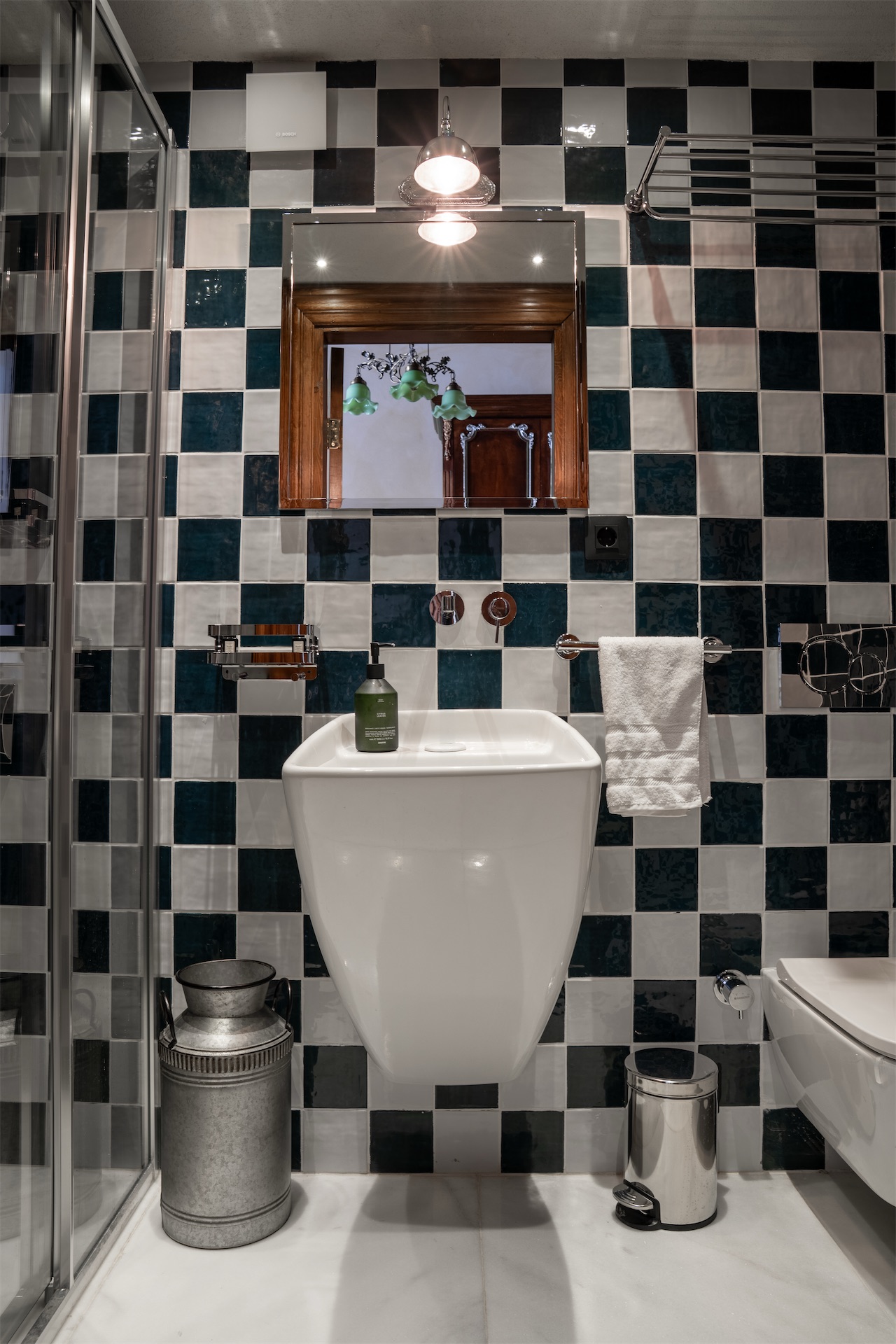
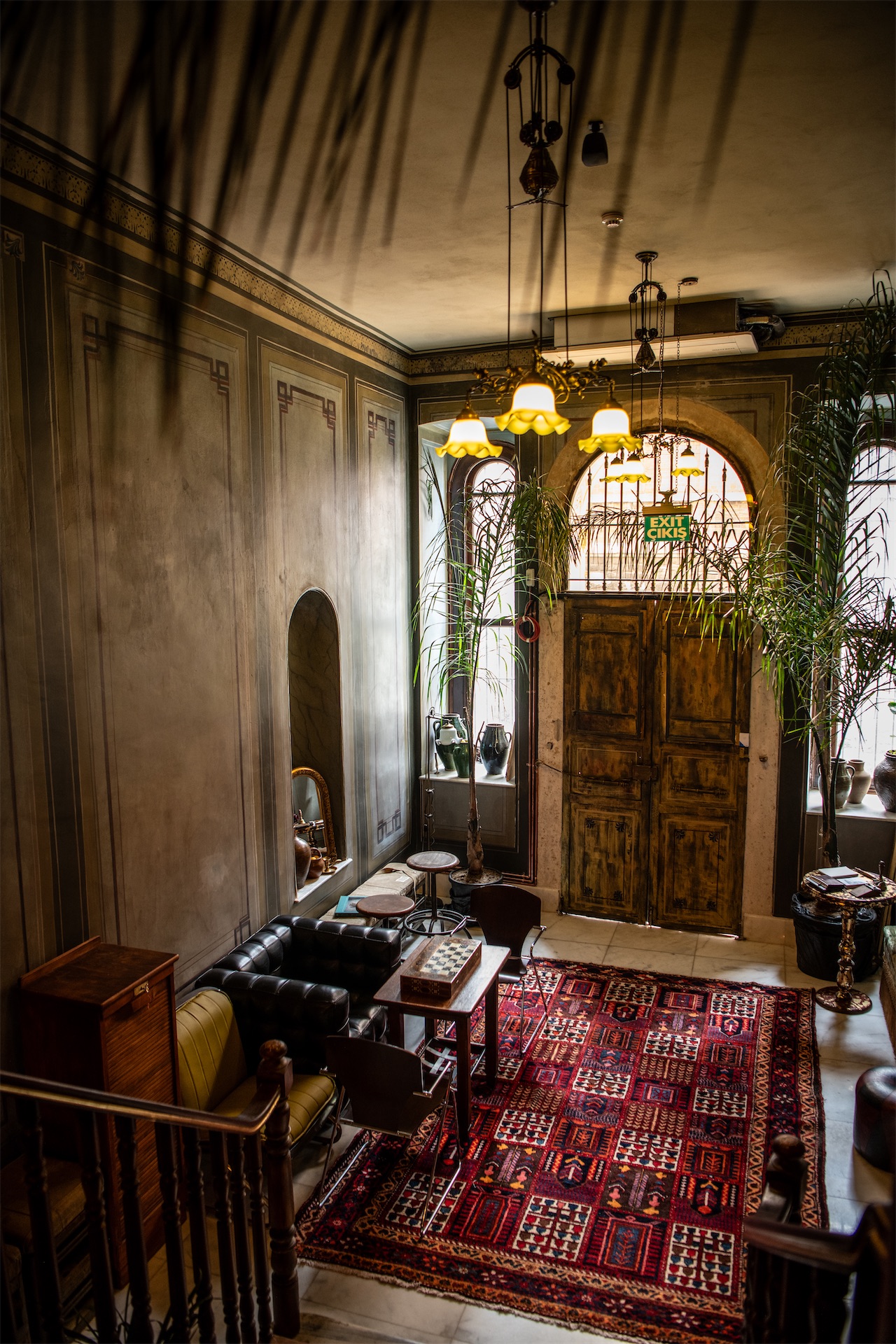
He acquired it at the end of 2021. The project and approval process took roughly fifteen months. Restoration started in the middle of 2023 and was completed in March 2025, with original wooden floors, ceilings, and structural elements preserved alongside the natural stone exterior. From there, Yusuf turned to the interiors: the furniture, the rugs, the lighting, the details inside every one of the seven rooms.
By December 2025, the building was fully ready. Yusuf opened around New Year for a week, as a private test, then closed for about a month to finish the things he was not satisfied with. The Yard officially opened in February 2026, almost four and a half years after the building had first been acquired.
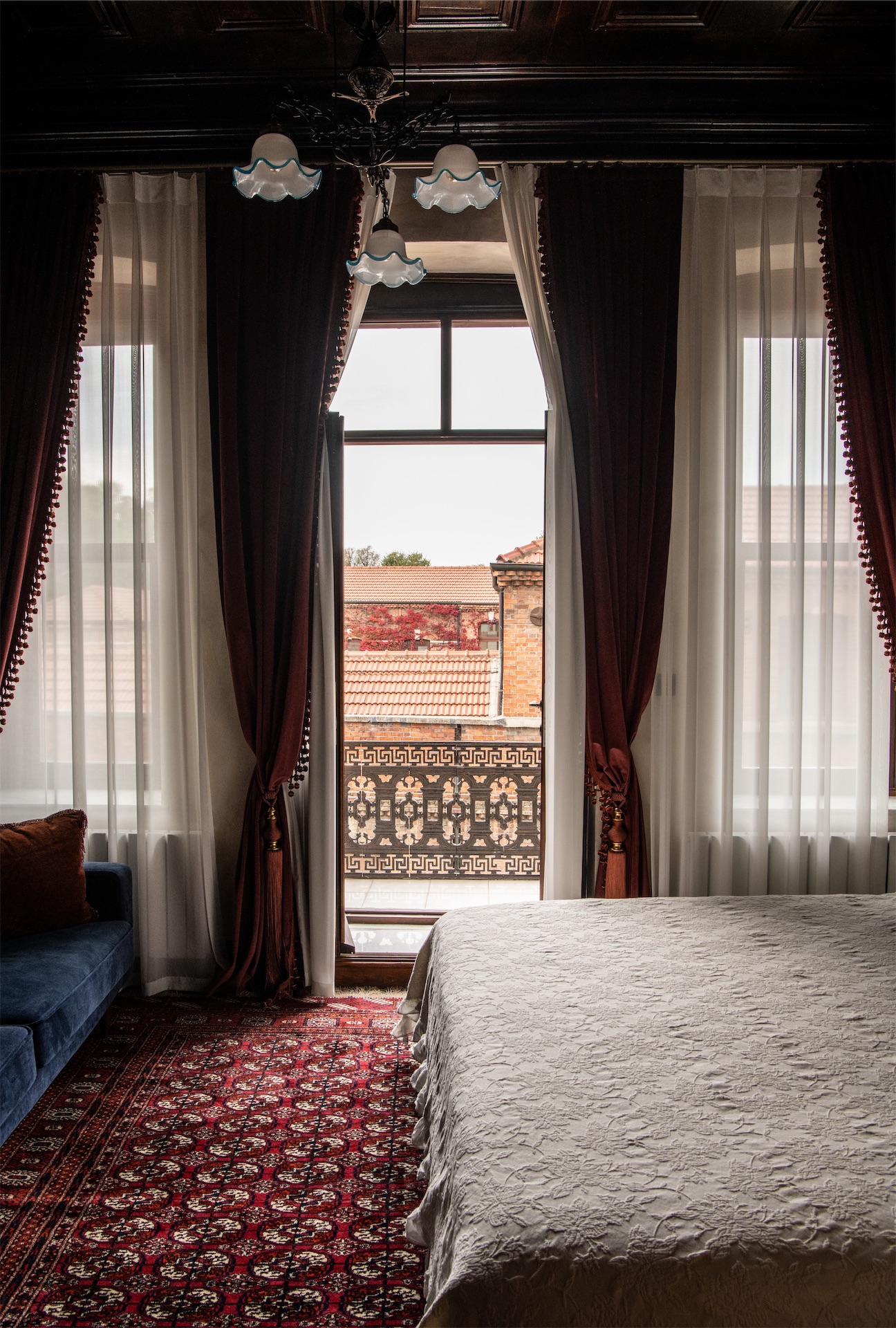
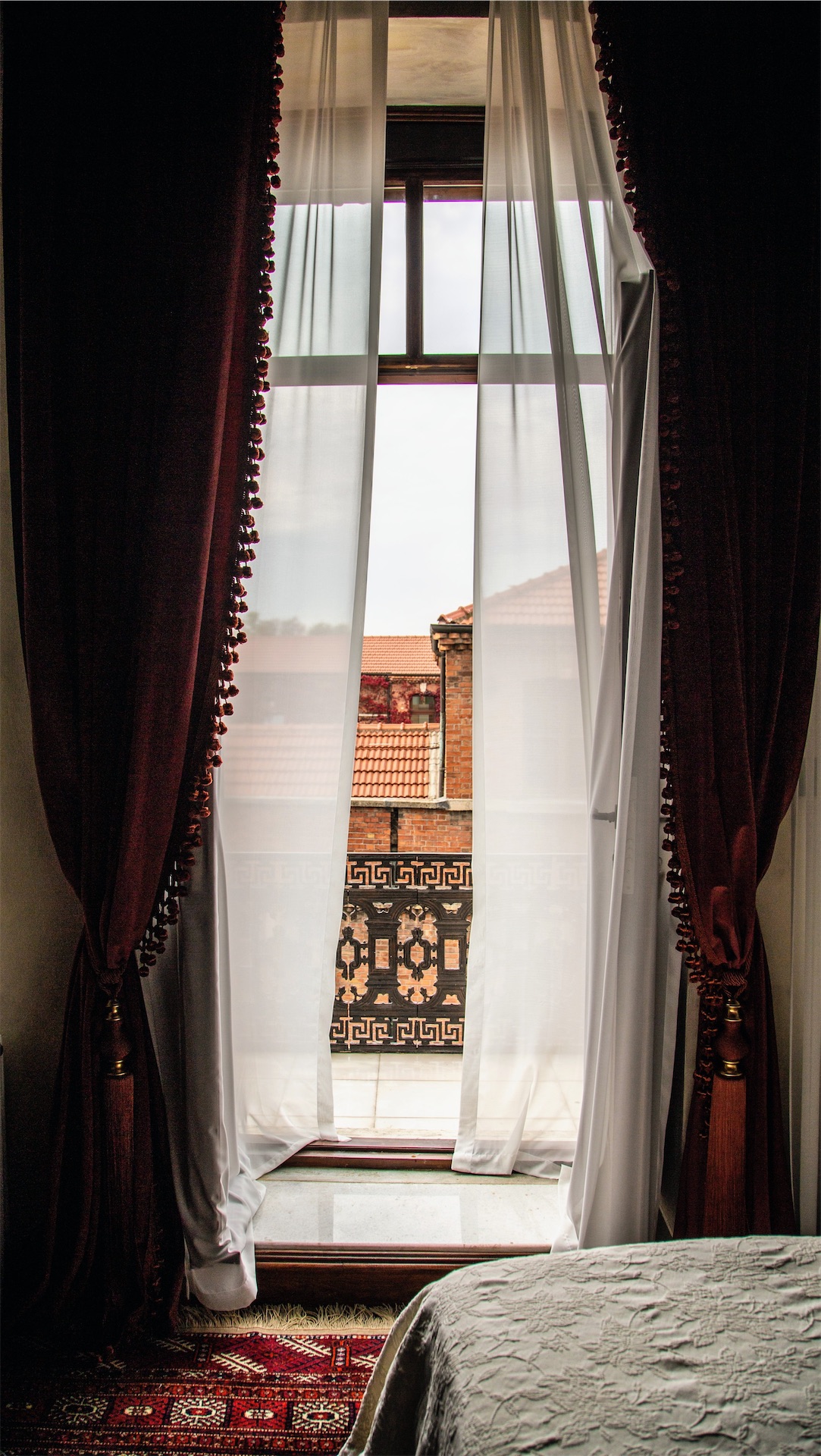
The seven rooms are individually designed, sized between thirty and thirty-four square meters, with three facing the inner courtyard and four facing the street. Several open onto private balconies. Ceilings reach up to 390 centimeters in the most generous rooms, with full-height windows pulling in the Pera light. Interiors are built around natural materials and hand-woven silk and wool rugs. Yusuf runs the hotel with Moises Gallavotti, a friend from his years in Milan, as the on-site manager.
THE HOTEL THAT INTENTIONALLY IS NOT A HOTEL
The first thing Yusuf will tell anyone about the place is what it is not.
“We do not come from a hospitality background,” he says. “In fact, we intentionally did not want to create a traditional hotel system. We do not want a place where people constantly feel they are spending money every minute. Water costs money, coffee costs money, snacks cost money. We did not want that kind of atmosphere.”
The decision to remove the reception desk follows from that.
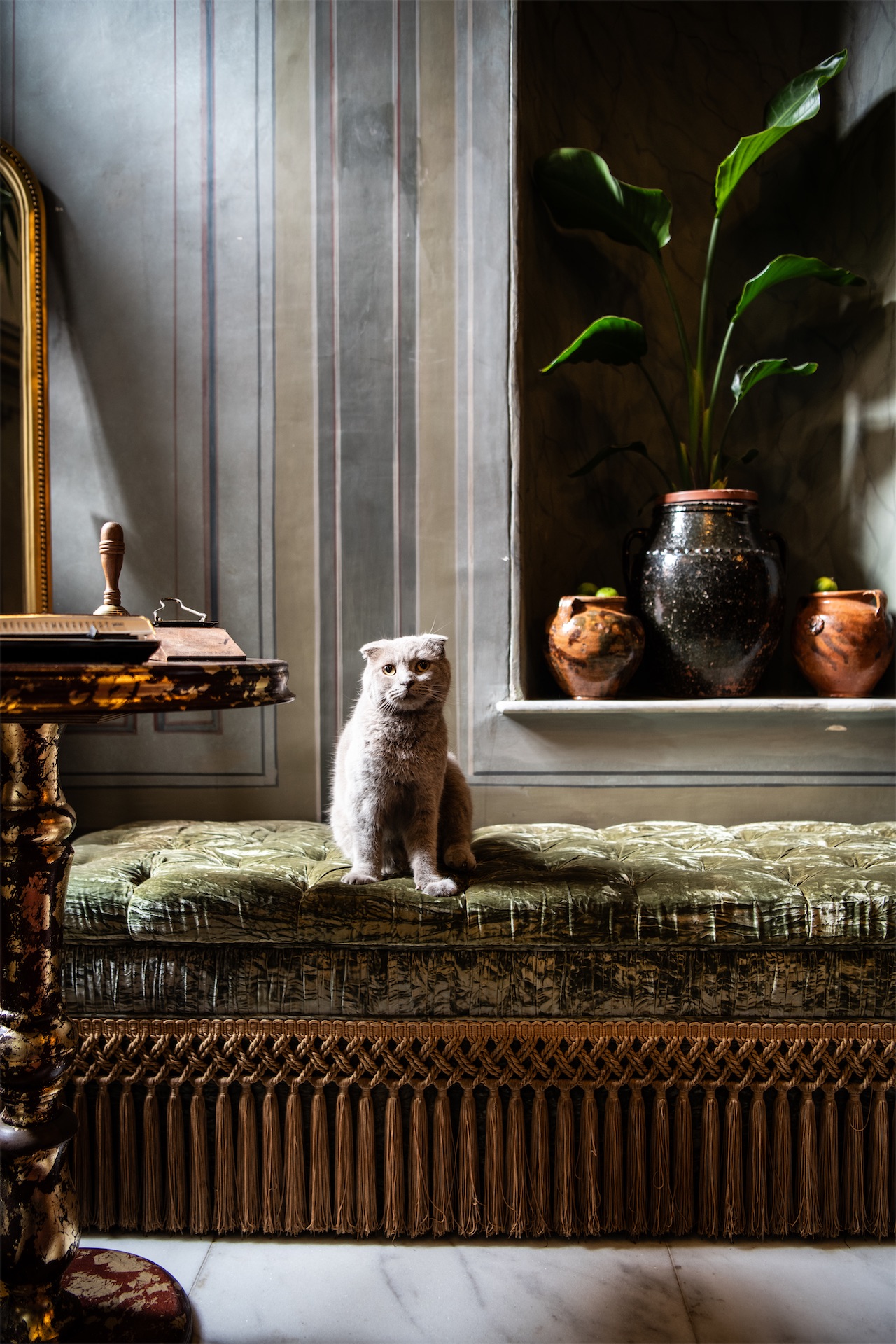
“This is also one of the reasons why we do not have a traditional reception,” Yusuf says. “We do not want people to feel like they are inside a typical hotel. We want guests to feel a sense of belonging, almost as if the entire building is their own home.”
In place of the reception is the kitchen.
“Yes, we sell rooms,” he says, “but after that we want guests to feel at home during their time here. Whatever we have, we try to share in the best way possible. Coffee, tea, water, brunch, cookies, desserts, fruit, depending on the day, whatever we have available, we try to offer the best quality we can. Because we believe a person’s value should never depend on how much money they spend.”
The cooking sometimes goes a step further. Yusuf and Moises occasionally cook with their guests when the moment is right. They are careful never to dress it up as part of the offer.
“We try very carefully to keep it natural and sincere,” Yusuf says, “because people can feel when something is genuine.”
“Our aim is not to offer more, but to remove what is unnecessary.”
— Yusuf Çakır, Owner of The Yard Hotel
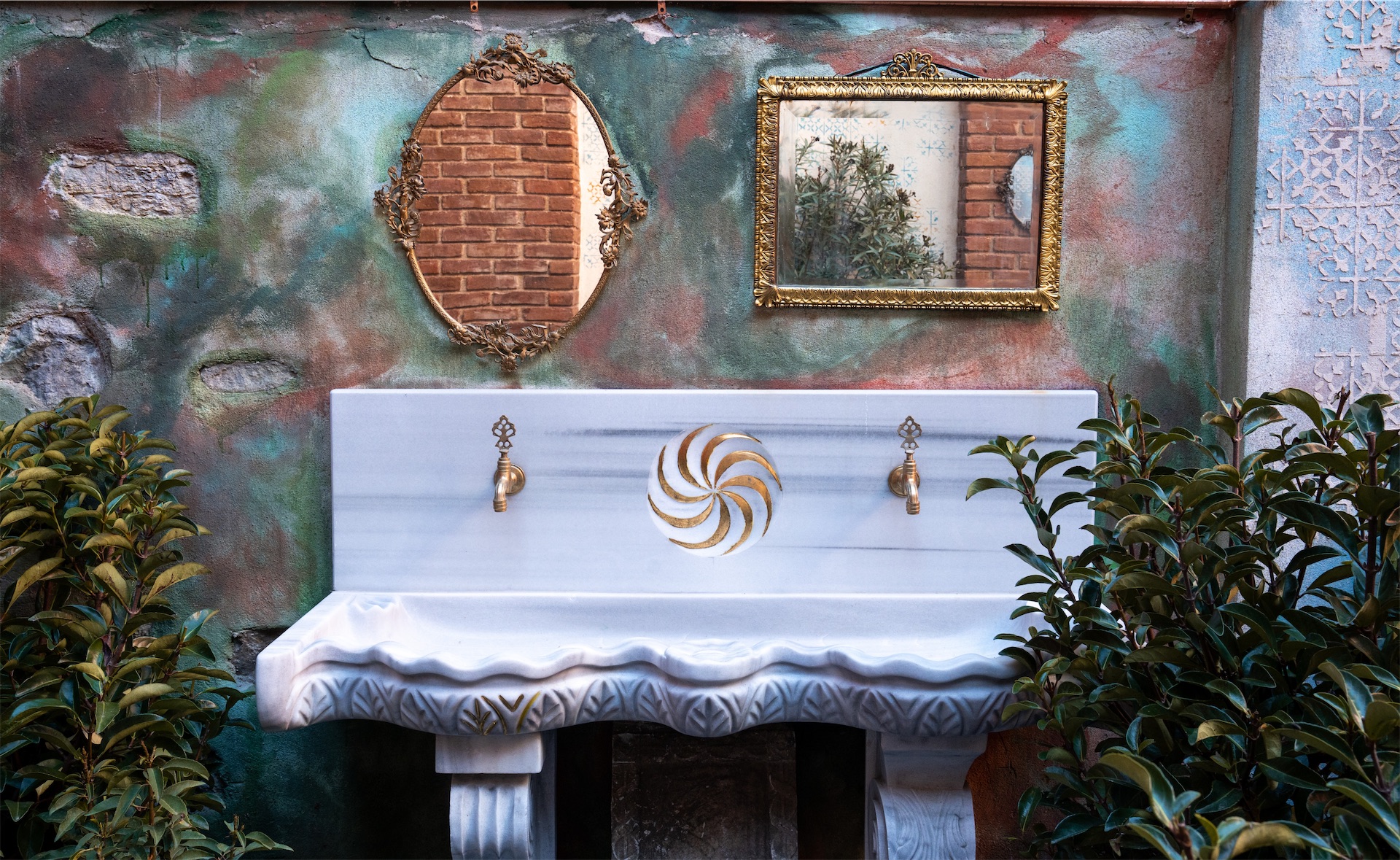

THE PERA YUSUF SEEDS GUESTS WITH
One thing The Yard does, that most hotels do badly, is help guests use the city. Yusuf and Moises will recommend, connect, and book on a guest’s behalf, and they do it with the unguarded specificity of someone who actually eats in these places.
Yusuf organizes his recommendations by time of day. For a midday meal in the local tradesmen style, Nato Lokantası in Karaköy. For traditional Turkish food, he is loyal to Hünkar Lokantası in Nişantaşı. For dinner, Lokanta 1741 in Cağaloğlu. For lahmacun and kebab at almost any hour, Pera Antakya Sofrası, three minutes from the front door in Asmalımescit. For fish, Sait Restaurant at Galataport, or the small fish market restaurants along the waterfront in Karaköy.
The recommendations are part of the same principle that runs the kitchen.
“If a guest is researching a specific topic, we genuinely enjoy trying to connect them with the right people or experts in the city,” Yusuf says. “We do not want The Yard to be only a place to sleep.”
WHAT THE YARD ASKS IN RETURN
The Yard sets a particular tone, and asks guests to meet it. Yusuf describes the underlying frame as an apartment block of considered neighbors.
“It is important to remember that this is not a completely isolated house,” he says. “Just like in an apartment building, neighbors should respect and think about each other, and we expect the same approach from our guests.”
Hospitality at this scale, as he describes it, is also a particular kind of weight.
“Hospitality is an incredibly difficult profession, but also a very beautiful one,” Yusuf says. “It is not a job where you can relax even for one day. Once a guest enters the building, you feel responsible for their comfort, safety, and well-being. The idea of leaving a guest disappointed is probably the thing that would upset us the most.”
Asked what The Yard has given him in return, he answers without hesitation.
“Through this place, we meet incredible people from all around the world,” Yusuf says. “You become friends with people from completely different cultures, and this gives you a much more positive perspective on life. Honestly, this is something that cannot really be measured with money.”
“We try very carefully to keep it natural and sincere, because people can feel when something is genuine.”
— Yusuf Çakır, Owner of The Yard Hotel

(1) Where is The Yard Hotel located?
The Yard Hotel sits on a quiet side street off Istiklal Avenue in the Pera district of Beyoğlu, Istanbul, directly across from the British Consulate and a short walk from the Galata Tower.
(2) How do I get to The Yard Hotel?
Istanbul Airport (IST) is around forty-five kilometers northwest of Pera, roughly a forty-five minute drive by taxi or private transfer in light traffic. Sabiha Gökçen Airport (SAW) on the Asian side is an alternative, often for European low-cost carriers. The historic fabric of Pera means there is no direct vehicle access to the front door; guests are dropped at the nearest accessible point and walk the final stretch.
(3) How does check-in work without a reception desk?
Each guest is given a personal door code before arrival and can settle into the building at their own pace. Yusuf and Moises are usually on site and available, but there is no front desk and no formal check-in ritual.
(4) What is included in the room rate?
Coffee, tea, water, fresh fruit, homemade cookies, desserts, and a daily brunch are laid out in the shared kitchen throughout the day at no extra cost. The aim is to remove the constant sense of being charged for small things rather than to upsell the basics.
(5) Is The Yard Hotel family-friendly?
The Yard is best suited to independent adult travelers, couples, and solo travelers on a culture-led Istanbul trip. The seven-room scale and the apartment-style atmosphere reward quiet consideration of the other guests sharing the building.
(6) When is the best time to visit Istanbul and stay at The Yard?
Spring (April to June) and autumn (September to October) bring mild temperatures, clear skies, and the most pleasant walking weather. Summer is hot and Istiklal is at its most crowded. Winter is cool and atmospheric, with fewer tourists and the inner courtyard at its most contemplative.



Subscribe
Enjoy the read?
Get unique stays, hidden gems, and mindful travel tips delivered straight to your inbox—no spam, just wanderlust.