
Three Camel Lodge: Mongolia’s First Luxury Eco-Lodge, Built by Hand at the Foot of the Bulagtai
May 08, 2026
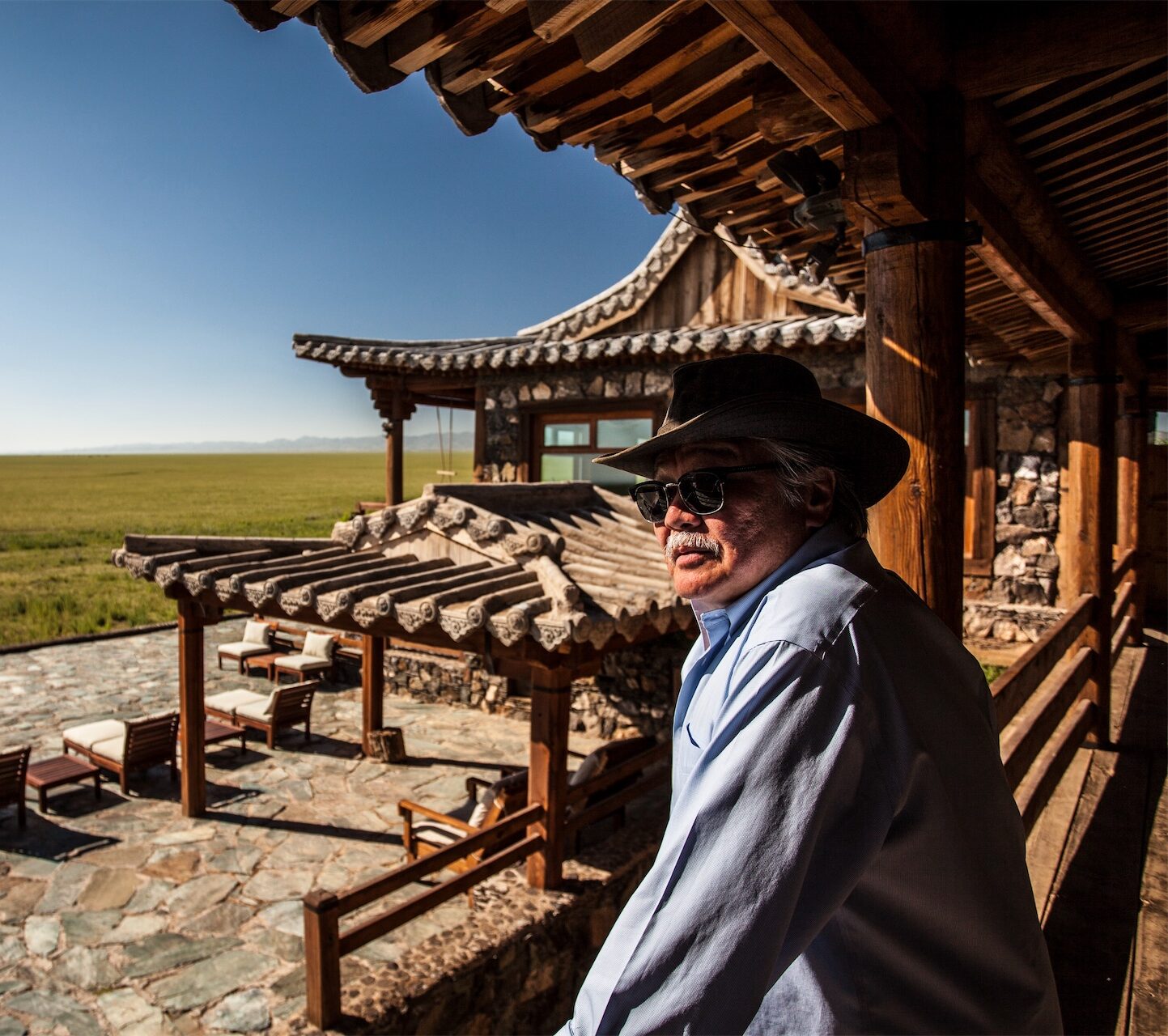
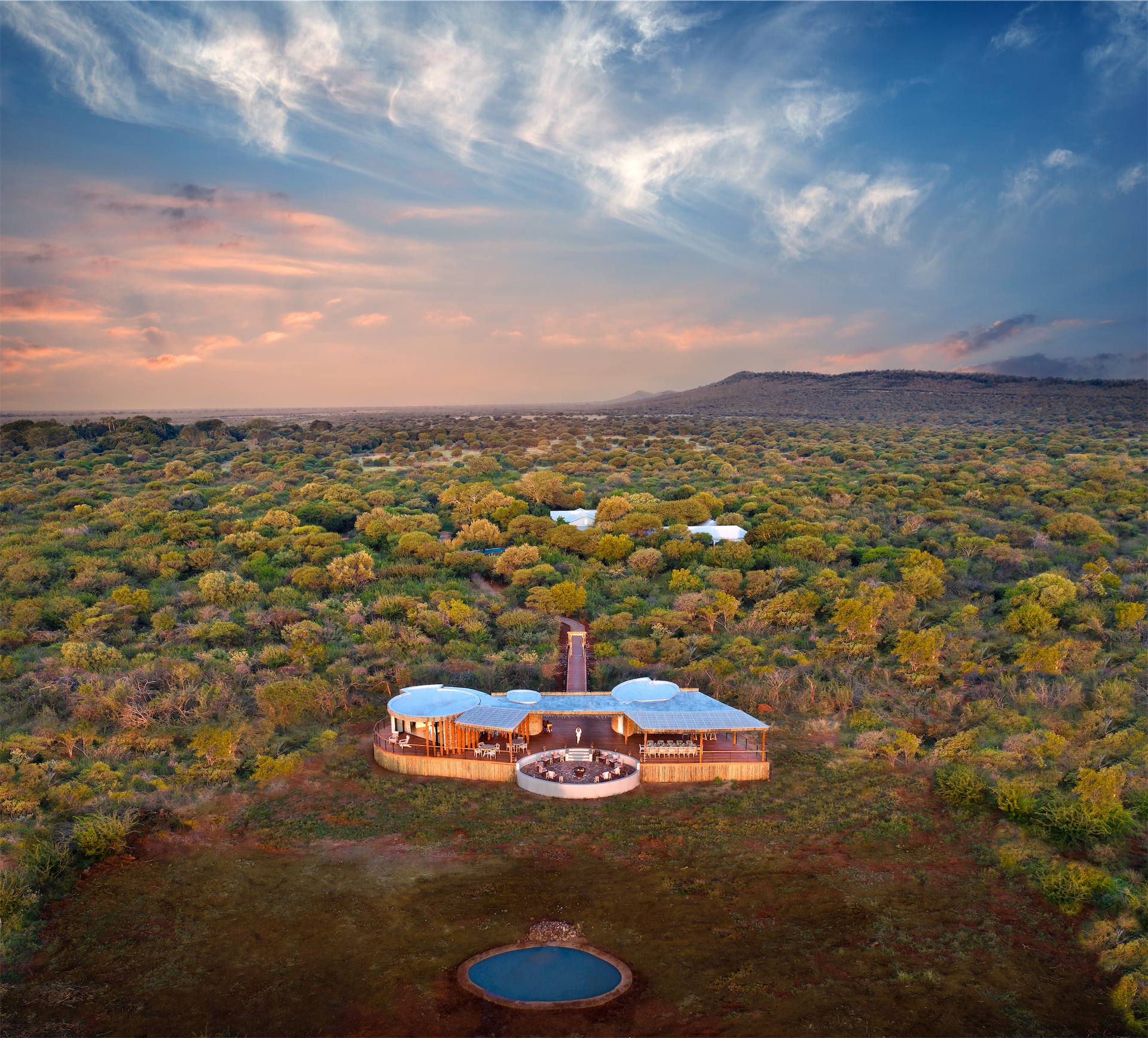
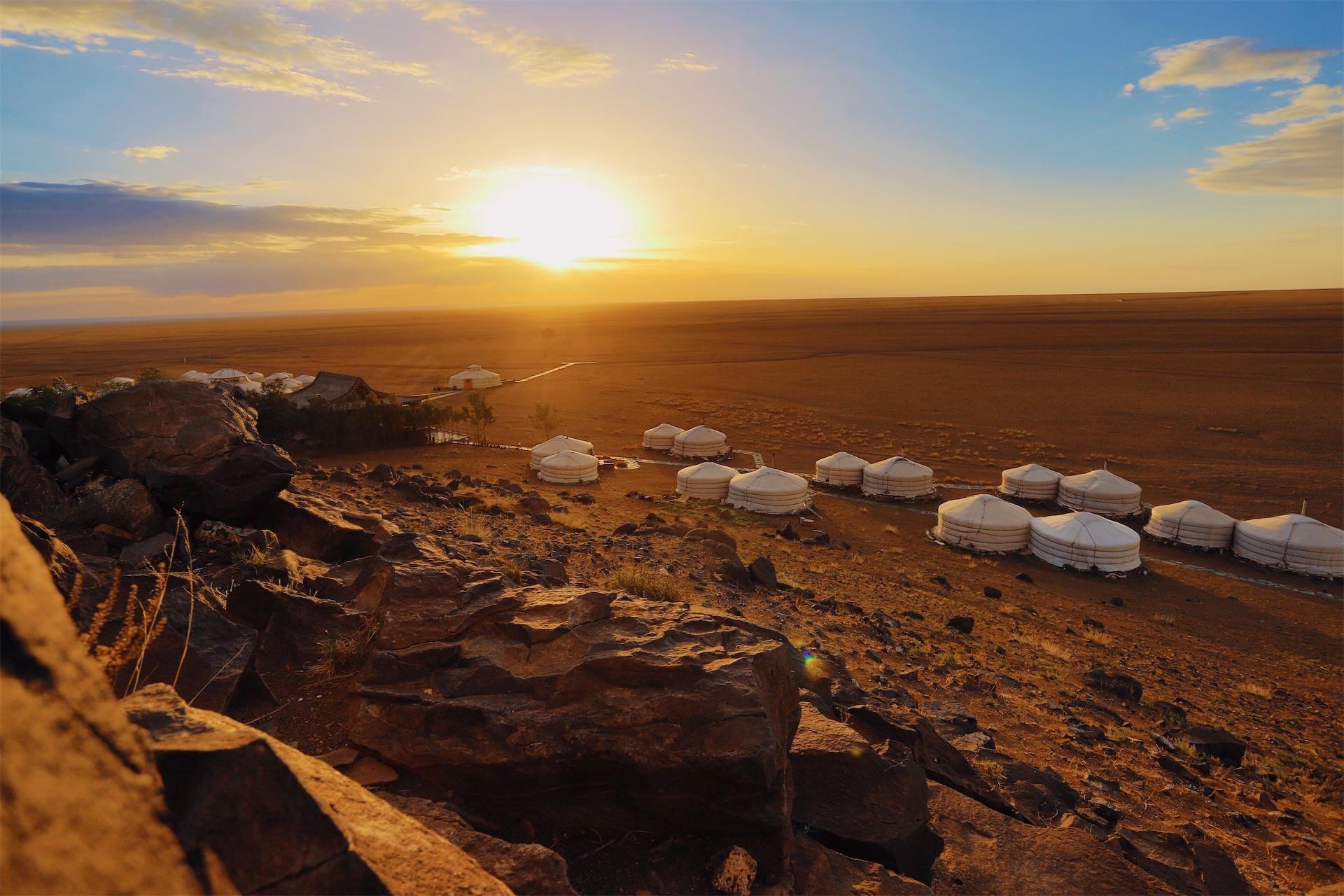
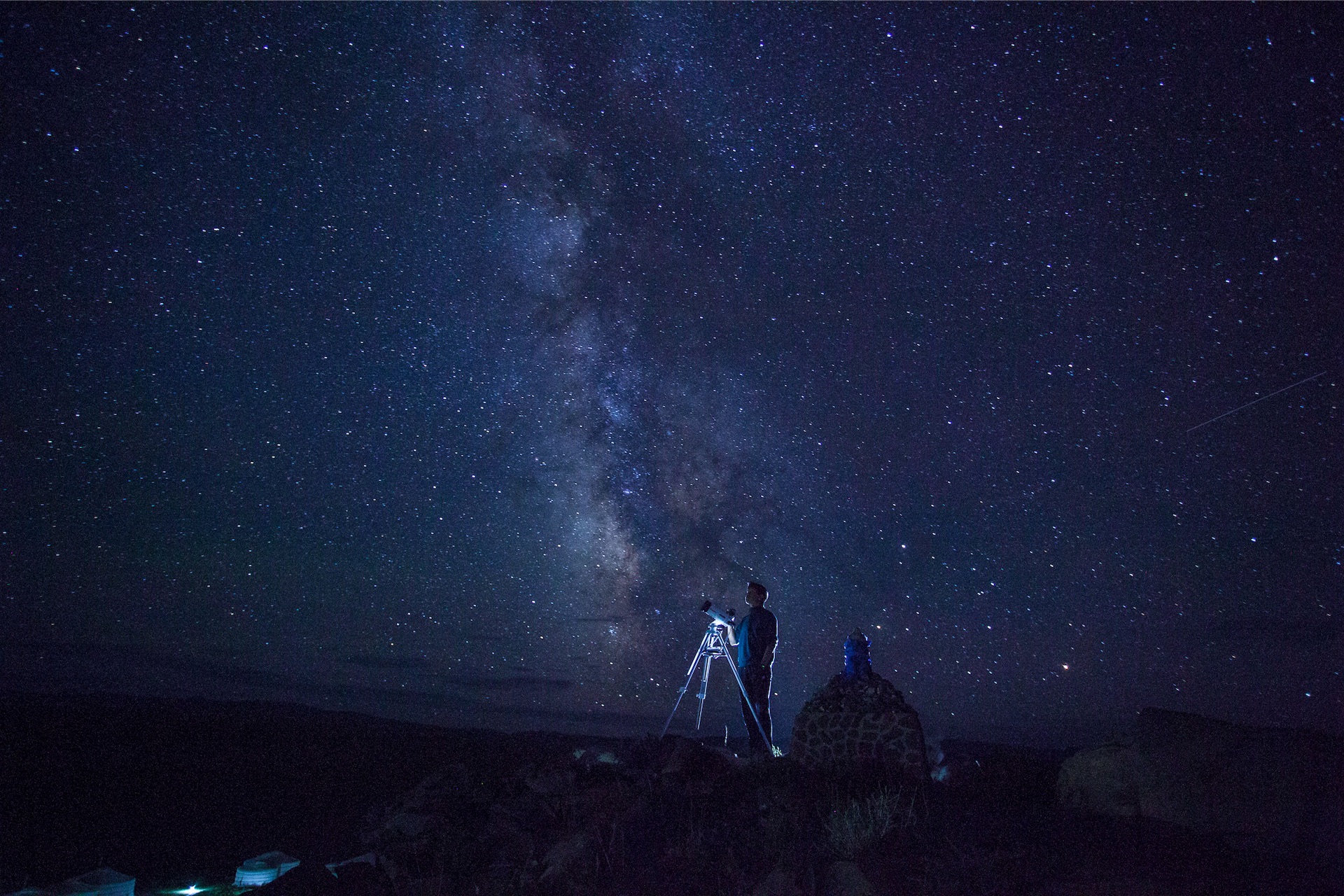
There is no internet at Three Camel Lodge, and that is the easy part. Cell signal stops a long way before you arrive. The nearest paved road is more than an hour back. The lodge sits at the foot of Bulagtai Mountain, in Mongolia’s southern Gobi, where the night sky is regularly counted among the darkest on Earth and the silence is the kind that takes a day to even register. Founded in 2002 by Mongolian-American Jalsa Urubshurow, Three Camel Lodge was the first luxury eco-lodge to open in Mongolia and remains one of the founding members of National Geographic Unique Lodges of the World. Forty handcrafted gers, a main lodge built in the style of a Mongolian Buddhist temple, a staff that is entirely Mongolian. Almost a quarter century in, it still feels like a place that belongs to the desert rather than to a brand.
There is no internet at Three Camel Lodge, and that is the easy part. Cell signal stops a long way before you arrive. The nearest paved road is more than an hour back. The lodge sits at the foot of Bulagtai Mountain, in Mongolia’s southern Gobi, where the night sky is regularly counted among the darkest on Earth and the silence is the kind that takes a day to even register. Founded in 2002 by Mongolian-American Jalsa Urubshurow, Three Camel Lodge was the first luxury eco-lodge to open in Mongolia and remains one of the founding members of National Geographic Unique Lodges of the World. Forty handcrafted gers, a main lodge built in the style of a Mongolian Buddhist temple, a staff that is entirely Mongolian. Almost a quarter century in, it still feels like a place that belongs to the desert rather than to a brand.
A KALMYK MONGOLIAN BUILDER WHO RETURNED HOME
“My story begins far from the Gobi Desert, in New Jersey, where I was born into the first Kalmyk Mongolian community in the United States,” Jalsa says. “My parents survived extraordinary hardships during World War II before immigrating to America, and their resilience shaped my outlook on life from an early age.”
Jalsa built his career in construction. The other thing he carried with him, all those years, were the stories his family told about Mongolia, the land of his ancestors. When the country opened to the world after its peaceful democratic revolution in 1990, he saw an opening.
“I saw an opportunity to reconnect with that heritage and to share Mongolia with travelers in a meaningful way,” he says. “That vision led me to found Nomadic Expeditions in 1992, pioneering luxury adventure travel to Mongolia at a time when few had considered visiting.”
Three Camel Lodge grew out of that journey. It opened ten years after Nomadic Expeditions, in 2002, as the first luxury eco-lodge in Mongolia.
“I wanted to create a place in the Gobi Desert that honors Mongolia’s nomadic traditions while offering travelers comfort and thoughtful hospitality,” Jalsa says. “More than a hotel, the vision was to create a gateway, an experience that connects people to the vast beauty of the Gobi and to the culture and communities that call it home.”
WHY THE LODGE WAS BUILT BY HAND, AND BY MONGOLIANS
The architectural decisions came early, and they were not abstract. Jalsa wanted the lodge to look as if it could only have been built where it stands.
“Inspired by traditional ger camps and Buddhist architectural principles, we designed the lodge to feel authentic to the landscape and culture,” he says. “Each ger is handcrafted by local artisans, and the main lodge was built using traditional techniques.”
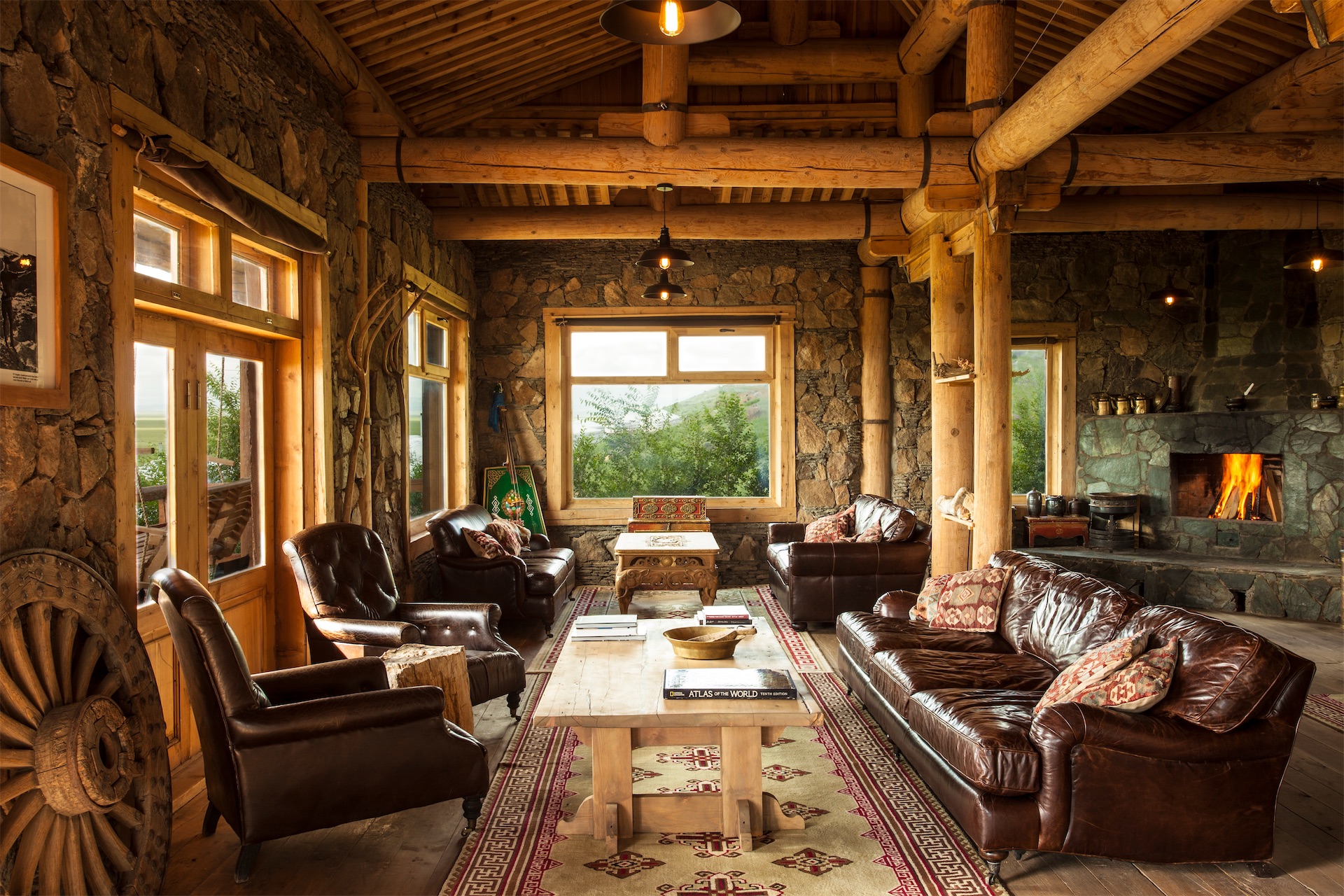
The main building draws on the soum style of rural Mongolian Buddhist temples. Roof tiles were hand-molded. Stone was quarried locally. The gers themselves were built using construction methods that have been passed down through generations of Mongolian families. The staff, by design, is entirely Mongolian.
“My background in construction and my Mongolian heritage came together in a single project,” Jalsa says. “The convergence of those two things is, in many ways, what Three Camel Lodge is.”
INSIDE THE GERS: FELT, CANVAS, AND A WINDOW TO THE STARS
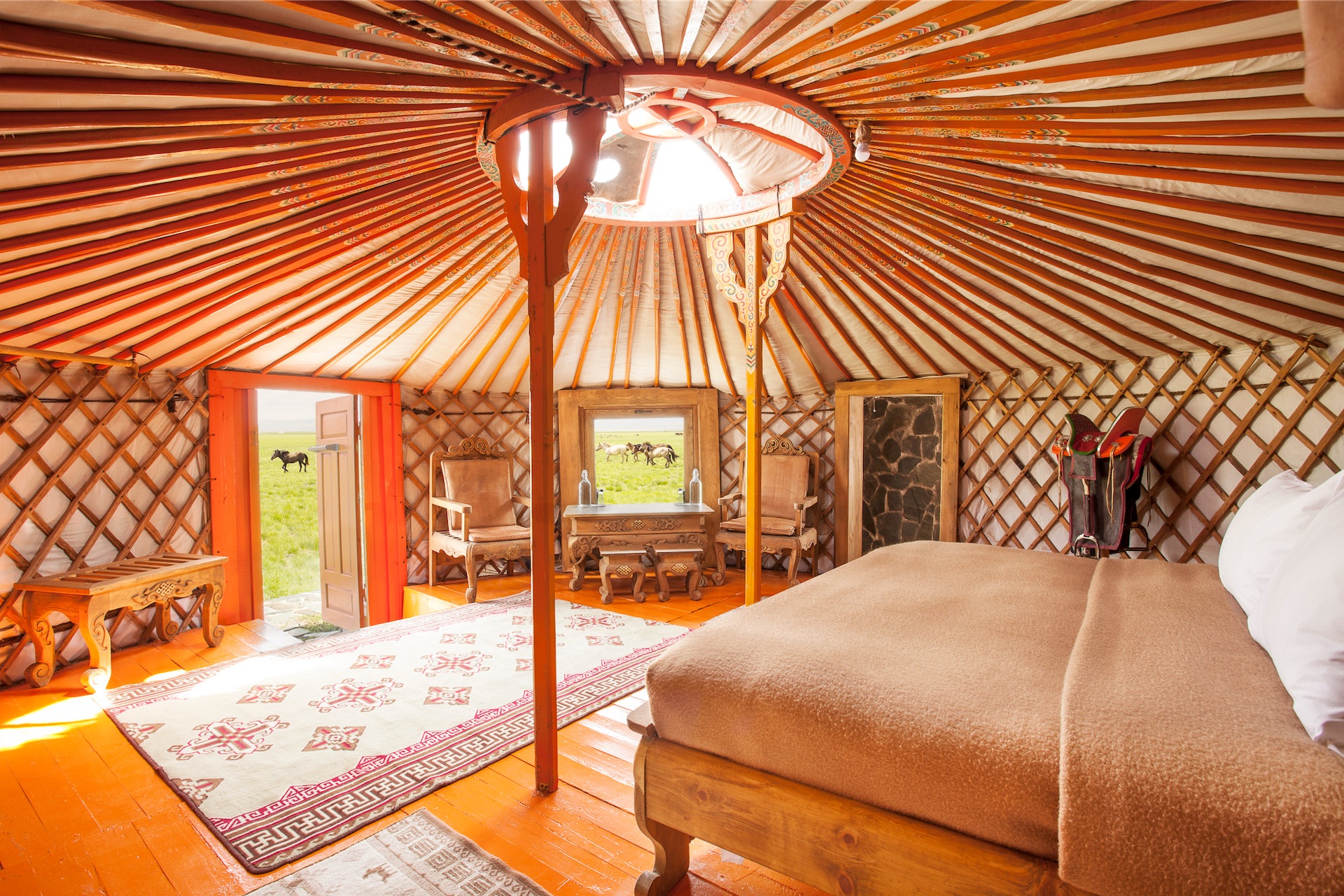
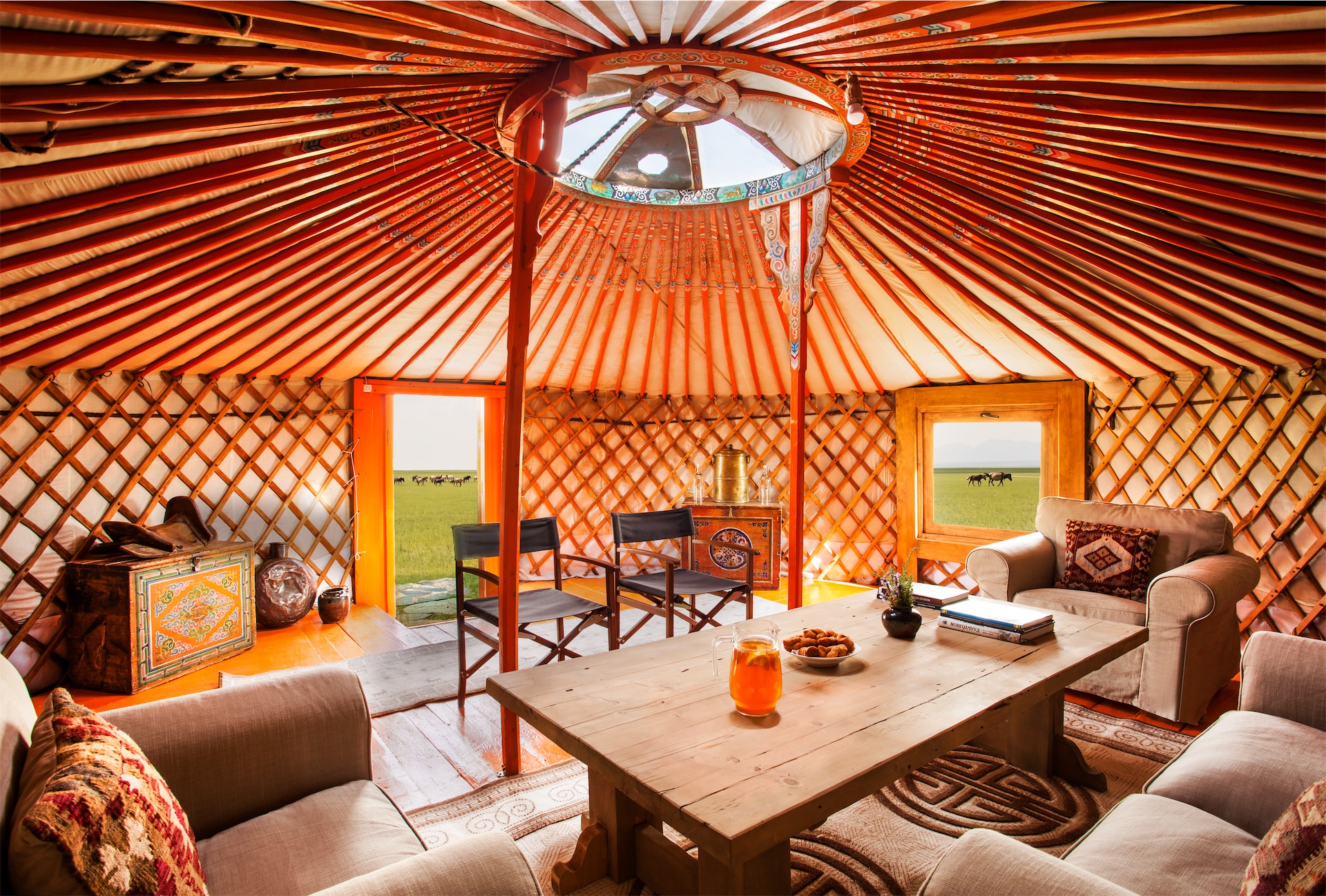
There are forty gers at Three Camel Lodge, including two family gers with interconnecting bedrooms. Each one is built on a latticed wood frame and covered in layers of felt and canvas, in the same tradition Mongolian nomads have used for centuries.
Inside, every ger has a wood stove for heating, hand-painted king or double beds, custom Mongolian furnishings, and a private bathroom with a shower. Each ger faces south, in keeping with Mongolian tradition. The central oculus, used historically as a sundial, doubles as a stargazing window directly above the bed.
There are no telephones in the gers, and no internet anywhere on the property. The omission is intentional. The desert outside the door is the program.
“More than a hotel, the vision was to create a gateway, an experience that connects people to the vast beauty of the Gobi and to the culture and communities that call it home.”
— Jalsa Urubshurow, Founder of Three Camel Lodge.
DAYS IN THE GOBI: CAMELS, FLAMING CLIFFS, AND HERDER FAMILIES
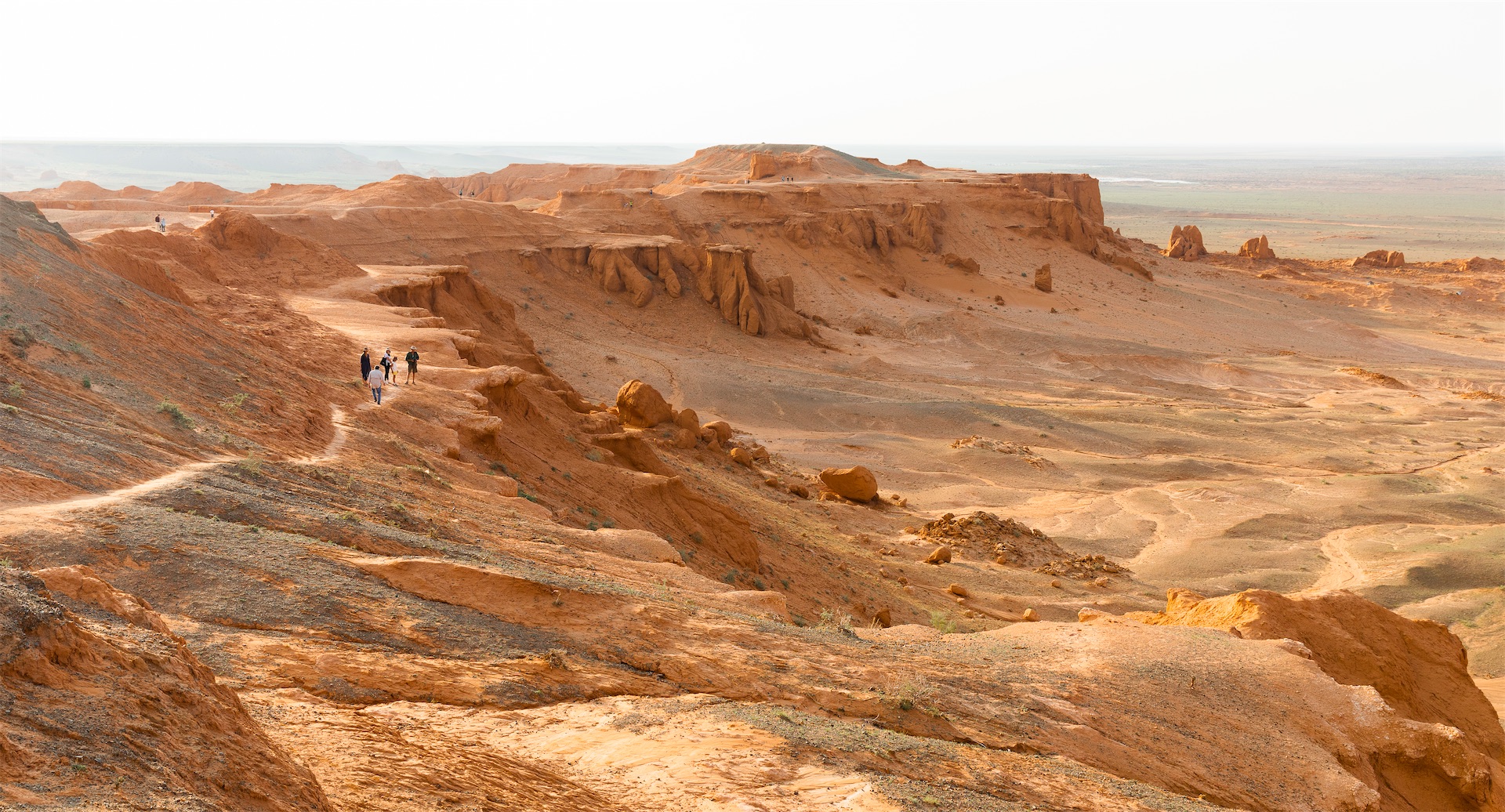
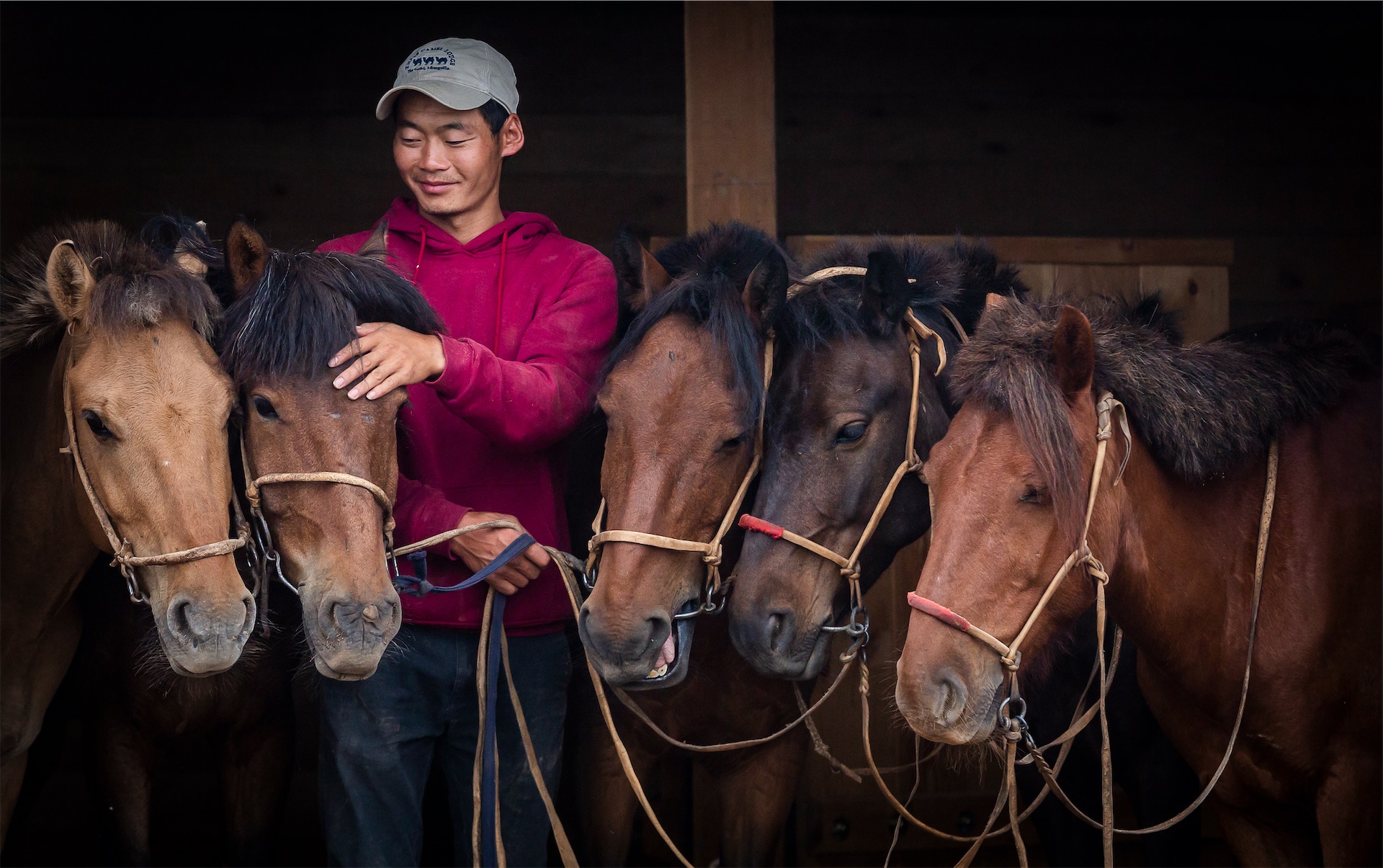
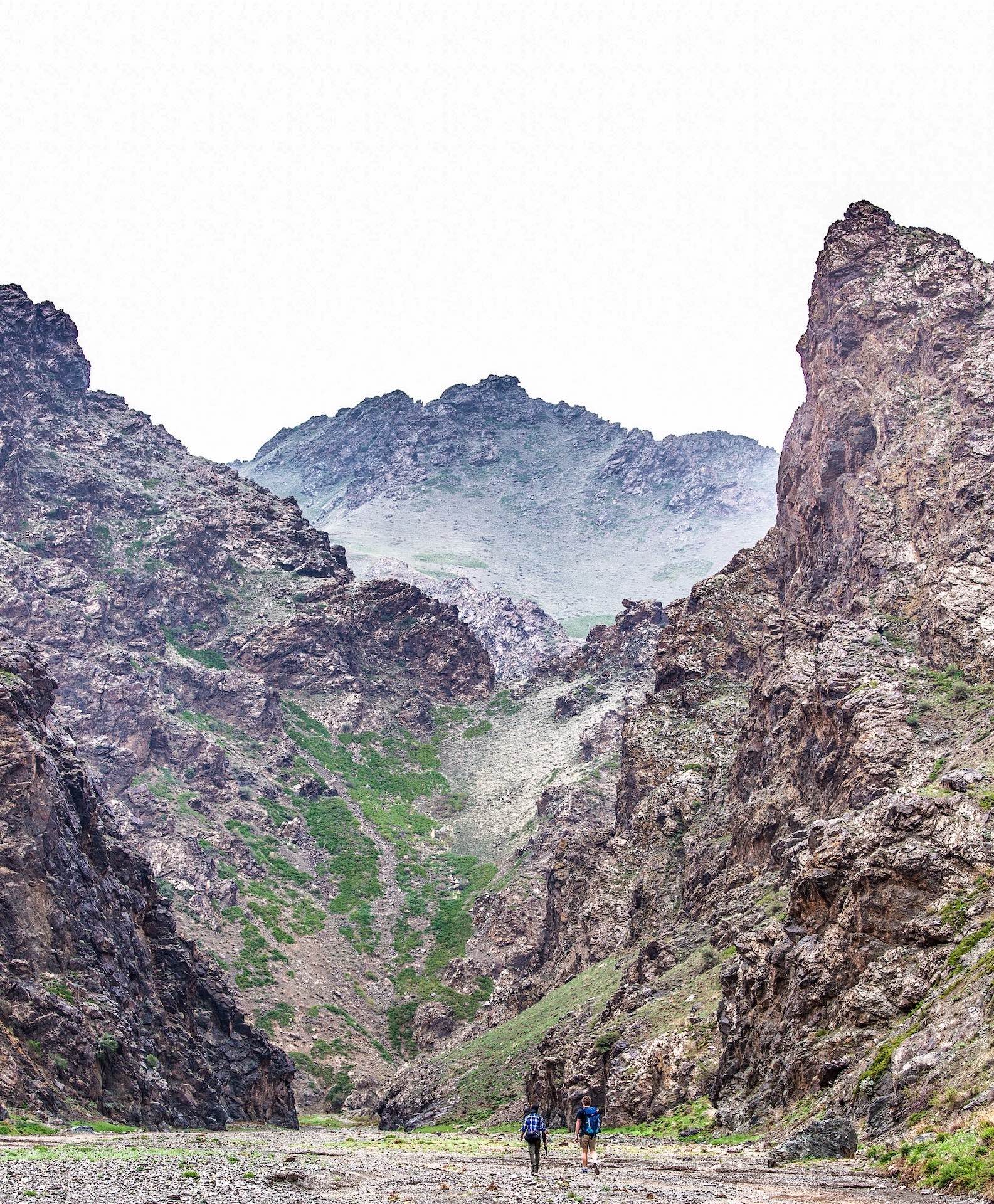
The pace of a stay is set by the desert. Days unfold across camel treks on Bactrian camels through the Moltsog and Khongor sand dunes, fossil expeditions to the Flaming Cliffs where the first dinosaur eggs were discovered in 1923, and guided hikes through the ice-filled canyons of Yol Valley National Park.
“There are many extraordinary sites near the lodge,” Jalsa says. “The Flaming Cliffs, where the first dinosaur eggs were discovered, remain one of the world’s most significant paleontological sites. The Moltsog and Khongor sand dunes offer memorable camel treks and sweeping desert views.”
He pauses on the most personal of the recommendations.
“Perhaps most meaningful are visits with local nomadic families,” he says, “where guests can share tea, stories, and a glimpse into a way of life that has endured for centuries.”
Bulagtai Restaurant, set within an oversized ger inside Dino Hall, serves Mongolian classics such as buuz dumplings and tsuivan noodles alongside Western dishes built around vegetables grown at the nearby Bulgan organic farms. Evenings end at the Thirsty Camel Bar or in the Spa Ger, where a local bariach delivers a traditional Mongolian massage. The night sky, undimmed by any light pollution for hundreds of miles, is the quiet headline of every stay.
NO PLASTICS, NO INTERNET, AND AN OPEN DOOR FOR HERDERS
Three Camel Lodge has a structural commitment to sustainability. It is also one of the things Jalsa speaks about most directly.
“From the beginning, sustainability has been a responsibility that informs every decision we make,” he says. “In a place as fragile and extraordinary as the Gobi Desert, every decision carries weight.”
The lodge has eliminated single-use plastics, runs a landfill-free waste management system, and was designed to blend into the surrounding landscape rather than to assert itself against it. Equally important is the lodge’s relationship with the nomadic herders whose grazing routes pass nearby.
“The lodge maintains an open-door policy for traveling herders who may need water or shelter,” Jalsa says, “reflecting longstanding traditions of Mongolian hospitality.”
Through Nomadic Expeditions, Jalsa has also supported a number of cultural preservation initiatives. The most visible is the Golden Eagle Festival, which he co-founded in western Mongolia in 1999 to sustain the centuries-old practice of Kazakh eagle hunting while supporting local communities.
“Our belief has always been that tourism should benefit the land and the people who live there,” he says.
WHAT THE GOBI LEAVES BEHIND
Ask Jalsa what he hopes a guest carries home, and the answer is not about the lodge at all. It is about the place.
“The Gobi Desert has a way of changing people,” he says. “Its vastness and silence invite reflection, and many guests leave with a renewed appreciation for nature and for cultures that live in harmony with the land.”
Almost a quarter century in, the lodge has become a quiet anchor in the southern Gobi. It supports local communities, employs Mongolians, and demonstrates a particular thesis about travel that Jalsa has held since the beginning.
“Three Camel Lodge represents the convergence of my heritage, my career in construction, and my commitment to sharing Mongolia with the world,” he says. “It is a place that supports local communities, celebrates Mongolian culture, and demonstrates that tourism can serve as a force for preservation.”
He returns one last time to the experience of guests on the ground.
“Seeing travelers experience the Gobi and connect with its people remains deeply meaningful,” Jalsa says. “When travel is thoughtfully designed and responsibly carried out, it can build understanding between cultures and foster a deeper respect for place.”
“The Gobi Desert has a way of changing people. Its vastness and silence invite reflection, and many guests leave with a renewed appreciation for nature and for cultures that live in harmony with the land.”
— Jalsa Urubshurow, Founder of Three Camel Lodge.
(1) Where is Three Camel Lodge located?
Three Camel Lodge sits at the foot of Bulagtai Mountain in the South Gobi Province (Omnogobi Aimag) of southern Mongolia, about seventy kilometers from Dalanzadgad Airport (DLZ).
(2) How do I get to Three Camel Lodge?
Most guests fly from Ulaanbaatar (UBN) to Dalanzadgad on a one-and-a-half-hour domestic flight via MIAT, Hunnu Air, or Aero Mongolia, followed by a one-hour off-road transfer in a Land Cruiser. An eight-hour overland drive from Ulaanbaatar across the Mongolian steppe is also available, and a private airstrip on the property accommodates charter planes and helicopters.
(3) When is Three Camel Lodge open?
The lodge operates seasonally from mid-May through early October. Late May and June are cool and breezy with the steppe turning green. July and August are warmer and ideal for camel treks. September and early October offer crisp days, vivid light, and the autumn bird migration. The lodge closes for the winter.
(4) Is there internet or phone signal at Three Camel Lodge?
There is no internet access on the property and no telephones in the gers, by design. Cell signal is limited to non-existent in the surrounding desert. The omission is part of the experience.
(5) What activities are available at Three Camel Lodge?
Bactrian camel treks, hikes through Yol Valley National Park, paleontology expeditions to the Flaming Cliffs, sand dune walks at Khongor and Moltsog, visits with nomadic herding families, mountain biking, 4×4 wildlife expeditions, stargazing, and Mongolian massage at the Spa Ger are all available. Most guests combine one or two larger expeditions per day with quieter time at the lodge.
(6) Is Three Camel Lodge family-friendly?
Yes, with a minimum age. The two family gers, which feature interconnecting bedrooms linked by a shared bathroom, accommodate children aged eight and above.
(7) Why is Three Camel Lodge considered an eco-lodge?
Three Camel Lodge was the first luxury eco-lodge to open in Mongolia, in 2002, and is a founding member of National Geographic Unique Lodges of the World. The property eliminates single-use plastics, runs a landfill-free waste management system, was built using traditional Mongolian construction techniques and locally quarried materials, employs an entirely Mongolian staff, and supports cultural preservation initiatives such as the Golden Eagle Festival in western Mongolia.

Plan Your Stay
Subscribe
Enjoy the read?
Get unique stays, hidden gems, and mindful travel tips delivered straight to your inbox—no spam, just wanderlust.
Other Stories
Property Spotlights
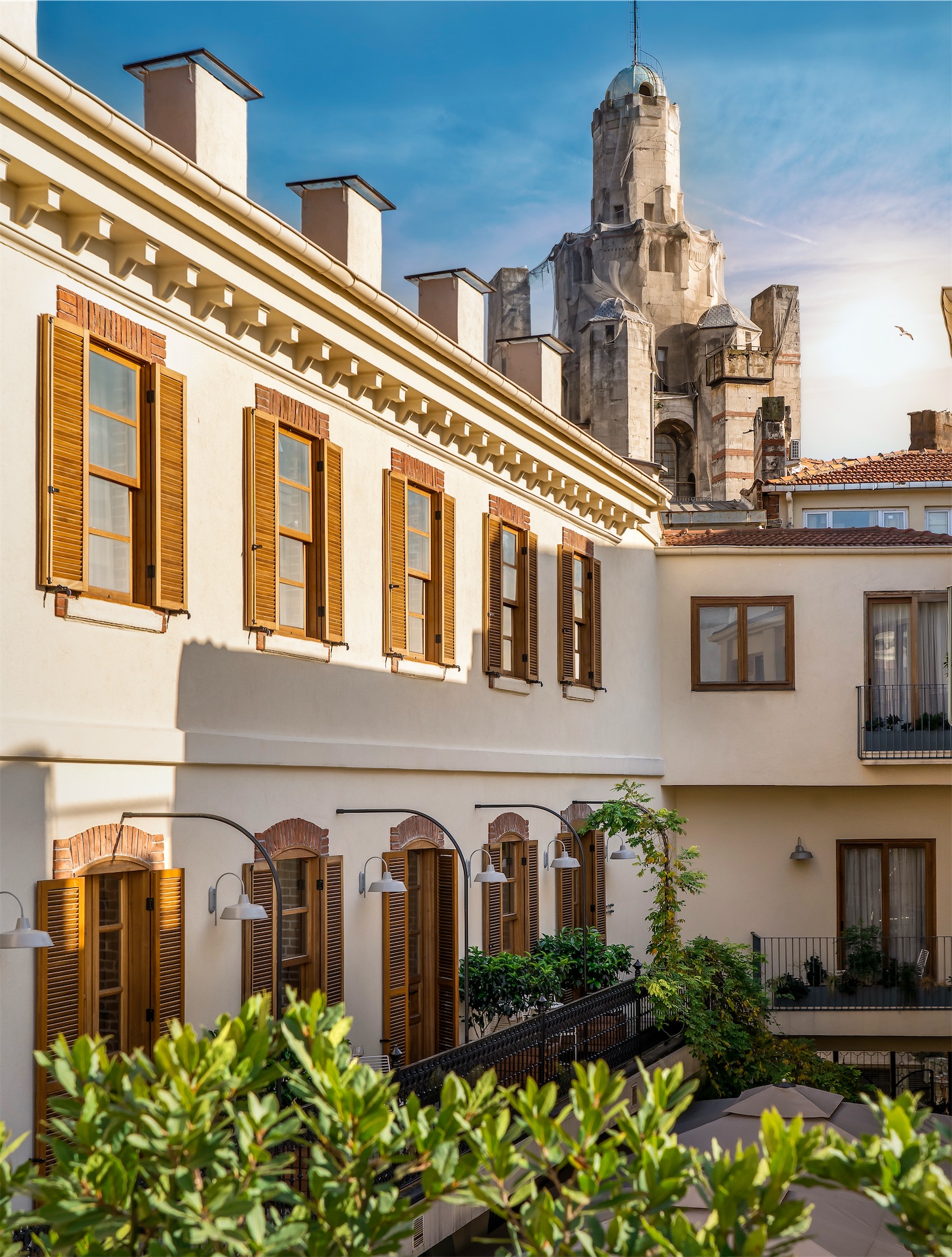
Ecole St. Pierre Hotel: A Gaspare Fossati-Designed French School in Galata, Reborn as a 17-Room Boutique Hotel
Property Spotlights
Eremito: A Contemporary Hermitage Rooted in Silence and Simplicity

Property Spotlights
Son Blanc Farmhouse: A 14-Room Menorcan Finca on the Way to Full Energy, Water, and Food Self-Sufficiency by 2030