
Son Blanc Farmhouse: A 14-Room Menorcan Finca on the Way to Full Energy, Water, and Food Self-Sufficiency by 2030
May 26, 2026
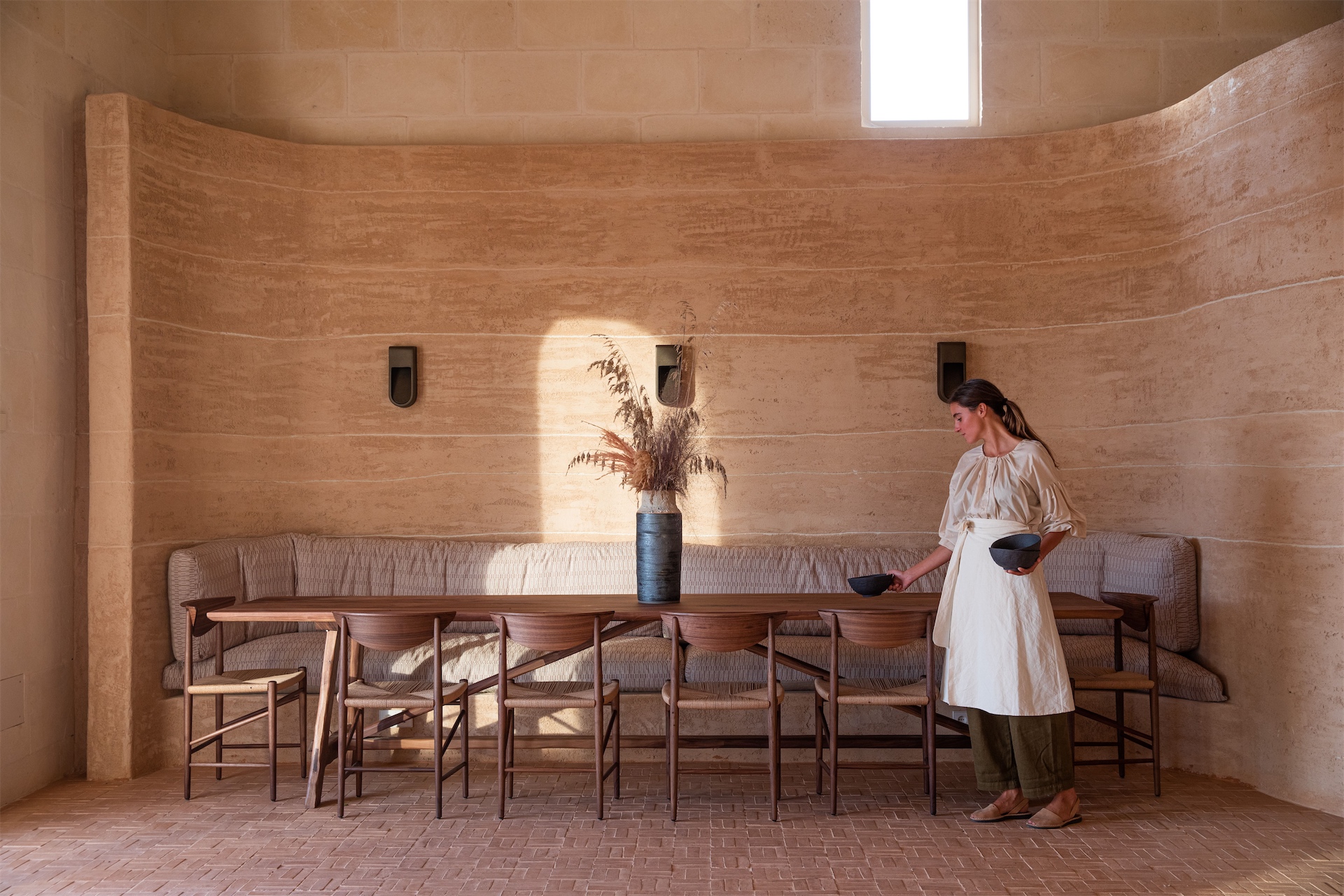

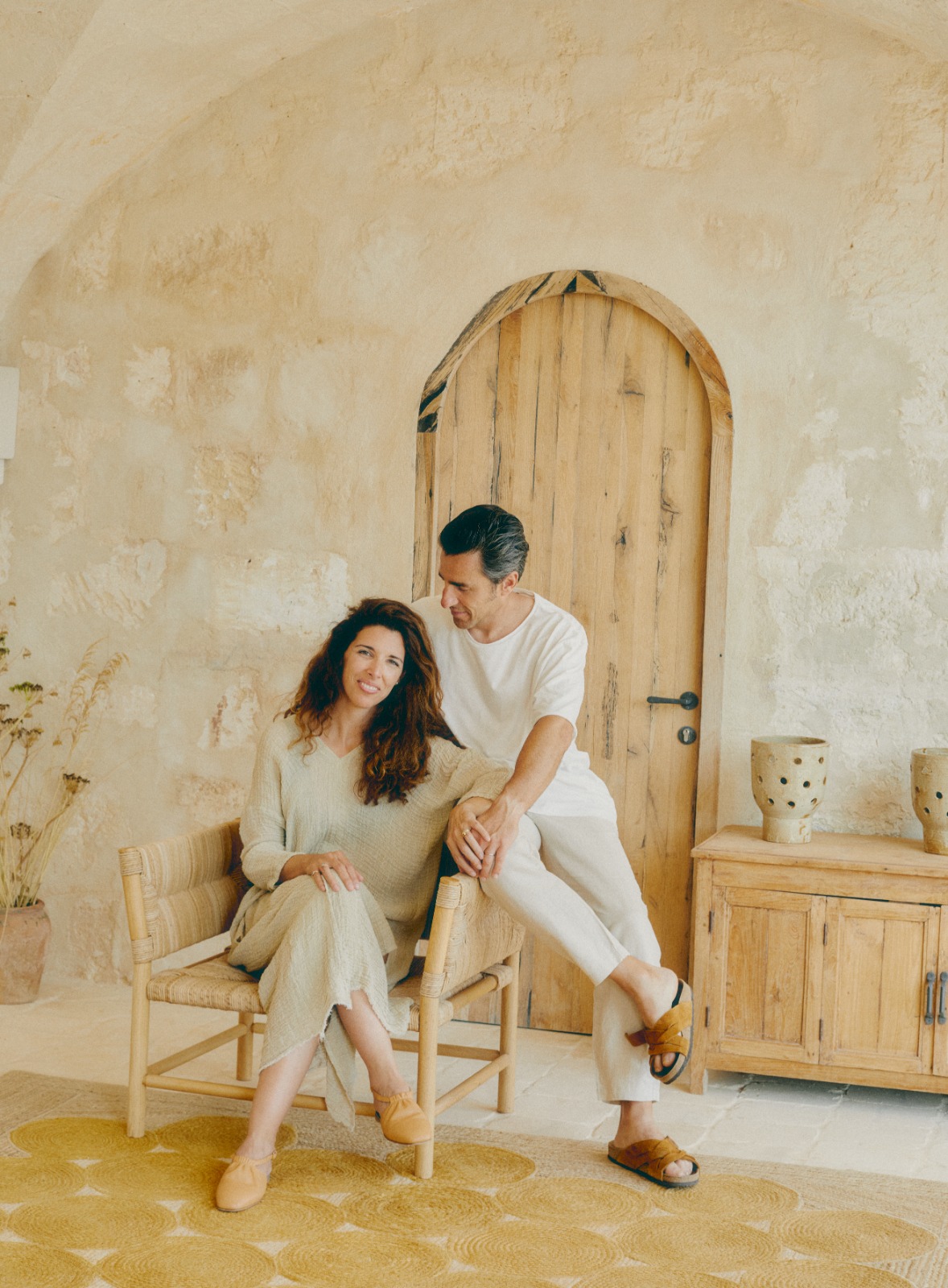
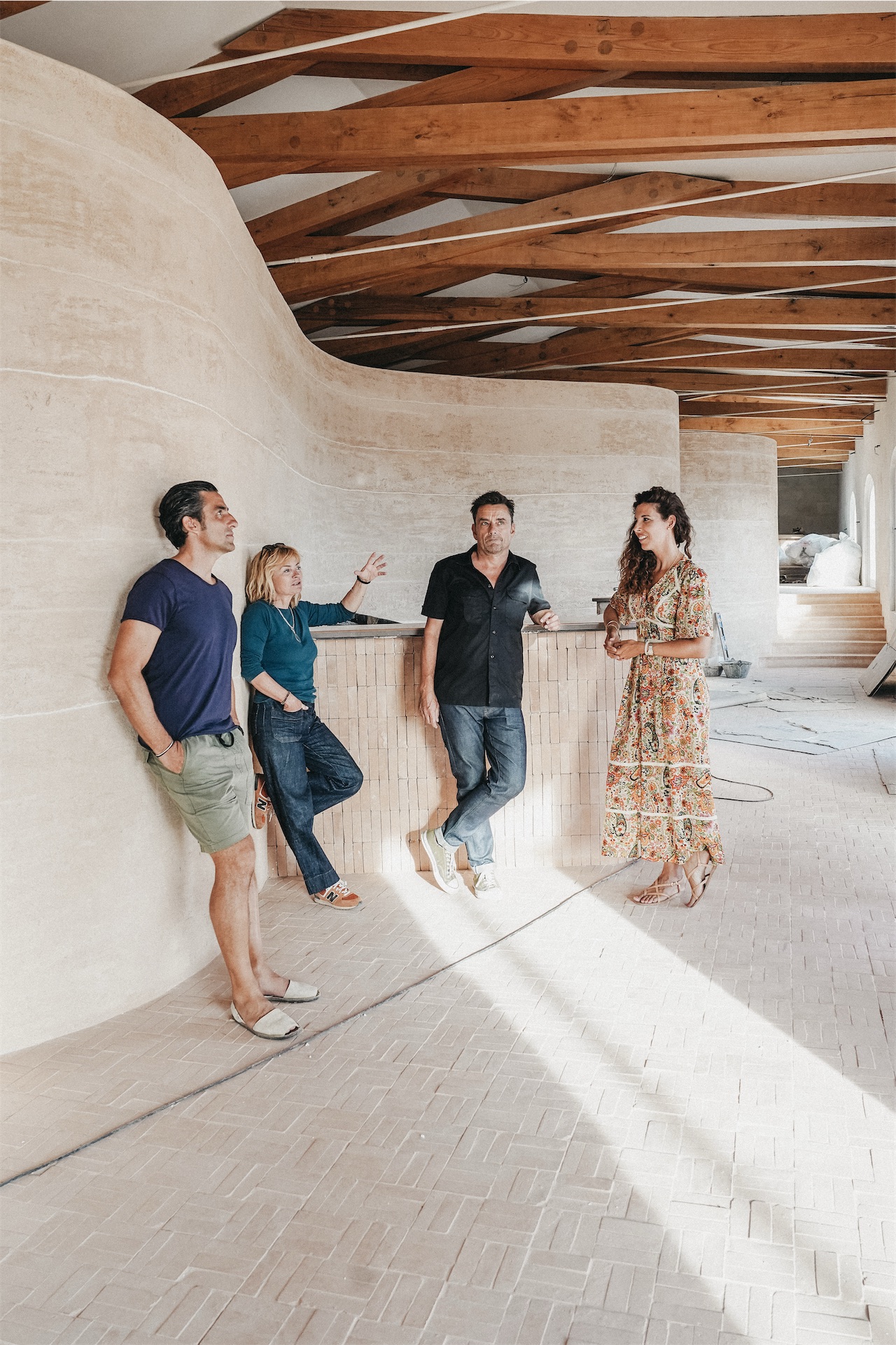
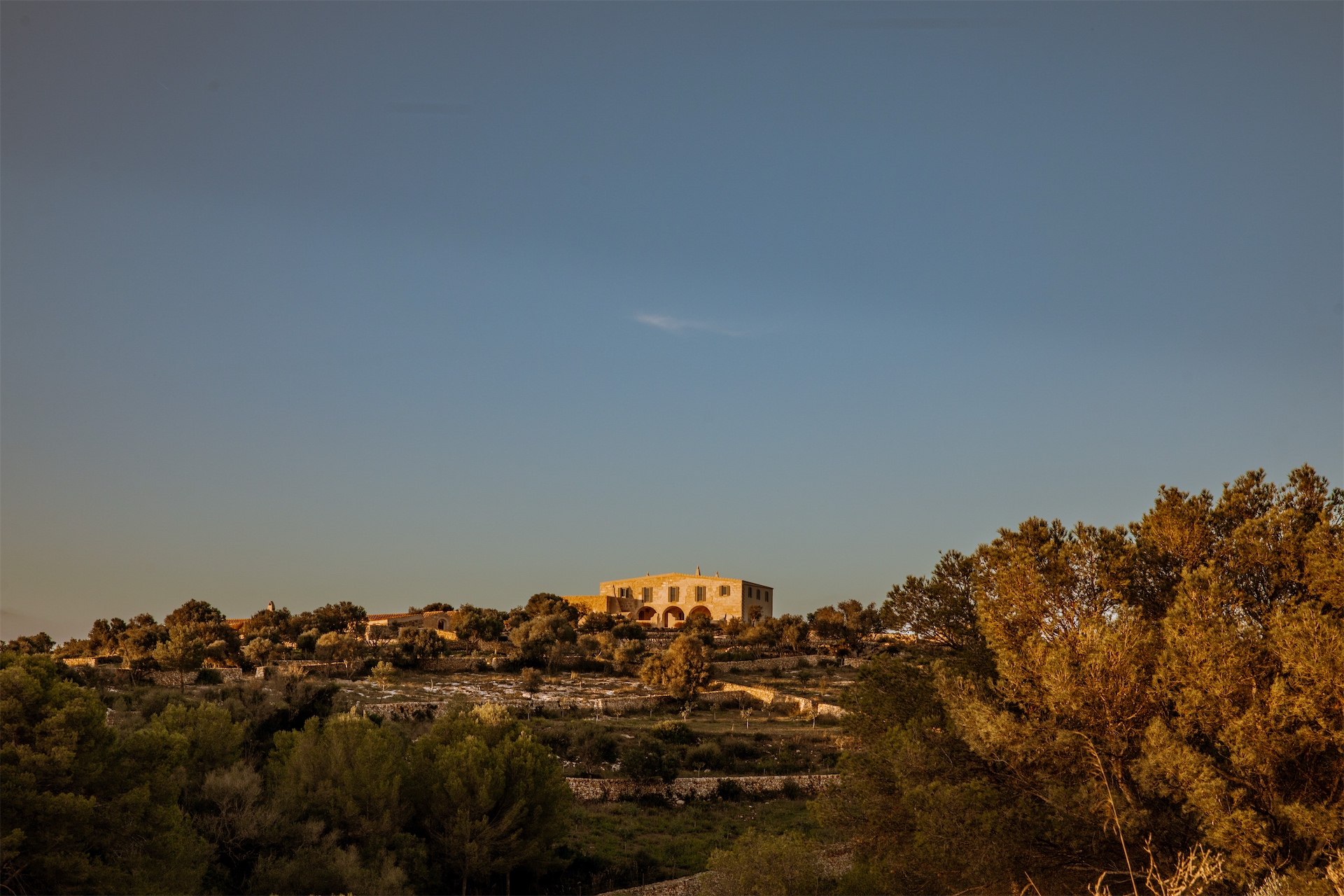
In the rolling interior of Menorca, between Alaior and the south coast, a 19th-century farmhouse has been quietly restored on a 130-hectare estate that intends to feed and power itself entirely by 2030. Son Blanc Farmhouse is the work of Benoît Pellegrini and Benedicta Linares Pearce, a couple whose family project took seven years from acquisition to opening. The building was restored by the Paris-based architecture studio Atelier du Pont alongside Menorcan craftsmen, and the result is a 14-room finca built around two parallel commitments: a bioclimatic architecture that uses cork insulation, geothermal heat pumps, and cooling ceilings to lower energy consumption, and a regenerative agriculture program that uses Keyline land management to feed the kitchen almost entirely from the estate.
In the rolling interior of Menorca, between Alaior and the south coast, a 19th-century farmhouse has been quietly restored on a 130-hectare estate that intends to feed and power itself entirely by 2030. Son Blanc Farmhouse is the work of Benoît Pellegrini and Benedicta Linares Pearce, a couple whose family project took seven years from acquisition to opening. The building was restored by the Paris-based architecture studio Atelier du Pont alongside Menorcan craftsmen, and the result is a 14-room finca built around two parallel commitments: a bioclimatic architecture that uses cork insulation, geothermal heat pumps, and cooling ceilings to lower energy consumption, and a regenerative agriculture program that uses Keyline land management to feed the kitchen almost entirely from the estate.
A FAMILY PROJECT THAT TOOK SEVEN YEARS TO BUILD
Son Blanc began with a personal idea rather than a hospitality plan.
“This project is the embodiment of a family journey,” Benoît and Benedicta say, “a way to give shape to our own ambitions and dreams and, at the same time, a medium through which we can share our environmental and social values with our children and other people around us. At our own small scale, we would like to do something to move towards the huge shifts the world needs to undertake.”
The brief for the place itself was set early.
“Son Blanc’s mission is to create a new approach to hospitality,” they say, “a utopian retreat, founded on the principles of approachable sustainability, collaboration with the natural environment and social connection.”
The actual building took longer than expected. The finca was acquired in 2018 and restored over five years, but the planning process around it stretched the full project to seven.
“The biggest challenges we met on our journey were dealing with very slow planning permission processes,” they say, “and being the first to try innovative and sustainable energy solutions in a climate that has been challenging for them.”
ATELIER DU PONT AND THE BIOCLIMATIC LOGIC
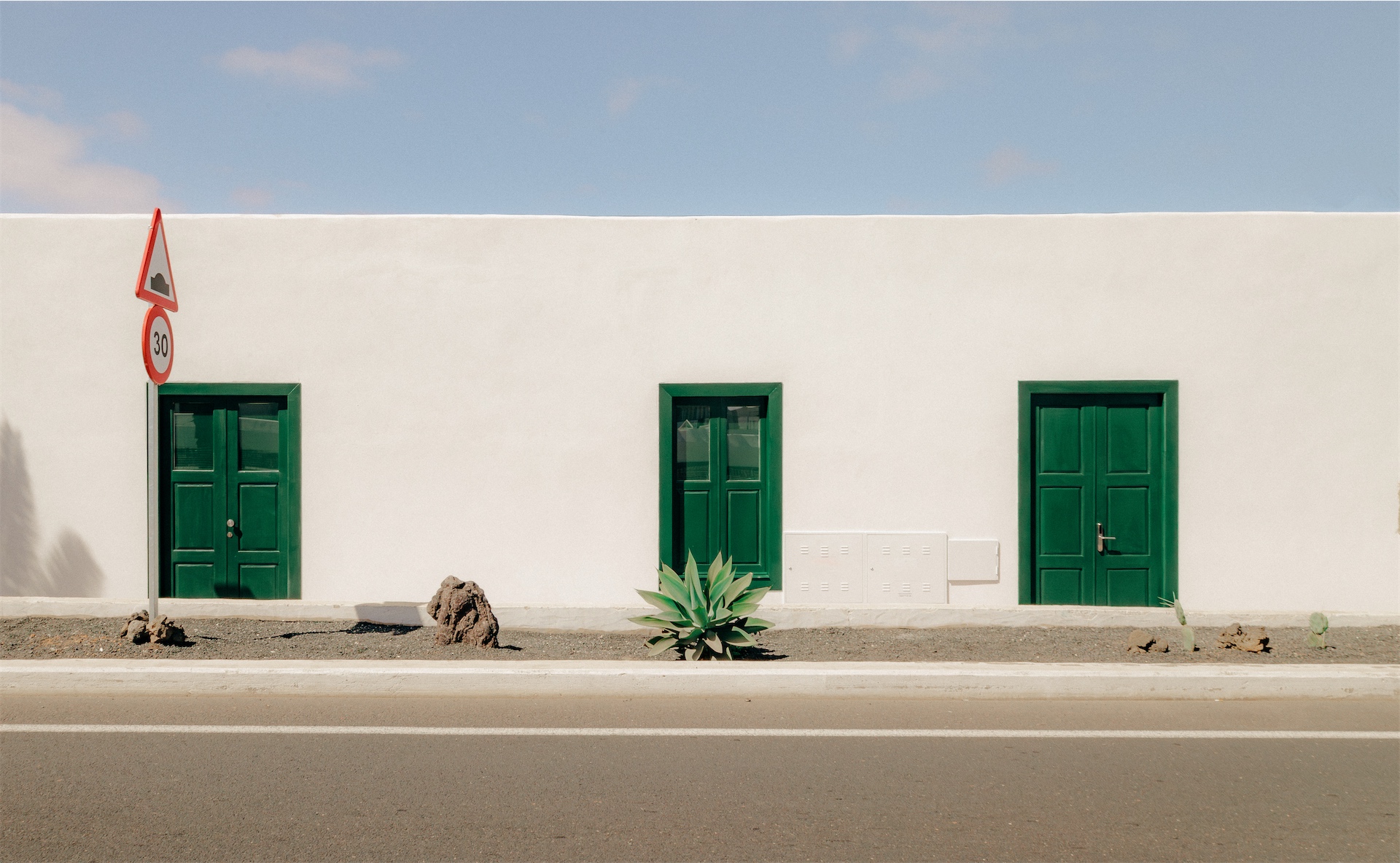
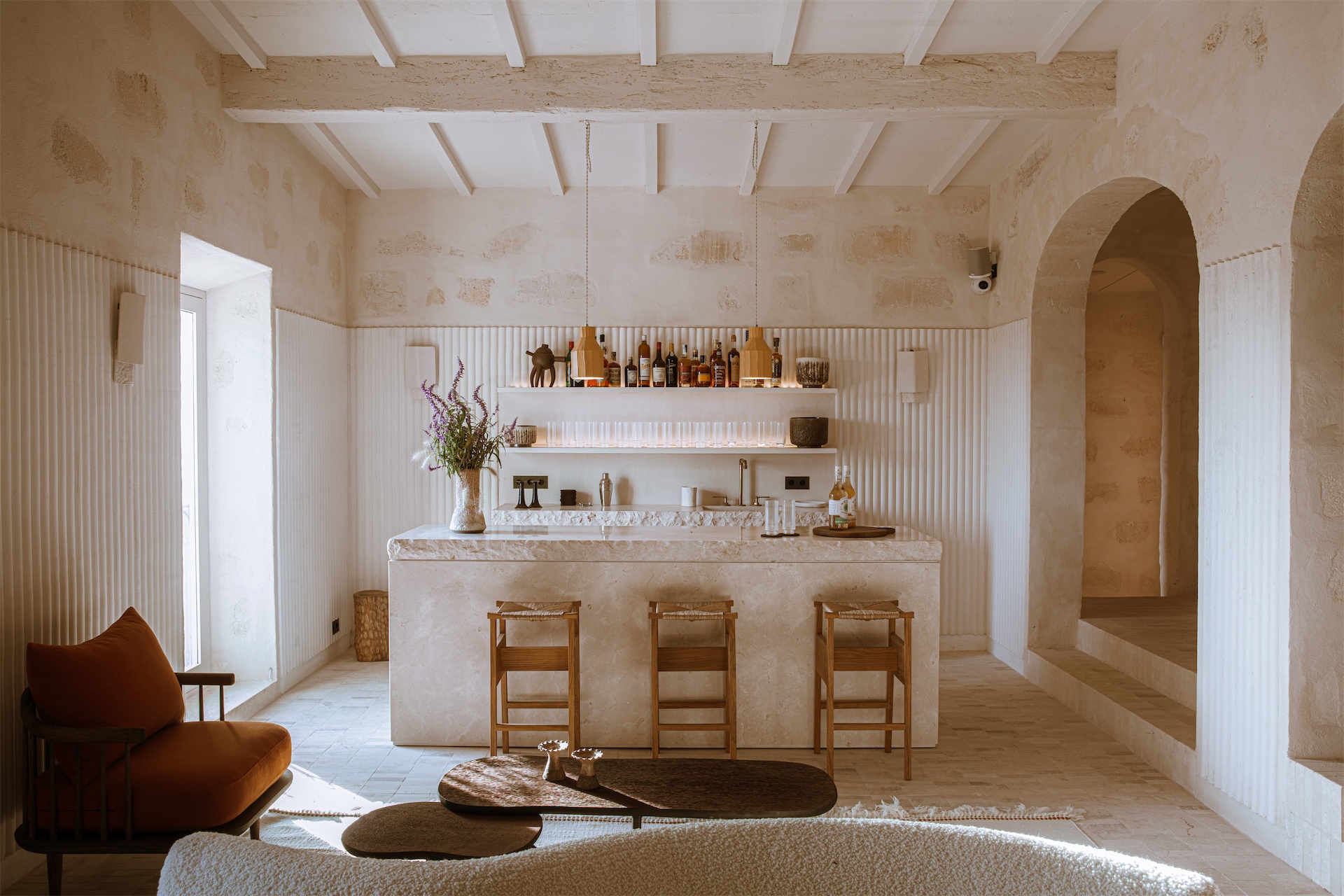
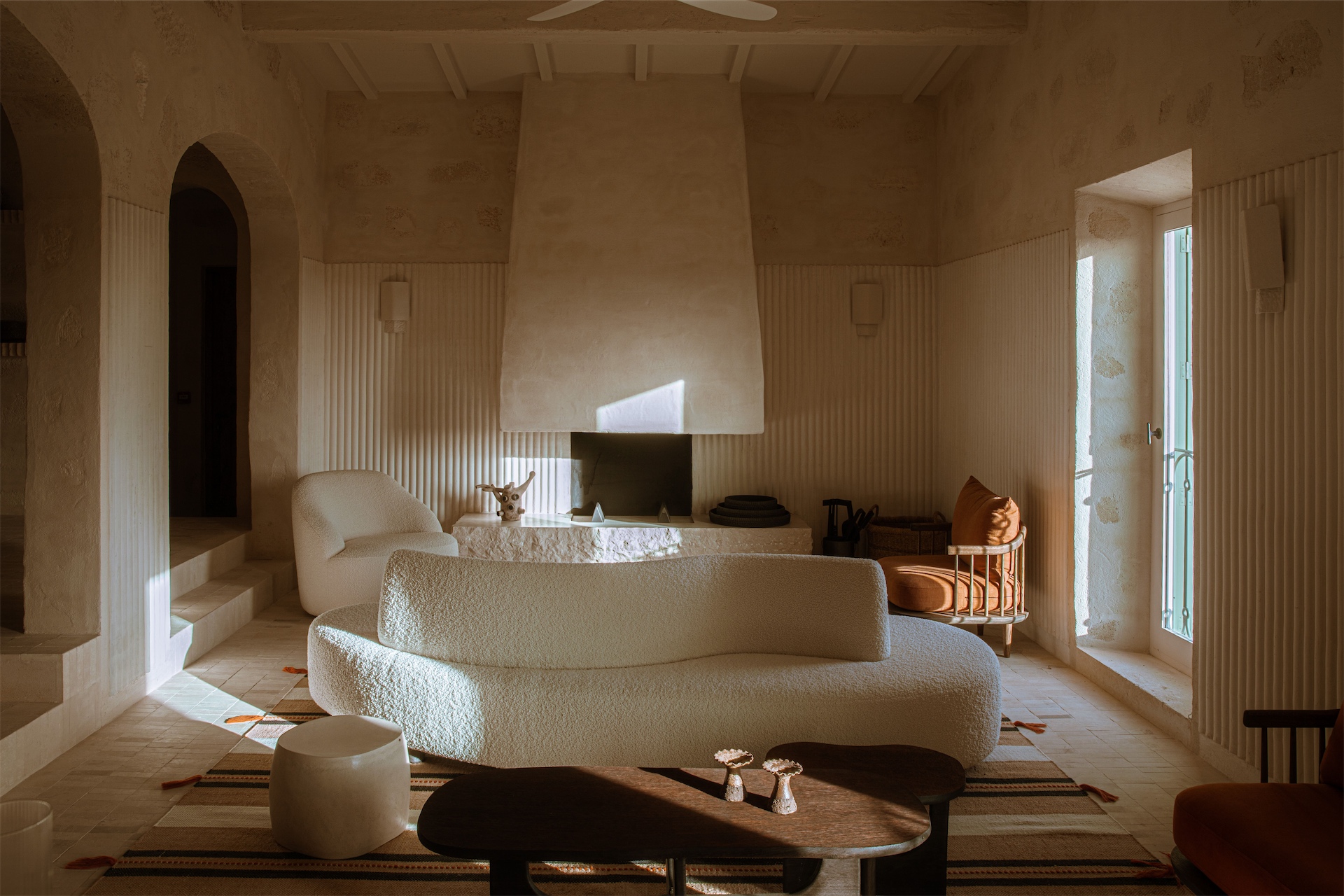
The restoration was led by Atelier du Pont, the Paris-based architecture studio, working with Menorcan craftsmen. The building itself reads as a quiet update of a traditional Menorcan farmhouse: dry-stone walls, white-washed surfaces, deep window openings cut into thick masonry. The systems behind the walls do most of the heavy lifting.
“The finca has been restored by integrating principles of bioclimatic architecture,” Benoît and Benedicta say. “Passive processes such as using stone and cork for insulation, and traditional processes such as white-washing, are completed by sustainable systems such as the use of cooling ceilings and geothermal heat pumps. Through the synergy of these different devices, the farmstead manages to considerably reduce its energy consumption and, consequently, its carbon footprint.”
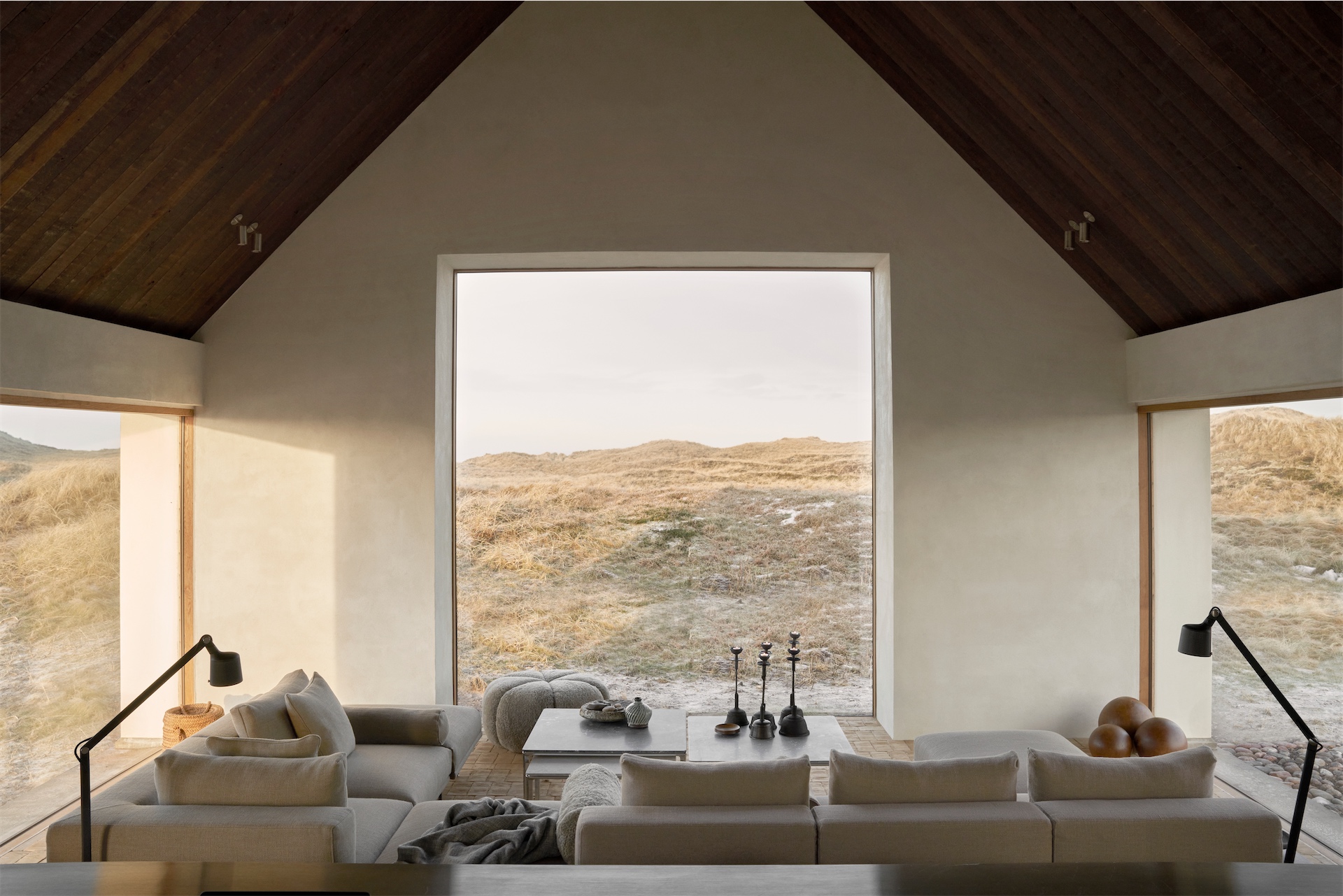
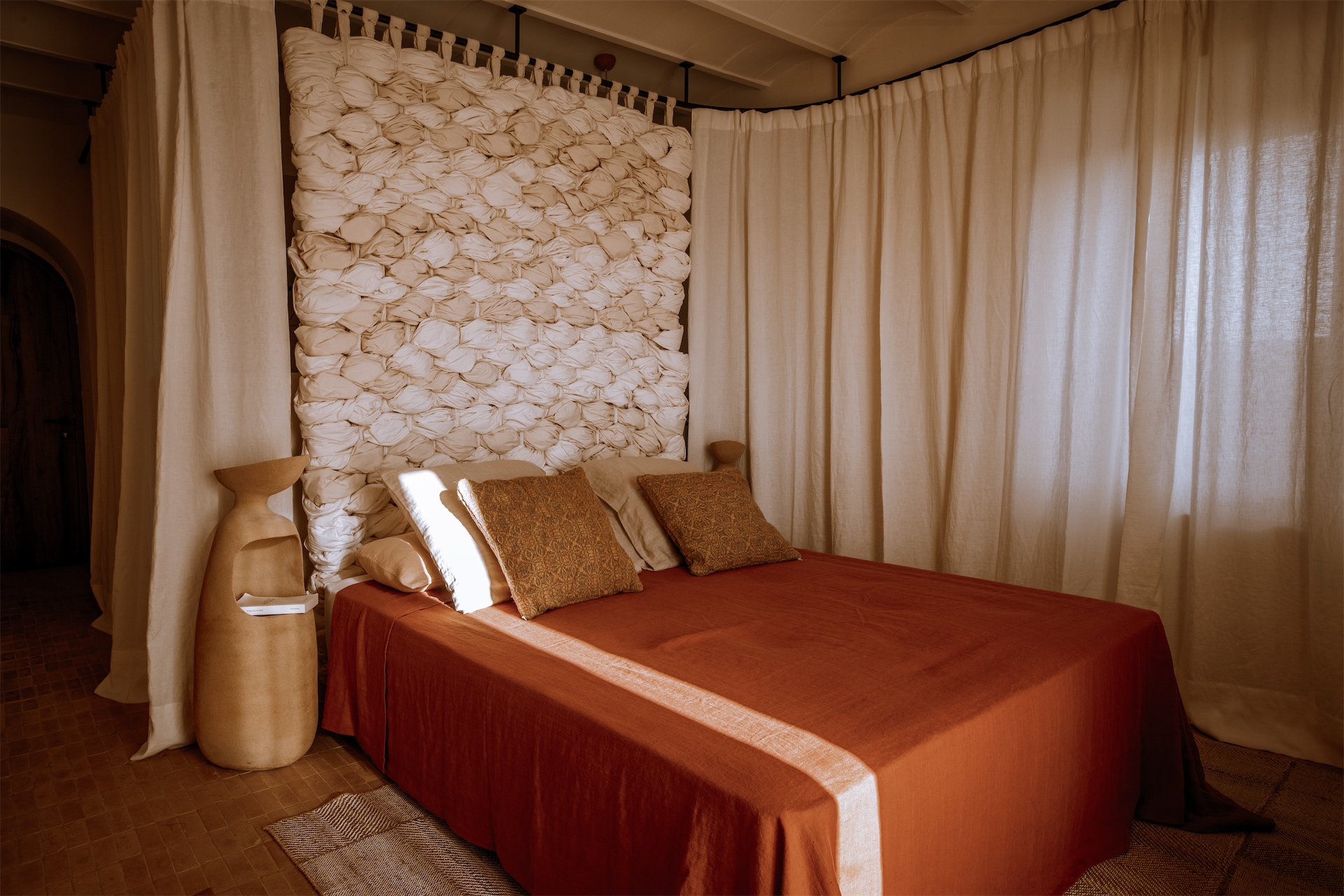
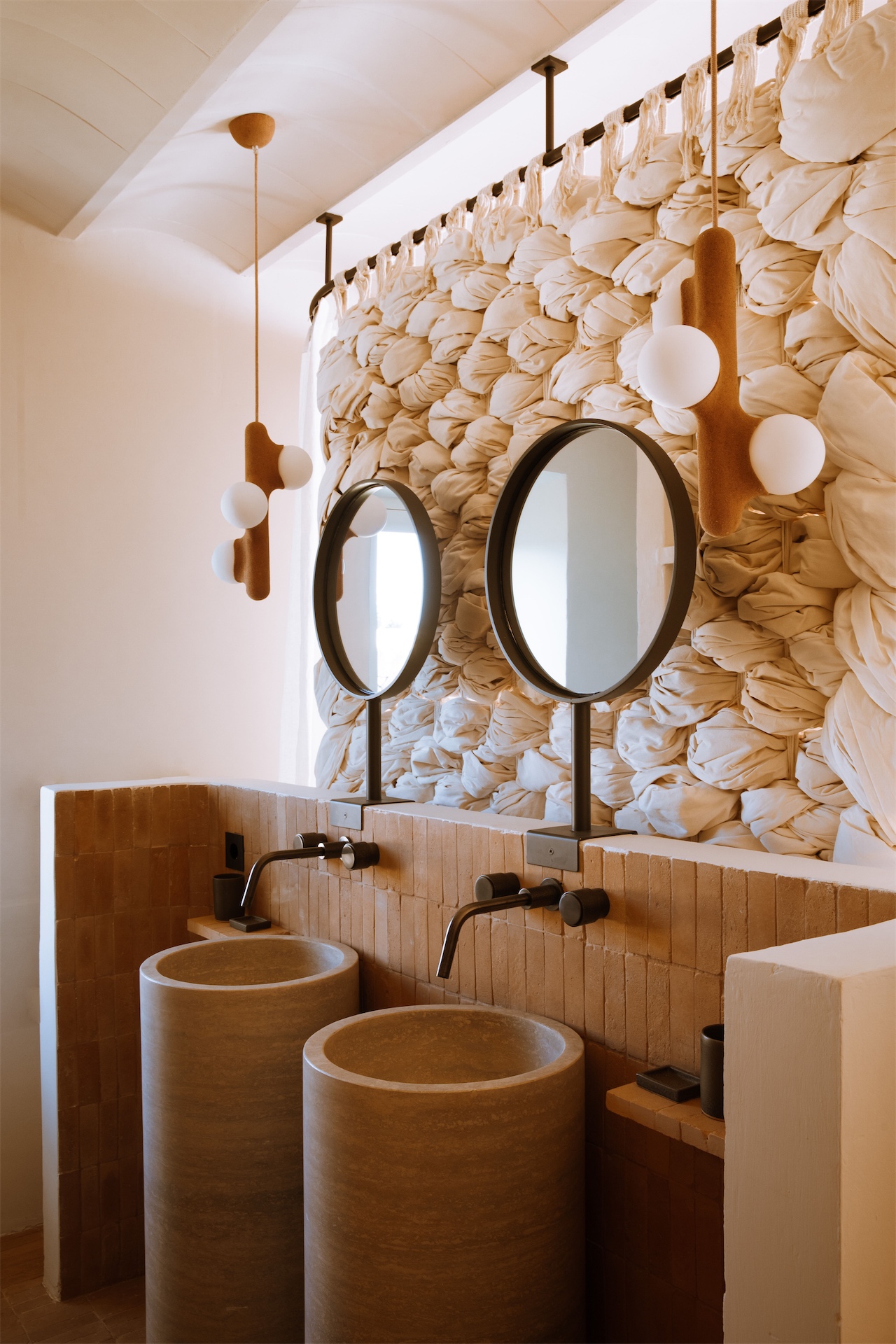
Inside the building, the 14 individually designed rooms and suites are shaped by local stone, clay, reclaimed wood, and natural textiles. Some open onto private gardens, others to terraces with sea views or outdoor hot tubs.
KEYLINE LAND MANAGEMENT AND THE PATH TO 2030
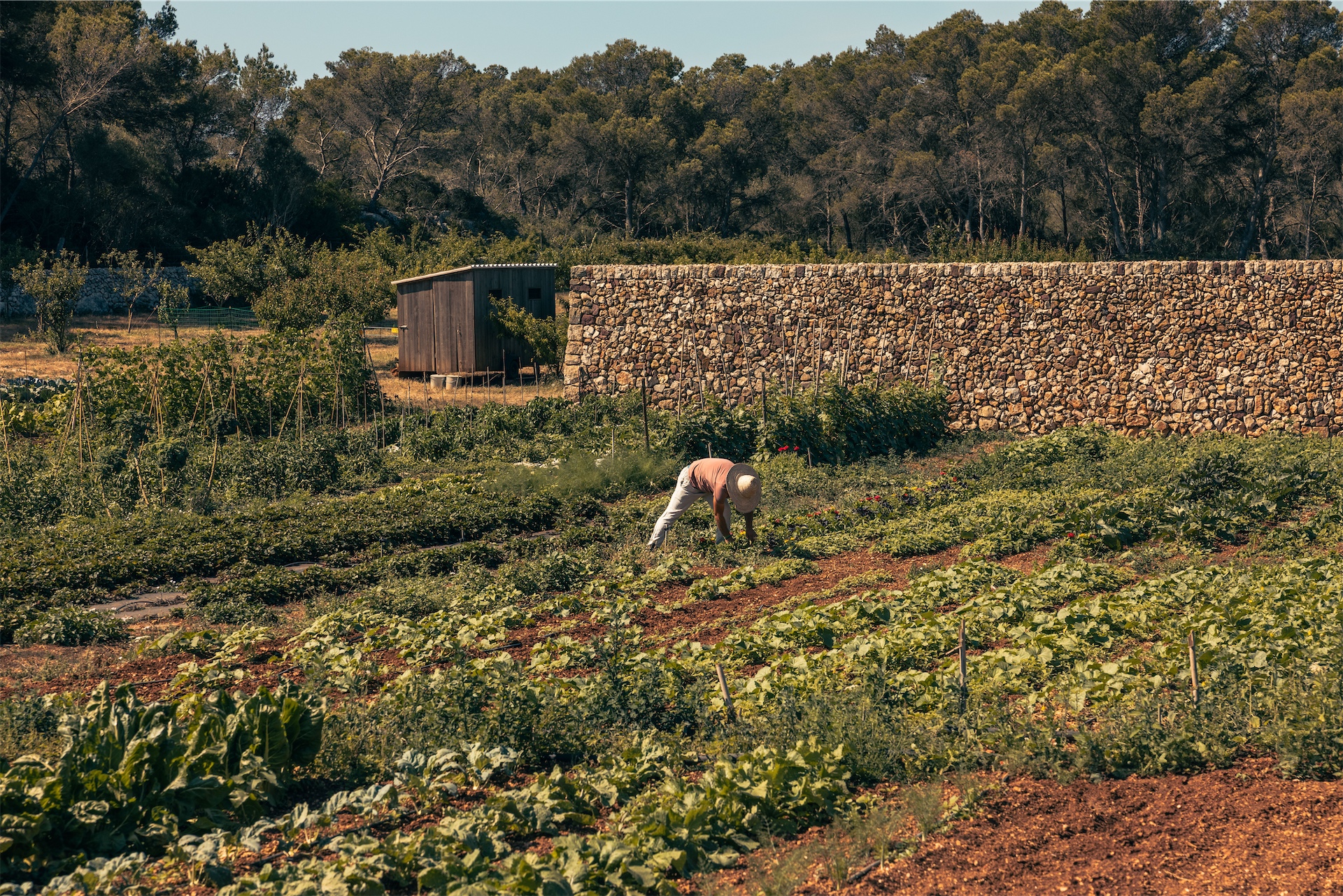
If the architecture quietly handles the energy and the temperature, the 130 hectares around it are designed to handle the food. Son Blanc runs a regenerative agriculture program organized around Keyline land management, a system that shapes water flow across slopes to rebuild topsoil and increase fertility over time.
“Agricultural land is fundamental to the project,” Benoît and Benedicta say. “By implementing a so-called regenerative agriculture, an entire ecosystem is preserved and renewed, offering enough produce to feed the estate at any time of the year.”
What grows on the estate is the full pantry: almond and olive groves, orchards, vegetable gardens, medicinal plants, livestock. The kitchen is built around what is harvested that morning or sourced from trusted local producers. Menus change daily. Cooking over charcoal fire, pickling, fermenting, and preserving anchor the cuisine.
The whole operation is moving toward a clearly stated end point.
“Producing its energy and managing its own resources,” Benoît and Benedicta say, “Son Blanc aims to achieve full energy, hydraulic and food self-sufficiency by 2030.”
“Son Blanc’s mission is to create a new approach to hospitality, a utopian retreat, founded on the principles of approachable sustainability, collaboration with the natural environment and social connection.”
— Benoît Pellegrini and Benedicta Linares Pearce, Co-Owners of Son Blanc Farmhouse
THE STAY: 14 ROOMS, A ROCK POOL, AND THE WEDNESDAY DINNER
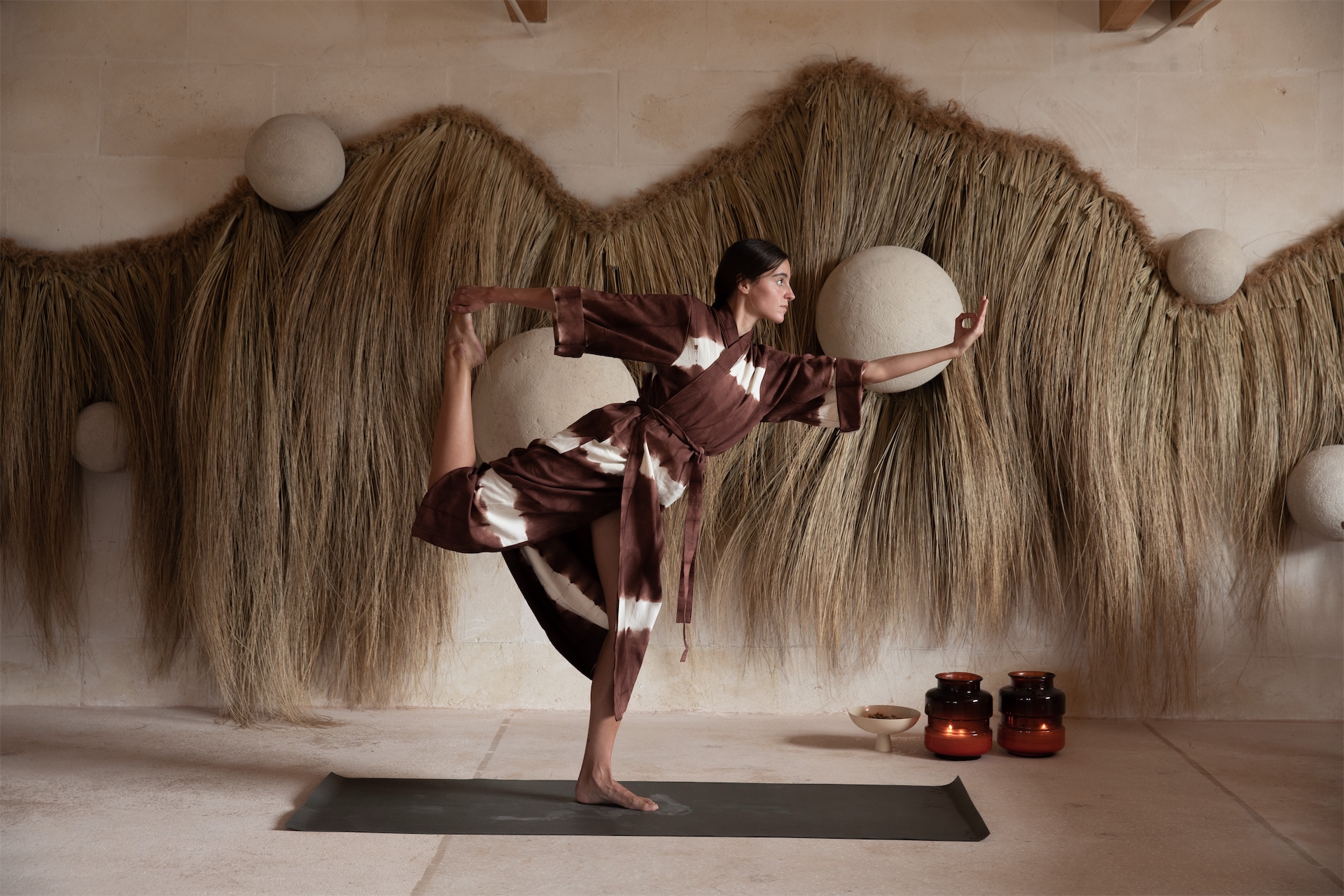
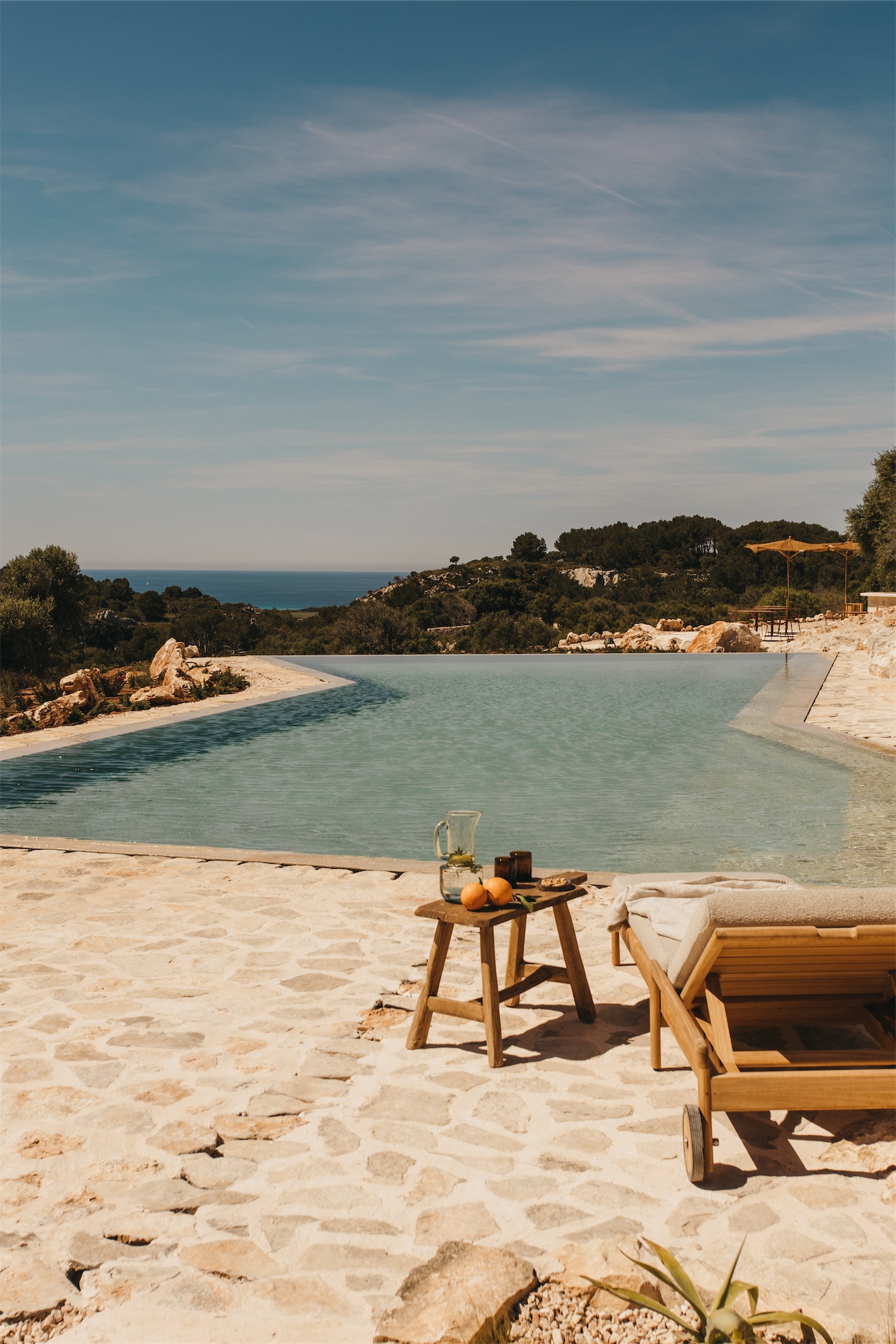
Son Blanc is built as a social retreat rather than an isolated escape. A pool carved into the rock anchors the outdoor program. Yoga platforms and treatment areas are open to all guests. Communal dining tables are deliberately sized to encourage strangers to share them. Weekly events run through the calendar.
Two of those events are the easiest entry points into the spirit of the place: the Wednesday communal dinner, where guests, hosts, and residents sit together at long tables, and the Sunday sunset roast that runs through the long Mediterranean evenings.
Benoît and Benedicta describe the stay itself as a kind of permission.
“At Son Blanc, we believe that the true path to well-being lies in authentic self-connection and immersion in the environment, embracing both nature and community,” they say. “We invite our guests to fully engage in a utopian experience, becoming an integral part of the surrounding ecosystem and local community. Being surrounded by fauna and flora creates true happiness and harmony with oneself, and allows you to embrace life as it comes, full of joy, surprises but also flaws.”
WHAT MENORCA HOLDS BEYOND THE ESTATE
Son Blanc is meant to be its own world, but Menorca around it is half of the experience. Benoît and Benedicta are careful with how they direct guests off-site.
“We encourage our guests to explore our 130-hectare estate, where they can encounter endemic plants, seasonal scents, and diverse fauna,” they say. “Our residents can stroll or ride our e-bikes through our crops, almonds, olive, chamomile, fruit trees, visit our vegetable patches and farm animals on guided farm tours, and explore our edible garden, where medicinal plants used in our cuisine and cocktails are cultivated.”
The wider island recommendations follow the same off-the-beaten-track logic.
“We invite guests to venture off the beaten track, away from the postcard-perfect coves and beaches, to uncover the island’s hidden spots and authentic beaches favored by locals,” they say. “Menorca’s architecture, art, history, and gastronomy are equally diverse and rich, and we are eager to share our carefully curated local addresses beyond the most popular destinations.”
WHAT GUESTS LEAVE WITH
Son Blanc is unusual among regenerative properties in how openly it names what it hopes a stay delivers. Benoît and Benedicta do not describe luxury or service.
“Son Blanc extends an open invitation,” they say, “to communicate with nature, to reconnect with your own essence, to share moments with good company and experience the Menorcan pace of life.”
The closing line, the one they keep returning to in conversation, is the simplest version of the project’s ambition.
“Ultimately, what Son Blanc offers is more than a stay,” they say. “It is a journey back to harmony with nature and others, leaving guests with a sense of renewed balance and belonging.”
“What Son Blanc offers is more than a stay. It is a journey back to harmony with nature and others, leaving guests with a sense of renewed balance and belonging.”
— Benoît Pellegrini and Benedicta Linares Pearce, Co-Owners of Son Blanc Farmhouse



(1) Where is Son Blanc Farmhouse located?
Son Blanc Farmhouse sits on Camí de Son Blanc in the municipality of Alaior, in the rolling interior of Menorca, Balearic Islands, Spain. The estate covers 130 hectares of preserved Menorcan countryside, with olive groves, orchards, ravines, pine and oak woods, and distant sea views.
(2) How do I get to Son Blanc Farmhouse?
Menorca Airport (MAH) is roughly twenty minutes by car from the estate. A rental car is recommended for exploring the island’s rural roads, coves, and historic villages, and the estate can assist with transfers on request.
(3) How many rooms does Son Blanc Farmhouse have?
Son Blanc Farmhouse has 14 individually designed rooms and suites, shaped by local stone, clay, reclaimed wood, and natural textiles. Some open onto private gardens, others to terraces with sea views or outdoor hot tubs.
(4) Who designed the restoration of Son Blanc Farmhouse?
The 19th-century farmhouse was restored by Paris-based architecture studio Atelier du Pont in collaboration with local Menorcan craftsmen. The design integrates traditional Menorcan techniques such as white-washing and stone construction with bioclimatic systems including cork insulation, cooling ceilings, geothermal heat pumps, photovoltaic panels, and water recycling.
(5) What does Son Blanc’s 2030 self-sufficiency goal mean?
Son Blanc Farmhouse aims to achieve full energy, hydraulic, and food self-sufficiency by 2030. Energy comes from photovoltaic panels and geothermal systems. Water is reduced through recycling and bioclimatic design. Food is grown on the estate through a regenerative agriculture program organized around Keyline land management, with almond and olive groves, orchards, vegetable gardens, medicinal plants, and livestock forming a closed-loop ecosystem that feeds the kitchen year-round.
(6) What is Keyline land management?
Keyline land management is a regenerative agriculture method that shapes water flow across the contours of sloping land to rebuild topsoil, increase fertility, and improve resilience to drought over time. At Son Blanc, Keyline principles are applied across the 130-hectare estate to support regenerative farming alongside the kitchen and the broader self-sufficiency goal.
(7) What is the best time to visit Son Blanc Farmhouse?
Spring (April to June) and autumn (September to October) bring mild temperatures ideal for hiking, farm immersion, and exploring the island. Summer brings long Mediterranean evenings, communal events, and swimming in the nearby calas. Each season has its own character on the estate.
(8) What can guests do at Son Blanc Farmhouse?
On the estate: regenerative farm tours, communal dinners, yoga and meditation, hiking and biking trails, pottery workshops, stargazing, and seasonal culinary experiences. The Wednesday communal dinner and the Sunday sunset roast are the social anchors of the week. Off the estate, the team recommends lesser-known beaches and the historic old town of Ciutadella over the busier tourist routes.

Plan Your Stay
Subscribe
Enjoy the read?
Get unique stays, hidden gems, and mindful travel tips delivered straight to your inbox—no spam, just wanderlust.
Other Stories
Property Spotlights
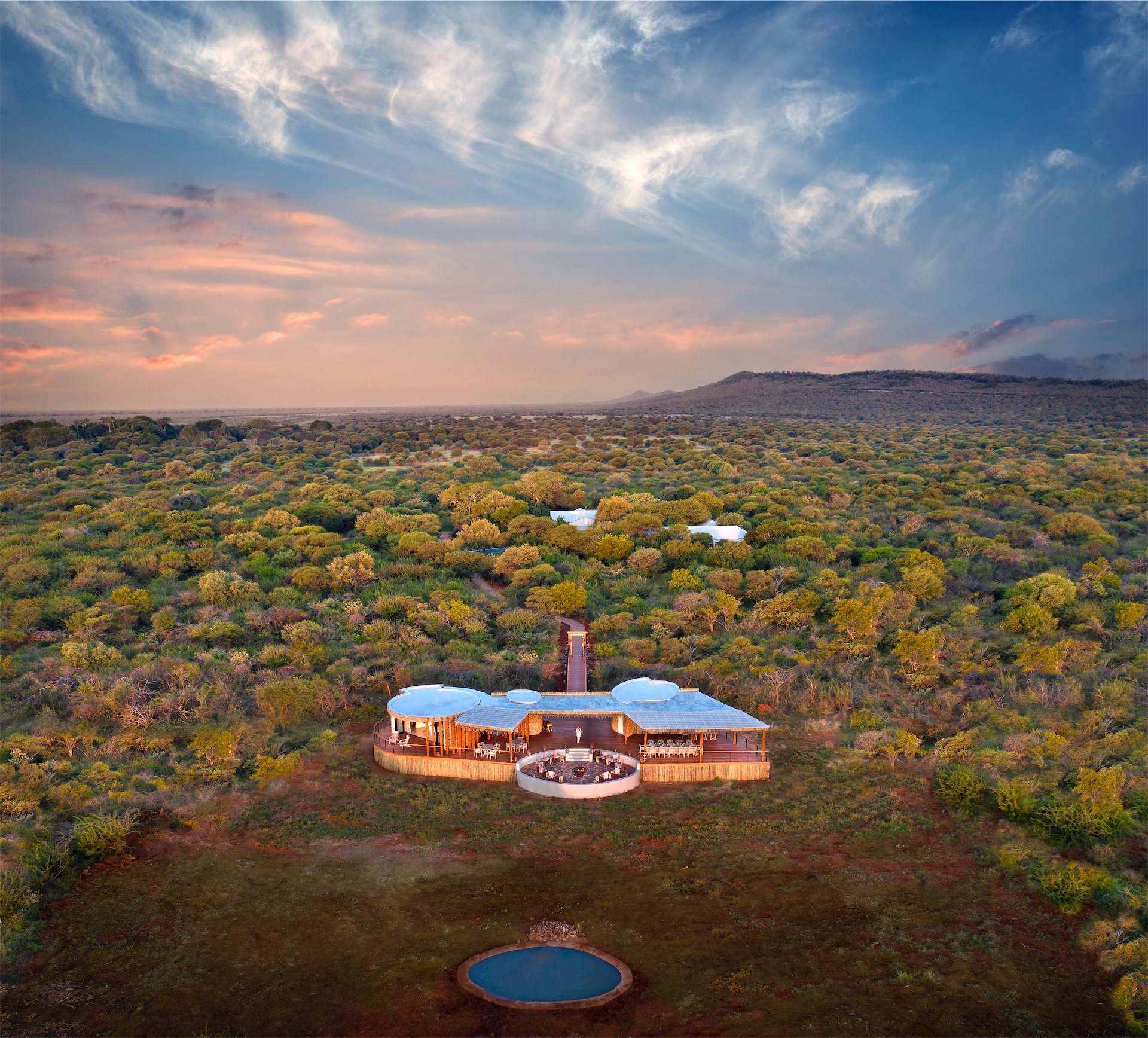
Morukuru Family: A Family-Owned South African Safari Collection Built on Freedom

Property Spotlights
Hotel Hubertus: A Mountain Retreat Suspended Between Earth and Sky in the Dolomites
Property Spotlights
EcoCamp Patagonia: Inside the World’s First Geodesic Dome Eco-Lodge in Torres del Paine